Author: Chukwu Ikenna

  • 19-Yr-Old Gets Admission 30 Minutes After Commiting Suicide

    19-Yr-Old Gets Admission 30 Minutes After Commiting Suicide


    Nineteen-year-old Opesusi Faith Timilehin on Monday took ‘Push Out’ rodent poison after scoring 190 in the just-released results of the Unified Tertiary Matriculation Examination (UTME), organised by the Joint Admission and Matriculation Board (JAMB).

    Timilehin, from Abeokuta, lived at Odogunyan in Ikorodu, Lagos State, with her elder sibling.

    According to Guardian newspaper, neighbors and residents mourned Timilehin, whom they described as “gentle and humble.”

    A family source said the deceased, who applied for microbiology, also sat for the same examination last year.

    “She said her last year’s result was better than this year’s,” one of her close allies (name withheld) told our newsmen on the phone.

    According to information, Timilehin scored higher than her current 190 in the previous JAMB result in 2024.

    Ironically, JAMB gave her provisional admission just about 30 minutes after she was confirmed dead at Kolak Hospital in Odogunyan.

    “The shocking revelation is that she was given an admission message via her Gmail yesterday, immediately after she was confirmed dead at Kolak Hospital, Odogunyan, Ikorodu, Lagos,” the source stated.

    Meanwhile, Timilehin’s parents, on hearing the sad news, arrived in Ikorodu, allegedly to pick up her remains back to Abeokuta for burial, leaving the residents to rain curses on JAMB for the general mass failure recorded in the examination.

  • White South Africans Arrive In The U.S. As Refugees

    White South Africans Arrive In The U.S. As Refugees

    The newly arrived people are from the ethnic minority of Afrikaners, the group of whites who ruled South Africa during apartheid.

    American officials welcomed a group of 59 white South Africans at Washington Dulles International Airport on Monday afternoon, in a ceremony greeting them as refugees under the argument that they are fleeing discrimination and racially based violence in their home country.

    The newly arrived people are from the ethnic minority of Afrikaners, the group of whites who ruled South Africa during apartheid. The dozens that came Monday, including families with young children, arrived via a flight chartered by the State Department. Their resettlement in the U.S. comes as the Trump administration has shut down refugee admissions from almost all other countries, including Afghanistan, Sudan, the Republic of Congo and Myanmar.

    The Afrikaners were met on arrival by U.S. Deputy Secretary of State Christopher Landau and Department of Homeland Security Deputy Secretary Troy Edgar.

    Landau said that Trump’s pause of the U.S. refugee program was from the very beginning subject to exceptions when it was determined to be in the interest of the United States. He cited the example of when the refugees “could be assimilated easily into our country.”

    “They tell quite harrowing stories of the violence that they faced in South Africa that was not redressed by the authorities by the unjust application of the law,” Landau said. “The United States, as we were proud to say, has stood for equal justice under law and the fair and impartial application of the law.”

    In an executive order issued on Feb. 7, Trump said the United States would help with resettling “Afrikaner refugees escaping government-sponsored race-based discrimination, including racially discriminatory property confiscation.” He condemned what he called the country’s “shocking disregard of its citizens’ rights,” specifically stating the government had seized the agriculture property of white Afrikaners without compensating them.

    The executive order also said the United States would no longer provide aid or assistance to South Africa. It came after a new South African land law went into effect and seems to reflect the views of Elon Musk, the head of the Trump’s Department of Government Efficiency who was born and raised in South Africa.

    The law has been depicted by some whites in South Africa, and some on the right in the U.S., as specifically targeting white farmers to take away their land. The South African
    government and experts dispute this, noting that the law allows for expropriation in cases when the land is not being used or there is a public interest in its redistribution, similar to eminent domain laws in the U.S.

    In February, South African President Cyril Ramaphosa pushed back on claims that it was a land grab. “The recently adopted Expropriation Act is not a confiscation instrument, but a constitutionally mandated legal process that ensures public access to land in an equitable and just manner as guided by the constitution,” he wrote on X days before Trump issued his executive order.

    Discussion around the law has fit into a larger narrative on the American right about white South African farmers supposedly being killed in large numbers, something Trump talked about in his first term and which Musk has referred to as “genocide,” even though there is not data to support this.

    The New York Times reported that 101 out of the 225 people killed on farms in South Africa between April 2020 and March 2024 were Black current or former workers living on farms. Of that number, 53 were farmers, who are usually white.

    The president on Monday said the carve out for South African refugees wasn’t race-related.

    “Farmers are being killed,” Trump told reporters. “They happen to be white. Whether they are white or Black makes no difference to me. White farmers are being brutally killed and the land is being confiscated in South Africa.”

    White House deputy chief of staff and homeland security adviser Stephen Miller defended the admission of white refugees on Friday.

    “What’s happening in South Africa fits the textbook definition of why the refugee program was created,” Miller said. “This is race-based persecution. The refugee program is not intended as a solution for global poverty, and historically, it has been used that way.”

    Officials in South Africa have disputed that claim.

    “It is most regrettable that it appears that the resettlement of South Africans to the United States under the guise of being ‘refugees’ is entirely politically motivated and designed to question South Africa’s constitutional democracy; a country which has in fact suffered true persecution under Apartheid rule and has worked tirelessly to prevent such levels of discrimination from ever occurring again,” Chrispin Phiri, a spokesperson for South Africa’s Ministry of International Relations and Cooperation, said in a statement Friday.

    Landau, the deputy secretary of state, reiterated the Trump administration’s stance on Monday. “It is not surprising, unfortunately, that a country from which refugees come does not concede that they are refugees, and unfortunately, you know, the South African government has not done what we feel is appropriate to guarantee the rights of these citizens to live in peace with their fellow South Africans, which is why, under our domestic law, they were given refugee status,” he said.

    The Episcopal Church said on Monday that it would not work to resettle the Afrikaners after the federal government asked it to do so under the terms of a refugee resettlement grant to the church.

    Presiding Bishop Sean Rowe wrote in an open letter that the church has decided to end refugee work with the federal government by the end of the fiscal year, “in light of our church’s steadfast commitment to racial justice and reconciliation and our historic ties with the Anglican Church of Southern Africa.”

    “It has been painful to watch one group of refugees, selected in a highly unusual manner, receive preferential treatment over many others who have been waiting in refugee camps or dangerous conditions for years,” Rowe wrote. “I am saddened and ashamed that many of the refugees who are being denied entrance to the United States are brave people who worked alongside our military in Iraq and Afghanistan and now face danger at home because of their service to our country.”

    Thula Simpson, an associate professor of history at the University of Pretoria in South Africa, said that Trump’s rhetoric and the admission of Afrikaner refugees in the U.S. has created tensions in South Africa.

    “By using the term ‘genocide,’ Trump has gone beyond the reality here,” Simpson said. “It creates a very uncertain situation, very intense situation, with aggravated race relations in the country — and the outcome is unpredictable.”

  • Lady Who Uses NYSC Allowance For US Visa, Gets Rejected by

    Lady Who Uses NYSC Allowance For US Visa, Gets Rejected by


    A young Nigerian lady has gone viral after sharing how she diligently saved her NYSC allowance and personal salary to fund a U.S. Master’s degree application, only to be denied a visa in the end.

    Gbemisola Taiwo revealed in a post on X (formerly Twitter) that during her National Youth Service Corps (NYSC) year, she did not spend any part of her monthly allowance. Instead, she topped it up with ₦200 from her salary to make ₦20,000 monthly.

    According to her, the money was specifically saved to cover the cost of applying for a U.S. postgraduate program. This included application fees, transcript processing, and other related charges.

    Despite her disciplined savings and financial sacrifice, her US visa application was ultimately rejected, making the entire investment futile.

    “Every single dime wasted. I cried ehn,” Gbemisola confessed, expressing the deep pain of seeing her hard-earned effort end in disappointment.

    She wrote, “I didn’t touch my NYSC allowance at all. At the time, I was working with a company, and I would take out ₦200 from my salary, then add it to the allowance to make it ₦20,000.

    “I used that money to start processing my U.S. master’s application ; paying for the application fee, sending transcripts, and other related costs.

    “In the end, my US visa was denied.
    Every single dime wasted.
    I cried ehn.(sic)”

    The post was a response to a tweet by financial expert Oluwatosin Olaseinde, who had asked followers to share the most extreme money-saving hacks they’ve ever practiced.

    Gbemisola’s story has since struck a chord with many online users, garnering thousands of reactions and sparking conversations about sacrifice, rejection, and financial risks young Nigerians face in pursuit of international opportunities.

  • 16-Yr-Old Girl Fakes Own Kidnap, Demands N2m Ransom From Her Family

    16-Yr-Old Girl Fakes Own Kidnap, Demands N2m Ransom From Her Family


    A SS2 student of a private secondary school on Watchman Street in Abakaliki, Ebonyi State, faked her own kidnapping and demanded a ransom of N2million from her family.

    The 16-year-old girl allegedly contacted her brother, claiming she had been kidnapped.

    The spokesperson of the Ebonyi State Police Command, Joshua Ukandu, who disclosed to reporters on Monday, May 12, 2025 said that a family friend helped her plan the hoax.

    According to the PPRO, the teenager is a native of Izzi Local Government Area and was due to return to school for the third term on Saturday.

    The girl told police she had gone to buy second-hand clothes, known locally as ‘Okirika’, when someone tapped her from behind.

    She claimed to have lost consciousness and woke up the next day at Ishieke Junction in Ebonyi Local Government Area.

    She added that she often dreams of being kidnapped, and her mother regularly prayed against it.

    Upon regaining consciousness, she asked for directions back to Abakaliki town.

    Instead of returning home, she went to the house of a family friend who had no idea she was missing.

    Using the man’s phone, she messaged her brother, claiming she had been kidnapped and demanded N2 million ransom.

    Her brother asked to speak with the kidnappers and requested their location, but she refused and blocked his number.

    Later, she unblocked his number and sent an account number belonging to the family friend hosting her.

    Unfortunately for her, the phone was tracked. Police raided the house and arrested everyone involved in the plot.

    Ukandu confirmed that the command has launched a full investigation into the incident.

    The girl has since been reunited with her family, though the matter remains under police investigation due to her age.

  • How Corps Members Win Millions at NYSC Camp

    How Corps Members Win Millions at NYSC Camp

    Winners of the Corprenuership Competition have emerged at the 2025 Batch A, Stream 1 orientation course, Bayelsa state.


    The panel of judges arrived at the winners after they submitted their business proposals and defended the ideas contained therein.


    In her remarks, the representative of The Unity Bank Yenagoa, Mrs RoseMary Olomu said the gesture was a corporate social responsibility activity of the bank to promote creativity and provide grants for corps members to start up various businesses during and after their service year.


    Congratulating the winners, the State Coordinator, Mrs Okpalifo Obiageli Charity who was represented by the Camp Director, Mrs Essien Ena Omawumi commended their moral courage and initiative to develop, submit and defend their business ideas.


    She urged the winners to judiciously use the funds for the purpose provided for.
    She thanked the unity Bank for the financial assistance and opportunity given to corps members to actualise and improve on their business dreams.


    The over all winner was awarded # 800,000 Others got #500,000, #300,000 respectively.


    There was also consolation gifts for 7 other corps members who participated in the competition.


    In other news, the corps members of Bayelsa state celebrated our diverse cultural heritage today during 2025 Batch A stream one cultural carnival held at NYSC Permanent orientation camp, Boro town ,Kaima in Kolukuma/opkuma LGA.


    In her opening remarks the
    State Coordinator, Mrs Okpalifo Obiageli Charity described our culture as our identity which embodies, our language, food, dressing, our craft , ceremonies etc. She further stressed that cultural carnival is a true symbol of unity, cultural integration necessary for national development.


    She also charged them to avoid cultural bigotry, biases, superiority which hinder national integration and development. She informed them that Cultural carnival is a platform provided by the Scheme for corps members to show case some of our diverse cultural heritage and therefore appreciate our multi cultural society.


    While urging them to respect other people’s cultures, the State coordinator enjoined the corps members to promote them.


    She expressed joy seeing corps members from other cultural background dressed up, singing and dancing passionately for cultures other than the their own .She urged them to avoid borrowed foreign cultures that are inimical to our national identity and development.


    She enjoined all camp officials and corps members to preserve, respect and promote our cultural heritage wherever they may find ourselves within or outside the country because our culture is our Power ,Strength and Pride.

    In her vote of thanks, the Head of Socials Committee, Mrs Ochie Adline thanked God and commended the State Coordinator, Camp officials for their support towards the success of the socials activities on camp.


    Highlights of the event were display of colourful traditional attires , dances, music , food from various ethnic groups across Nigeria .


    The Executive Assistant to the Governor on NYSC Matters, Dr. Wisdom Poyeri was in attendance.

  • Boko Haram Seizes Military Weapons Worth Trillions

    Boko Haram Seizes Military Weapons Worth Trillions

    Honourable Yusuf Adamu Gadgi, a member of the House of Representatives, has claimed that Boko Haram insurgents have seized military assets worth trillions of Naira during attacks on military bases across Nigeria’s North-East region. Nigerian home decor ideas

    Gadgi made the statement while contributing to a motion moved by Honourable Ahmed Satomi from Borno State.

    The motion addressed the recent fire outbreak at a military arms depot in Giwa Barracks, Maiduguri, and the increasing attacks by Boko Haram in Borno and Yobe states.

    Gadgi claimed that the scale of destruction being inflicted by insurgents on military equipment is unprecedented.

    He warned that failure to take swift and decisive action could have dire consequences.

    He said: “I was shocked by what Boko Haram did at Giwa Barracks and other military facilities. There’s a serious threat to the security and safety of Nigerians, and even to the country itself.”

    Gadgi pointed out that the National Assembly had allocated significant funds for the purchase of over 40 combat vehicles and other weapons for the military, amounting to trillions of naira, to ensure the protection of citizens.

    “How can we guarantee the safety of the people under such conditions, when insurgents can seize these weapons?” he asked.

    “The National Assembly is doing its best to address security matters, but government agencies must also take responsibility. The President must launch an investigation into the conduct of top military commanders and other security agencies, and take appropriate action.

    “We must also summon these agencies to explain why they are failing in their duties.”

    The lawmaker cautioned that continued negligence from the government and its security apparatus would erode public trust—posing a major threat to political leadership and national stability.

    “If action is not taken quickly, Nigerians may be forced to defend themselves, and they could begin to see us, their leaders, as enemies—just like they see Boko Haram,” he warned

  • If You Can’t Put 60,000 People On The Street, You Are Not Serious – Sowore Tells Obi

    If You Can’t Put 60,000 People On The Street, You Are Not Serious – Sowore Tells Obi

    A former presidential candidate of the African Action Congress (AAC), Omoyele Sowore, has doubted the political relevance of politician, Peter Obi and the Labour Party, saying they do not represent real political opposition in Nigeria.Nigerian home decor ideas

    Speaking on Channels Television’s Inside Sources on Sunday, May 12, Sowore described Obi’s political relevance as a temporary phenomenon that failed to challenge the ruling elite.

    “In terms of real opposition, I don’t know why anybody refers to Peter Obi as one. He hasn’t fought for the mandate he claimed or mobilised his supporters,” Sowore said criticising the former Anambra governor for failing to speak out against key national issues like fuel price hikes.

    Sowore described the Labour Party as a “short rental” political platform.

    “What they call Airbnb in America. You move in, check out when your time expires. When they’re done with Peter Obi, they’ll move it to someone else,” he said.

    Sowore further suggested Obi’s popularity during the 2023 elections was rooted in religious sentiment sparked by the APC’s controversial Muslim-Muslim ticket.

    He challenged Obi’s supporters, saying

    “If you can’t put 60,000 people in the streets, then you’re not serious about opposition.”

    In swift response, the Obidient Movement dismissed Sowore’s comments as baseless. The National Coordinator of the movement, Yunusa Tanko, defended Obi’s continued influence, stating that his every move still shapes national discourse.

    “If Peter Obi is not a threat, why do they always talk about him? Whether he speaks or breathes, it makes news. That’s relevance,” Tanko said during a phone interview with Channels Television.


  • ‘Why I Dislike Lagos’

    ‘Why I Dislike Lagos’


    By: Esther Charles Ikedife

    I never reach NIGERIA , I don de see stress and shegebanza I AM SORRY, GUYS. but I dislike Lagos State.

    I almost missed my flight from Lagos to Asaba. I had totally forgotten that I’d need to pay for extra luggage, and I only had the 15kg free allowance for domestic flights. I arrived at the airport before 6:00 am, as my flight was scheduled for 7:45 am. After standing in line for almost an hour because of how crowdy the line was, it was finally my turn to check in. The attendant weighed my bags and informed me that I needed to pay ₦38,000 for excess luggage.

    I was taken aback, and she explained that it was ₦1,000 per kilogram or something like that.

    I hastened to make the payment, but she directed me to a specific area, urging me to hurry as my flight was departing soon.

    I rushed to the payment unit, only to discover that they only accepted ATM card payments. Unfortunately, I didn’t have a valid ATM card with me, having left all my cards with my mom when I left Nigeria, and the only one I had with me had expired.

    Hhhhhhhhhmmmmmmm… That was how I began to plead for alternative options.

    The boy on seat suggested that I transfer the money to his account, and he’d help make the payment, but I had to add some “malt money” as a token of appreciation.

    I agreed to his suggestion and took his account number, attempting to make a USSD payment from my Access Bank account, which was my most active one. However, the payment failed repeatedly, and I grew increasingly frustrated. I then tried using my Think To Ink Writers Academy account from Fidelity, but it didn’t work either, as the account was dormant despite having funds in it.

    To make matters worse, I didn’t have any bank mobile apps installed. Never had one before leaving Nigeria.

    I ended up calling my sister Gloria to help me make the transfer to the guy, but she couldn’t help out since she and I share the same bank Access Bank. No network.

    I rushed to the counter to plead with the attendant to check me in, and take my contact but she gave me a stern look and hissed.

    I then called Christie my sister to make the transfer, but she couldn’t understand me due to the background noise.

    I called my husband, informed him about the situation, and he scolded me for not having a banking app and not reaching out to him sooner.

    Someone that can’t even remember his naira Bank account is scolding me for not having Mobile Bank app.

    He took action and called someone to make the transfer. However, the person claimed to have made the transfer, but the guy on seat I was working with said he hadn’t received it. Meanwhile, my flight was being called, and I was getting increasingly anxious, feeling a rush of stress.

    I rushed to the counter, pleading with the attendant to check me in despite the issues with my payment, assuring her that the transfer had been made. However, she shot me a stern glance again, set my ID aside, and fired at me, “Madam, please shift and let me check in others. Your flight is departing in 10 minutes.”

    I continued to beg, even switching to Igbo when I saw her name tag, but she was just so rude.

    I stood there, overwhelmed by the stress. If I missed my flight, I’d lose out – no refunds, and I’d have to pay 50% to book a new one.

    I seethed with frustration and my husband was busy blaming me for not reaching him sooner.”Woh! Carry your luggage and go back to Gloria’s place. We book flight next time” he said.

    Just then, a kind stranger intervened, inquiring about the issue. The attendant explained, and he urged her to check me in. When she refused, citing concerns about people not paying, making her bare the loss.

    I offered to share my Facebook name as proof. That if I don’t pay, they should drag me on social media.

    The attendant no gree. She kwechiri!
    They finally announced for the last time and the man offered to pay, on the condition that I’d pay him back. “Flight tickets are expensive, and I don’t want you to miss yours. Please pay me back, I beg you. Don’t run off with my money,” he pleaded.

    I nodded and promised to repay as we exchanged contact information.

    The attendant cautioned him, “Your money might get lost,” but he asked her to check me in anyway.

    She complied, and I thanked him, but he waved it off, saying, “Stop thanking me, go and board before you miss your flight.”

    As I rushed to the escalator, the guy I’d been trying to pay for excess luggage called, saying he’d received the payment. I asked him to go to the check-in unit and inform the attendant.

    Luckily, I had taken the good man’s contact, so I called him to check if he’d completed the transfer. He said he was in the process when I called, but I assured him it was no longer necessary since the payment had been received. I thanked him for his help, and that was how I managed to catch my flight from Lagos to Asaba.

    The stress is already stressing just few days in.

    The way I’m planning to visit the bank to sort out all my accounts and fix all the fixable eeh.

    For now, let me focus on the wedding.

    You see Lagos? That city no work at all. I wonder how people survive there. Getting over populated by the day. The traffic I even experienced on my way to the airport is story for another day.

  • Snakes, Lizards Take Over Public Schools

    Snakes, Lizards Take Over Public Schools

    Public primary schools in Owukpa, a district in Ogbadibo Local Government Area of Benue State, are facing a slow and painful extinction.

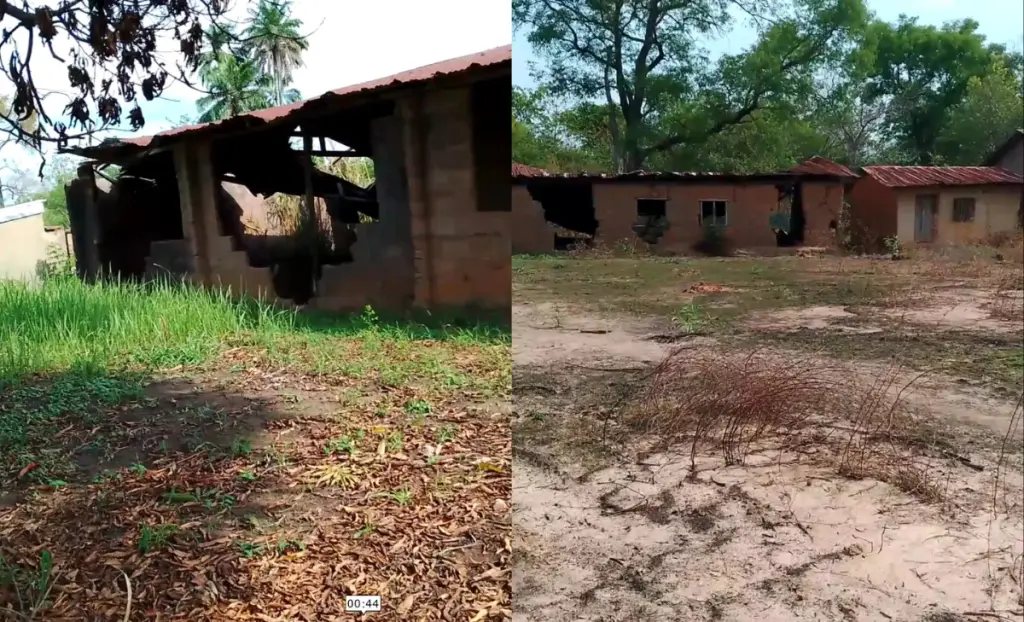
    Once nurturing grounds that shaped some of Nigeria state’s finest doctors, lawyers, journalists and professionals, these schools have now deteriorated into crumbling structures, deserted by both teachers and pupils, now overrun by reptiles.

    Years of government neglect, insecurity and policy setbacks have left the schools in ruins, with classrooms sitting empty, walls fallen apart, roofs blown off and only a handful of pupils still enrolled.

    A recent tour of the community by Dailypost revealed the alarming extent of the decay, raising urgent questions about the future of public education in Owukpa.

    One of the most disturbing sights on the tour was at LGEA Primary School Ikwo, a village in Itabono that borders Enugu State.

    Established in the early 1970s, this once-thriving educational institution has deteriorated beyond recognition.

    The school is now in a state of complete disrepair.

    The buildings have collapsed, classrooms are without chairs and the walls have crumbled to dust.

    The school currently has no single pupil, only snakes and lizards now roam freely through the abandoned structure.

    The decay is not confined to Ikwo alone. At LGEA Primary School Ekere Owukpa, the situation is even worse.

    The school, founded in the 1950s, which once played a central role in educating the community, now faces a severe shortage of both teachers and pupils.

    The classrooms are now largely empty, with many parents opting to send their children to private schools instead.

    Clement ‘All-Rounder’ Ocheme, a former headteacher and education supervisor from Ekere Owukpa, said that the lack of interest in public schools has been a major contributing factor.

    “Parents no longer see the value in public education. They are pulling their children out and enrolling them in private schools, which they believe offer better opportunities,” Ocheme told reporter.

    Chief John Ameh Onuh, a veteran teacher and the traditional ruler of Agbogiri Clan, echoed similar concerns.

    He recalled the days in the 1960s-1990s when the schools in the region were bustling with pupils.

    “We had over 500 students enrolled at that time, but now, the population has dwindled to less than 20,” Onuh noted with a sense of despair.

    “We need the government to take action before these schools vanish entirely.

    “There are hardly any teachers left. Since many of us retired, the government hasn’t recruited replacements and that has left a huge gap,” Chief Onuh lamented.

    “Most parents are no longer willing to gamble with their children’s future, so they’re turning to private schools. Take Ekere, for example, we have only one teacher in the entire school. How can one person possibly handle six different classes? It’s a heartbreaking reality. Public primary schools in our communities are slowly dying.”

    Similarly, at LGEA Primary School Achi Ugbugbu, the situation is particularly dire.

    The school, which once produced countless individuals who went on to make a mark in various fields, today has structures that are falling apart, classrooms that are bare, and not a single teacher to be found.

    Edwin ‘Dandy’ Apochi, a teacher who served in the school for decades, described the situation as “pathetic.”

    He said for years now, the school has had no teachers and its future is now uncertain.

    Sadly, LGEA Primary School Udaburu has also fallen into a state of neglect, with just two teachers left and only three pupils enrolled, most of whom barely show up for classes.

    Godwin Adikwu, one of the school’s teachers employed by the community, is responsible for all the classes, a daunting task given the school’s declining enrollment.

    Many parents have since pulled their children out, unable to tolerate the lack of proper facilities or teachers.

    Speaking with reporter, the Clan Head of Udaburu, Chief Simon Idoko, said the situation is beyond the community’s control and requires urgent government intervention.

    “We have done all we can as a people, raised funds, employed volunteer teachers, even provided teaching materials from our pockets, but there’s only so much a community can do.

    “The schools are collapsing, both physically and structurally. Our children are being left behind, and that is something no society can afford.

    “This is not just a local issue anymore; it is a state emergency. If the government continues to look away, we will wake up one day to find that public primary education in Owukpa no longer exists,” he lamented.

    Barrister David Mike Agada, a legal practitioner and proud alumnus of LGEA Primary School Udaburu, also decried the current state of his alma mater.

    Agada, who graduated from the school in 1993, recalled the vibrancy and overpopulation that once defined the institution.

    “Back then, the classrooms were so full that some pupils were sent home simply because there wasn’t enough space to accommodate everyone,” he reminisced.

    “Imagine being told you were too small to be in school because the place was bursting with pupils. That’s how vibrant the school used to be.

    “It’s heartbreaking to return to a place that once shaped the future of so many, only to find it in ruins.

    “It’s not just a building falling apart; it’s an entire generation’s opportunity being lost. Government silence is no longer just neglect; it’s a betrayal,” Agada added.

    The situation has only worsened since the retirement of key education figures in the area.

    Chief Simon Agada, former Head of School Services in Ogbadibo LGA, who is a native of Udaburu, voiced his frustration with the government’s neglect of public education in the region.

    “Since my wife, who was the headteacher of LGEA Primary School Udaburu, retired, the school has been left in the hands of no one,” Agada explained.

    “The people we have now are what we call gatecrashers; most of them lack proper training.

    “The government is not helping matters at all. The last time there was a meaningful recruitment of teachers was during George Akume’s tenure as governor back in 2007.

    “Since then, successive administrations have ignored the plight of government schools, not just in Owukpa, but across the entire Idoma land and Benue State at large.

    “The government has failed to provide the necessary support to keep these schools operational,” he lamented.

    In Ejule, another community within Owukpa, the public school faces similar challenges.

    The school, which once produced some of the region’s best medical doctors and lawyers, is now largely abandoned.

    “The lack of attention from the government is appalling,” said Mr Benedict Abutu, Education Secretary of Ogbadibo.

    Mr Augustine Akor Ameh, a former headteacher in the school, said, “One of our major challenges is the lack of basic teaching materials. For instance, many schools don’t even have chairs or desks, not for the pupils and not even for the teachers.

    “Moreover, there has been no clear effort or commitment from the government to support or motivate teachers.

    “Right now, private schools are taking over because they provide better learning environments and parents are withdrawing their children from public schools in large numbers.

    “Imagine, only two teachers are managing an entire primary school with six classes. That’s unacceptable. The government needs to take urgent action.”

    Wesley Primary School in Okpudu, the first primary school in Owukpa community, is yet another victim of this neglect.

    With its roofs blown off and classrooms empty, the school stands as a shadow of its former self.

    The school has no teacher with less than 10 pupils

    The situation in Atamaka, where insecurity has taken a heavy toll, is perhaps the most troubling.

    Last year, six young men were kidnapped along the Atamaka-Ugbugbu road, causing the only teacher at the LGEA Primary School Atamaka to flee.

    Today, the school stands vacant and parents are left with no choice but to seek alternatives for their children.

    “The situation is dire,” said a community leader.

    “We need urgent intervention from the government to ensure the safety of our children and teachers,” he added.

    Other schools, such as LGEA Primary School Ai-Fam (St Michael), LGEA Priamry School Ai-Ujah, LGEA Primary School Ikpochi and LGEA Primary School Ai-Odu, are also in a state of disrepair, lacking teachers and proper facilities.

    The situation has been worsened by the policies of the current state government.

    In 2022, the Benue State Government under then-Governor Samuel Ortom recruited a number of civil servants, including teachers.

    However, shortly after assuming office, Governor Hyacinth Alia reversed the move, ordering the dismissal of those employed during Ortom’s final months in office, among them, the newly recruited teachers.

    The publication learnt that the last time the state government recruited teachers in large numbers was in 2007, during the first tenure of then-Governor George Akume.

    Nearly two decades later, many of those teachers have either retired or died, with no replacements hired, leaving a devastating vacuum in the public education system.

    When Dailypost contacted the office of Grace Adagba, Chairperson of the Benue State Universal Basic Education Board (SUBEB), which oversees public primary schools in the state, an official requested a call back in one hour.

    Also, when the reporter visited the High Level, Makurdi office of the board, an official redirected him to the Ministry of Education and Knowledge Management, stating that the ministry was in a better position to respond to the development.

    “This matter you are talking about falls under the purview of the Ministry of Education and Knowledge Management.

    “They’re better positioned to provide detailed responses,” the official who craved anonymity said.

    However, repeated attempts to reach the Commissioner, Frederick Ikyaan, were unsuccessful, as calls were ignored and text messages went unanswered.

    Meanwhile, when reached for reaction, Mr Emmanuel Agese, information officer, SUBEB, denied knowledge of such dire situation in Owukpa.

    “There is no situation of dilapidated primary schools in Owukpa which has made pupils attend schools in neighboring states to the knowledge of SUBEB.

    “If there is such a situation then the head teachers of such schools have not reported the conditions of such schools to the executive chairman of SUBEB, Grace Adagba who is very proactive in responding to such cases.

    “The head teacher may not have reported the exodus of pupils from their schools because they could be benefiting from such an unfortunate incident.

    “The Executive Chairman is committed to the positive development of primary education in the state as can be seen in the uncommon transformation of the sector like the modern structures in our schools.

    “The head teachers should endeavor to promptly report such a situation to the appropriate authority if at all there is any.”

  • Why Nigerians In Australia Don’t Travel Back Home

    Why Nigerians In Australia Don’t Travel Back Home

    President of the American Academy of Optometry, African Chapter, Dr Uchechukwu Osuagwu, speaks with BIODUN BUSARI on his life journey from Nigeria to Australia

    How would you describe your growing up?

    I grew up in Aba, in the South-East of Nigeria. My parents and younger siblings are still there. After completing my primary education, I moved to Port Harcourt for my secondary education. Then, I travelled again to pursue my university education at Abia State University. After my internship in Akwa Ibom State, I went to Taraba State for my National Youth Service Corps programme. I relocated to Lagos to start working after the service year.

    Growing up in Nigeria was interesting for me, and it was where I learnt persistence and resilience. I grew up in an environment where giving up wasn’t an option. My parents were middle-class—my dad was a businessman, and my mum was a teacher. My family consists of five boys and a girl. I remember that my dad could only afford to buy a new pair of shoes when we were on school holidays. He wanted to ensure that we all went to school.

    When I returned from school, I remember the first pair of shoes I bought for him. He said it was the first time he had worn new shoes in the last three years. Another thing that helped me was music—I played music for quite a while. During my university days, I was playing professionally. I performed with some big names in the music industry in the East. I travelled to different places on weekends to sustain myself financially, so I wouldn’t depend too much on my parents. It was all a struggle, but those moments built me. My siblings and I are products of ancient values.

    What inspired you to study optometry?

    I didn’t dream of studying optometry initially. I had always wanted to be a medical doctor. My dad felt the same way. However, I found it difficult to gain admission into medical school despite my brilliance. I wrote my first exam and didn’t get the desired points. I took the second exam and still didn’t meet the cut-off mark for medicine, so I was offered botany.

    After one year in botany, if I had a good GPA, I could switch to medicine. While in my first year studying botany, I was able to get someone to help me switch to optometry before the year ended. That’s how my journey in optometry started. I fell in love with the course, but my dad still pushed me to study medicine. I told him I liked optometry, and the rest is history.

    Why did you choose to relocate to Australia?

    I tell people that any place outside Nigeria is fine because you still have to board a plane. Australia was not a destination many of us considered while growing up. What happened was that I first travelled to Saudi Arabia, where I spent about five years. I worked in a private clinic, then at a university, where I started working as a research assistant. During that time, I enrolled in a master’s programme in the United Kingdom, which I completed at Aston University.

    From that point, I started thinking about what I could do after my master’s. I was writing papers, publishing, and teaching. I had very good clinical skills and academic knowledge. I later got a scholarship in the UK to pursue a PhD, but it was only partially funded. After discussing it with my wife, we decided it wasn’t a good move.

    Then I got a fully funded PhD scholarship in Australia. I had already paid part of the PhD fee in the UK, which I lost because the school said I had pledged to study. We had a friend in Australia, and when we told him about the opportunity, he convinced us that it was a great place. We thought it through and moved. I’ve never regretted it for one day because this place is so peaceful. There are opportunities here, the education system is of good quality, and the people are very kind. It’s a great place to raise a family in a decent environment.

    What do you have to say about the myth that Nigerians who relocate to Australia forget to come back?

    It’s not a myth, it is real. It’s not that you don’t want to come back, but I’ll give you an instance.

    If you want to travel from Australia to Nigeria on a return ticket, you’d be looking at about $8,000. That’s just for the ticket. Whereas, if you’re travelling from the UK to Nigeria, you may need about £190 for a ticket, depending on the time of booking. But here in Australia, it’s a decision you have to consider carefully. The distance is quite far, as you could have cumulative flight hours of 36 to 48 hours, depending on the route you take.

    It’s not just the travel to Nigeria. Beyond the flight ticket, you’d also need to budget around £10,000 to £15,000 for family expenses. Every Nigerian here wants to go back home at least once in a while, but again, the cost is substantial. If you have to save close to $20,000 or $30,000 and spend it on just one trip, that’s a huge commitment.

    Added to that, our country isn’t treating us well. If Nigeria were getting better and people were seeing opportunities and a future there, they would come back. I understand how it is, it’s not a myth, it’s a reality that people weigh carefully.

    What are the first-hand opportunities for the Nigerian community in Australia?

    I think there is a wide range of skill sets for Nigerians to explore in Australia. The country has diverse needs and is looking for professionals in various fields. They are in need of doctors, nurses, car painters, electricians, automobile engineers, mechanics, chefs, physiotherapists, and radiologists. If certain requirements are met, such as age and English language proficiency, then anyone can apply. So, it’s open to people from all over the world.

    Also, professionals in IT and healthcare are in high demand, as well as those in managerial roles like business analysts and accountants.

    What is the real reason behind staff shortages?

    Australia has a massive landmass. As a result, there are many unoccupied or remote areas, and people live in locations with limited access to healthcare. They’re finding it difficult to service these areas effectively.

    Beyond that, the population is ageing, and manpower is being lost as people retire. So, there’s a need for younger people to fill the workforce gap. That’s one of the main challenges in Australia.

    Another issue is specialisation. Many migrants come with PhDs to work as lecturers and contribute to knowledge development. Meanwhile, many locals are already well-off. Some receive government support even without working, so they may not have the same drive as migrants. And as the country continues to grow, migration numbers are increasing.

    How do Nigerians cope with snakes and reptiles that visit their homes?

    I think every environment has its peculiarities. It’s part of living in a particular society. So, when you move here, you know what to expect. You have to adjust your mindset and behaviour to suit the community.

    Here, there are crocodiles, snakes, and scorpions. But since 2014, when I moved here, I’ve never seen any in my home, though I have seen them outside. It depends on where you live. Some areas have more snakes than others.

    Interestingly, some reptiles here are kept as pets. Some people build small enclosures to keep pythons. However, brown snakes are dangerous. If you see a snake, you don’t kill it, you call the snake catcher. They’ll come and return it to the bush. They don’t even kill them because snakes play a role in the ecosystem; they help control other animals that may be more harmful than they are. That’s how they preserve the environment.

    Snakes are around, but none of my family members has ever had a snake bite. Some people have had encounters, but it’s not as bad as people say. The weather here is also a factor. When it’s hot, snakes seek cooler spots, which is how they sometimes enter homes.