Category: Business

  • 8 Ways To Make Money On WhatsApp In 2025

    8 Ways To Make Money On WhatsApp In 2025

    In 2025, WhatsApp is no longer just a messaging app — it has become a powerful tool for earning income if you know how to use it strategically. With over 2 billion users worldwide, including millions in Africa, WhatsApp gives you direct access to people who trust you — and that’s where the real money lies.

    Whether you’re a student, small business owner, or content creator, here are 8 proven ways to make money using WhatsApp this year.


    1. Sell Products via WhatsApp Status

    The WhatsApp Status feature is one of the most underrated tools for marketing.

    How it works:

    • Post pictures/videos of your products daily
    • Include clear descriptions and pricing
    • Add a call-to-action (e.g., “DM to order” or “Limited stock available”)

    You can sell fashion items, perfumes, gadgets, food, skincare, and even digital products.

    Tip: Use eye-catching images and post during peak hours (7–9 am, 6–9 pm).


    2. Promote Affiliate Links

    Affiliate marketing on WhatsApp works well because people tend to trust recommendations from contacts they know.

    Steps:

    • Sign up for affiliate programs (like Jumia, Expertnaire, Amazon, ClickBank)
    • Get your unique referral links
    • Share product reviews, testimonies, or short descriptions with the links
    • Earn a commission for every sale made through your link

    Be honest in your recommendations and avoid spamming.


    3. Create and Sell Ebooks or Courses

    If you’re skilled in anything — writing, cooking, fashion, digital marketing, graphics, or even language tutoring — you can create a short ebook or video course and sell it directly to your WhatsApp contacts or groups.

    People are willing to pay for knowledge that helps them grow.

    Tip: Use free tools like Canva (for ebooks) and CapCut (for videos) to create quality content.


    4. WhatsApp TV (Broadcast List Marketing)

    Just like YouTube has TV channels, WhatsApp TV is becoming a trend. It means growing a loyal broadcast list where you share daily content — news, job updates, motivation, gossip, or business tips — and monetize it.

    Monetization comes from:

    • Sponsored ads (businesses pay you to advertise)
    • Selling your own products
    • Charging users for premium content access

    Grow your list consistently by offering free value (e.g., “Join my daily updates for free job alerts”).


    5. Offer Paid Mentorship or Consultation

    If you’re an expert in a field — business, tech, career, or health — people are willing to pay to learn from you.

    Set up:

    • A free group for engagement
    • A VIP or paid mentorship group with a one-time or monthly fee

    You can offer private consulting via chats or voice notes. WhatsApp’s privacy and directness make it ideal for such services.


    6. Dropshipping Without a Website

    With WhatsApp, you can run a zero-capital dropshipping business. Here’s how:

    • Partner with suppliers (from Instagram or local markets)
    • Get product pictures and prices
    • Add your markup and promote on WhatsApp
    • Collect orders and payment from your contacts
    • Deliver through logistics partners or the supplier directly

    You don’t need inventory — just smart marketing and trust.


    7. Drive Traffic to Your Blog, YouTube, or Online Store

    WhatsApp can help increase traffic to other platforms where you already monetize — like a blog (with AdSense), YouTube channel, or Shopify store.

    How:

    • Share engaging headlines, teaser videos, or story excerpts
    • Include clickable links to your site or channel
    • Encourage shares for wider reach

    The more clicks you get, the more money you make on your monetized platform.


    8. Create a Paid WhatsApp Group

    This is one of the fastest ways to earn from WhatsApp in 2025. Simply create a premium group and charge members to join.

    Ideas:

    • Job updates
    • Crypto/Forex signals
    • Business coaching
    • Prayer/faith-based groups
    • Daily money tips or investment updates

    Be sure to deliver value regularly to maintain trust and retention.

    WhatsApp is no longer just a chat app — it’s a business tool in your pocket. With zero startup cost, you can start small and scale big. All you need is:

    • A good smartphone
    • Consistency
    • Creativity
    • A value-driven mindset

    If you treat your WhatsApp like a business, it will pay you like one.

  • How to Monetize Your Facebook in 2025

    How to Monetize Your Facebook in 2025

    In 2025, Facebook remains one of the most powerful platforms for building influence and making money online. Whether you’re using a personal profile, business page, or content creator account, Facebook now offers more monetization tools than ever before — and the good news is, you don’t need to be a celebrity or influencer to benefit.

    From short videos to e-commerce and paid content, this guide will show you exactly how to monetize your Facebook presence in 2025, step-by-step.

    1. Enable Professional Mode on Your Profile

    In 2025, you no longer need a separate business page to make money — your personal Facebook profile can now be monetized using Professional Mode.

    Benefits of Professional Mode:

    • Monetize your Reels
    • Get access to bonuses and insights
    • Qualify for Stars (fan support)
    • Appear in brand collaborations

    To activate it:

    • Go to your profile
    • Tap the three-dot menu
    • Select “Turn on Professional Mode”

    Once activated, start creating engaging content consistently to build your audience.

    2. Monetize Your Facebook Page With In-Stream Ads

    If you prefer using a page (especially for businesses or niches), Facebook In-Stream Ads allow you to earn money from video content.

    Requirements (as of 2025):

    • 5,000 followers
    • 60,000 total minutes viewed in the last 60 days
    • At least 5 active video uploads
    • Meet Facebook’s Monetization Policies

    When eligible, ads will automatically play during your videos, and Facebook pays based on views and engagement.

    3. Get Paid Through Facebook Reels Bonus Program

    Short-form video is dominating social media — and Facebook Reels is a major money-maker.

    By joining the Reels Bonus Program, creators can earn monthly payouts based on the performance of their Reels.

    Tips to Grow Fast:

    • Keep your videos under 60 seconds
    • Post consistently (3–5 Reels weekly)
    • Use trending music and hashtags
    • Stay original — avoid reposting from TikTok or Instagram

    Both pages and professional profiles are eligible.

    4. Earn Through Facebook Stars

    Facebook Stars is a fan support feature that allows your followers to show appreciation by sending you virtual gifts during Live videos or on Reels.

    Each Star is worth money, and Facebook pays you based on how many you collect.

    To start:

    • Go Live regularly or post engaging Reels
    • Interact with your audience
    • Encourage them to send Stars as support

    5. Partner With Brands and Businesses (Sponsorship Deals)

    Once you build a solid following and engagement rate, you can start earning through brand collaborations.

    Join Facebook’s Brand Collabs Manager to connect with companies looking to sponsor posts or videos.

    What brands look for:

    • Consistent content
    • Niche audience (e.g., health, tech, fashion)
    • High engagement (likes, shares, comments)
    • Professionalism in communication

    Even micro-influencers can earn between $100–$500 per post.

    6. Promote Affiliate Products

    Affiliate marketing is another great way to monetize your Facebook in 2025.

    How it works:

    • Sign up for affiliate programs (e.g., Jumia, Konga, Amazon, Expertnaire)
    • Share your unique product link in posts or stories
    • Earn a commission when someone buys through your link

    Create helpful content like reviews, how-tos, and recommendations to drive clicks naturally.

    7. Sell Digital or Physical Products

    Facebook has become a powerful e-commerce tool. You can sell:

    • Online courses
    • Ebooks
    • Skincare products
    • Fashion items
    • Gadgets
    • Handmade crafts

    You don’t need a website. Use Facebook Shops, Marketplace, or post directly in groups and your status.

    8. Create a Paid Facebook Group

    If you offer premium knowledge or services, set up a paid membership group.

    Examples:

    • Investment insights
    • Business coaching
    • Job and scholarship updates
    • Prayer or faith-based discussions
    • Learning communities (e.g., graphics, writing, coding)

    Charge a one-time or monthly access fee and provide ongoing value.

    9. Drive Traffic to Other Monetized Platforms

    Facebook can also help you grow external income sources.

    Link it to your:

    • Blog (with AdSense or affiliate links)
    • YouTube channel
    • Instagram shop
    • Telegram channel
    • Email list

    Post engaging content on Facebook with links to your other platforms.

    Final Thoughts

    In 2025, Facebook is more than a social media app — it’s a full-blown digital business platform. The key is to focus on:

    • Authenticity: Be real with your audience
    • Consistency: Show up and post regularly
    • Value: Share what helps, inspires, or entertains

    Start with one monetization method and grow from there. Whether you’re a student, entrepreneur, or creator, Facebook can pay you — if you use it with purpose.

  • 10 Cheapest Markets to Get Foods in Nigeria

    10 Cheapest Markets to Get Foods in Nigeria

    Food is a basic necessity, and in Nigeria where the cost of living continues to rise, many people are constantly looking for ways to stretch their budget. One of the smartest ways to save money is by knowing where to buy affordable food items. While supermarkets and retail stores are convenient, traditional markets still offer the best deals for most foodstuffs.

    In this article, we’ll explore the 10 cheapest markets to get food in Nigeria. These markets are known for offering quality produce at relatively lower prices. Whether you’re buying in bulk or just for your household, these markets can help you save money without compromising on quality.

    1. Mile 12 Market – Lagos

    Mile 12 Market in Lagos is one of the largest and cheapest food markets in Nigeria. It is particularly famous for wholesale prices on fruits, vegetables, and food ingredients like pepper, tomatoes, onions, and yam. Many retailers and restaurant owners source their food items here due to the affordability.

    While the market can be crowded and busy, the prices make it worth it. With proper bargaining, you can get food at nearly half the price compared to retail shops in urban areas.

    2. Ogbete Main Market – Enugu

    Ogbete Market is the largest market in Enugu State and one of the most organized in Southeast Nigeria. The market caters to people from across the state and nearby towns. It offers a wide variety of foodstuffs including rice, beans, garri, vegetables, and spices at cheaper rates than supermarkets.

    Traders here are used to bulk buyers, which means that if you’re purchasing in large quantities, you’re likely to get even better deals.

    3. Bodija Market – Ibadan

    Located in the heart of Ibadan, Oyo State, Bodija Market is a haven for food buyers. It’s known for its vast selection of grains, meat, fish, and fresh farm produce at affordable prices. It serves as a major hub for farmers and suppliers from the North and Middle Belt.

    The market operates daily, and the prices are particularly lower during peak harvest seasons when there’s an abundance of food supply.

    4. Dawanau Market – Kano

    Dawanau Market in Kano is the largest grain market in West Africa. It is a go-to destination for wholesale buyers looking for maize, millet, rice, guinea corn, beans, and other cereals. Prices in Dawanau are incredibly competitive due to its proximity to agricultural producing areas.

    If you’re looking to stock up on non-perishable foods for personal use or resale, Dawanau is a great option.

    5. Oil Mill Market – Port Harcourt

    Oil Mill Market is one of the busiest and cheapest markets in Rivers State. Open primarily on Wednesdays, the market offers food items at discounted rates because sellers come from rural areas and farmlands directly to sell their goods.

    Items like garri, yam, fish, vegetables, crayfish, and palm oil are significantly cheaper here compared to urban Port Harcourt stores.

    6. Zaki Biam Yam Market – Benue

    Zaki Biam in Benue State is widely recognized as the biggest yam market in Nigeria. Benue is known as the “food basket of the nation,” and this market proves it. Traders from all over Nigeria buy yam in bulk from here at unbeatable prices.

    Even though it’s more common for wholesalers, individuals can also take advantage of the cheap prices, especially during the harvest season between August and November.

    7. Garki Ultra-Modern Market – Abuja

    While Abuja is known for its high cost of living, Garki Market stands out for its affordability. Compared to other markets in the FCT, Garki offers competitive prices on fruits, vegetables, grains, and even meat and poultry.

    Smart shoppers in Abuja know that going to Garki Market rather than supermarkets or malls helps them save a lot on monthly food expenses.

    8. Ogige Market – Nsukka

    Ogige Market is a prominent market in Nsukka, Enugu State. It caters largely to university students and local residents, which makes the sellers very price-conscious. Because of this, many foodstuffs like rice, beans, pepper, okra, and maize are sold at lower rates.

    If you’re living around a university town, you can often find markets like Ogige where the prices are tailored to meet the needs of low-income earners and students.

    9. Relief Market – Owerri

    Relief Market is one of the most affordable markets in Imo State. With a large selection of local and imported food items, buyers can access fresh produce and dry foods at low prices. The market is well-organized and offers a range of choices, from organic farm produce to bulk grains and condiments.

    Early morning shopping at Relief Market usually gives the best prices and freshest food.

    10. Dugbe Market – Ibadan

    Dugbe is another popular market in Ibadan known for food affordability. Although it’s slightly more commercial than Bodija, it offers amazing deals on perishable and non-perishable items. Many people shop here for weekly and monthly food stock-ups due to the pocket-friendly prices.

    From locally processed palm oil to garri and vegetables, Dugbe Market is reliable for quality and affordability.

    Tips for Buying Food Cheaply in Nigerian Markets

    • Go early: Prices are lower in the morning when sellers are eager to make early sales.
    • Buy in bulk: The more you buy, the more you save per unit.
    • Negotiate: Bargaining is expected, and it can save you a lot.
    • Avoid festive periods: Prices usually go up around Christmas, Easter, and Ramadan.
    • Bring your own bags: Reduce extra costs by coming prepared with your own packaging.

    Conclusion

    With food prices rising nationwide, knowing the cheapest markets to buy from is an advantage every Nigerian should use. Whether you live in Lagos, Enugu, Kano, or Port Harcourt, there’s a market that offers cheaper prices for your basic food needs.

    By exploring any of the 10 markets listed above, you can reduce your food expenses and stretch your budget further without compromising quality. Be smart, shop local, and save more.

  • How To Turn Your House Compound Into a Money-Making Farm

    How To Turn Your House Compound Into a Money-Making Farm


    Have you ever looked at the empty space in your compound and wondered what you could do with it? You’re not alone. Many homeowners have unused land that could generate real income. With a little planning and effort, you can turn your house compound into a thriving, money-making farm.

    This guide will show you exactly how to do that, even if you have zero farming experience. Let’s dive in.

    Why Farming in Your Compound Makes Sense

    Urban farming is no longer just a trend — it’s becoming a necessity. Food prices are going up, and many people are turning to self-sufficiency. But farming isn’t just about survival; it’s also a business opportunity.

    Whether you live in the city, a suburb, or a rural area, your backyard can become a profitable venture.

    Here’s how you can make that transformation.


    Step 1: Assess Your Space

    Before you begin, look around your compound.

    • How much space do you have?
    • Is there enough sunlight?
    • What is the quality of your soil?
    • Is water easily accessible?

    These factors will determine what type of farming will thrive in your environment. Even a 10×10 feet space can be put to great use.

    Tip: Don’t be discouraged if your space is small. You can use pots, containers, or vertical farming systems.


    Step 2: Choose the Right Farming Method

    There are different types of farming you can practice depending on your space, time, and interest.

    1. Vegetable Farming

    This is one of the easiest ways to start. Popular vegetables like tomatoes, peppers, lettuce, spinach, and okra grow well in small areas.

    They don’t require heavy investment and mature quickly, so you start earning in a short time.

    2. Poultry Farming

    With just a small cage and a clean environment, you can rear chickens for eggs or meat. Local demand for fresh eggs and chickens is always high.

    Start small with 10-20 birds and scale up as you gain experience.

    3. Snail Farming

    Snail farming requires minimal space and offers high returns. It’s quiet, doesn’t smell, and has huge market potential.

    Snails reproduce fast, and there’s always demand in both local and export markets.

    4. Herb Farming

    Growing herbs like scent leaves, mint, basil, thyme, and lemongrass can be very profitable.

    They’re in demand by restaurants, markets, and herbal medicine producers.


    Step 3: Create a Farming Plan

    Just like any business, farming needs a plan.

    Ask yourself:

    • What will you plant or raise?
    • How much will it cost to start?
    • Where will you sell your produce?
    • How long will it take before you start earning?

    A simple spreadsheet or notebook can help you organize your thoughts and track your progress.

    Planning helps you avoid waste and ensures you make informed decisions.


    Step 4: Start Small and Grow

    Many people make the mistake of starting too big.

    You don’t need to turn the whole compound into a farm overnight. Start with a small corner, gain confidence, and expand.

    Experiment with different crops or livestock until you find what works best for you.

    Small consistent steps lead to long-term success.


    Step 5: Maximize Productivity

    Once your farm is up and running, it’s time to increase your yield.

    Here are a few tips:

    • Use organic compost or animal manure to enrich your soil.
    • Water your plants early in the morning or late evening to reduce evaporation.
    • Practice crop rotation to maintain soil health.
    • Keep your environment clean to prevent pests and diseases.

    Consistency is key. Farming rewards those who stick with it.


    Step 6: Sell and Make Money

    Now the exciting part — making money from your farm.

    Here are ways to sell your farm products:

    1. Local Market

    Visit your local markets or sell to market women. Fresh, home-grown produce sells faster than imported ones.

    2. Door-to-Door Sales

    Offer farm-fresh products to neighbors and colleagues. You’d be surprised how many people would prefer buying from someone they trust.

    3. Online Sales

    Take pictures of your produce and post on WhatsApp, Facebook, or Instagram. Many customers want fresh farm produce delivered to their homes.

    4. B2B Sales

    Supply small restaurants, food vendors, or supermarkets in your area. This can become a stable source of income.


    Bonus Ideas to Boost Income

    If you’re looking for more ways to make money from your compound farm, try these:

    1. Training and Consultancy

    Once you gain some experience, people will come to learn from you. You can offer training for a fee or start a YouTube channel.

    2. Seedling Sales

    Grow seedlings and sell to beginners. Many people want to start farming but don’t know where to get quality seeds.

    3. Manure and Compost Sales

    Convert kitchen waste and farm waste into compost and sell to other home farmers.

    Mistakes to Avoid

    To ensure success, avoid these common pitfalls:

    • Don’t start without a plan.
    • Don’t ignore proper hygiene and cleanliness.
    • Avoid using harmful chemicals.
    • Don’t overwater or underwater your plants.
    • Don’t give up too soon — farming takes time.

    Learn as you grow. Every mistake is a lesson.

    You don’t need acres of land to become a farmer. Your compound is enough.

    With the right mindset, a little hard work, and consistency, you can turn your home into a green, income-generating machine.

    It’s time to stop letting that space go to waste. Start small, dream big, and grow your way to financial freedom.

  • 9 ways to reduce data consumption on your mobile phone

    9 ways to reduce data consumption on your mobile phone

    These range from simple phone settings adjustments to more advanced techniques, such as choosing the cheapest data subscription plans.

    Mobile data costs continue to increase as demand for data-intensive activities such as social media, streaming, and gaming rises. As a result, mobile data consumption has increased dramatically, and many users find it challenging to manage their data usage effectively.

    Fortunately, there are several strategies for reducing data consumption on mobile phones, with or without unlimited data plans. These range from simple adjustments to phone settings, more advanced techniques, and choosing the cheapest data subscription plans. This article outlines seven effective ways to reduce data consumption on your mobile phone.

    1. Turn off Background Data

    Many apps run in the background and consume data even when not actively used. To reduce data consumption on your mobile phone, disable background data for such apps when you aren’t using them. To do this, go to your phone’s settings, select “Data usage,” and toggle off “Background data” for these apps.

    2. Turn Off Auto-Update

    While convenient, automatic updates can use up mobile data, especially if you have many apps. You can disable this feature by going to your phone’s settings, selecting “Apps,” and turning off “Auto-update” for these apps.

    3. Limit Streaming Activities

    Streaming media over mobile data consumes a substantial amount of data. To reduce data usage and avoid extra costs, store media on your device and download content when connected to Wi-Fi. Most streaming apps also have adjustable resolution settings.

    Opt for lower resolutions or download content over Wi-Fi for offline viewing to save data, prevent additional charges, and extend your phone’s battery life. Remember to close or delete video streaming apps when they’re not in use.

    4. Use Wi-Fi Networks

    To reduce mobile data consumption, connect to free Wi-Fi networks in public areas like cafes, restaurants, and offices whenever possible. Additionally, postpone using data-heavy apps like YouTube until you have a Wi-Fi connection.

    5. Reduce Data Usage for Social Media

    Data-intensive features like pictures and videos can make social media apps like WhatsApp, Facebook, Instagram, and Twitter consume a lot of mobile data. To reduce data usage, consider limiting your time on these apps or adjusting settings such as turning off media auto-download, auto-play videos, and using data-saving modes.

    6. Disable Cloud Backups on Mobile Data

    Cloud storage apps like Google Drive, Dropbox, and Google Photos can use up your mobile data by backing up your phone’s data to the cloud. To prevent this, turn off the backup option in these apps when you’re using mobile data.

    For example, in Google Drive, you can do this by opening the app, selecting the hamburger menu (three horizontal lines), choosing “Settings,” and enabling “Transfer Files Only Over Wi-Fi.” In Google Photos, open the app, select your profile picture, choose Photos Settings > Backup, select “Mobile Data Usage,” and tap “No Data.”

    7. Monitor Your Data Usage

    Regularly check your data usage to identify areas for change. For older Android versions, go to Settings > Network & Internet > SIM card & mobile network > Data usage. For newer Android versions (up to Android 12), go to Settings > Network & Internet > Mobile network > App data usage.

    You can also download data usage tracker apps, such as My Data Manager, Data Usage Monitor for Android users, and Data Manager for iOS users, to monitor your data consumption.

    8. Use Data-Saving Apps

    Data-saving browsers like Opera Mini, UC Browser, and Android Data Saver compress data and reduce consumption. Additionally, apps like GlassWire and Data Usage Monitor can track your data usage and help you identify which apps consume the most data.

    9. Embrace Offline Accessibility

    Enable offline access for apps that support it, such as Google Docs, where you can access and work on your documents offline. This lets you view important content without an internet connection, reducing data usage.

    Setting up any of the suggested tips just takes a few minutes, and you’ll be good to go! Doing this now helps keep your mobile data in check, so you don’t get any surprise charges or experience service interruption down the line.

  • NDLEA arrests Angolan businessman

    NDLEA arrests Angolan businessman


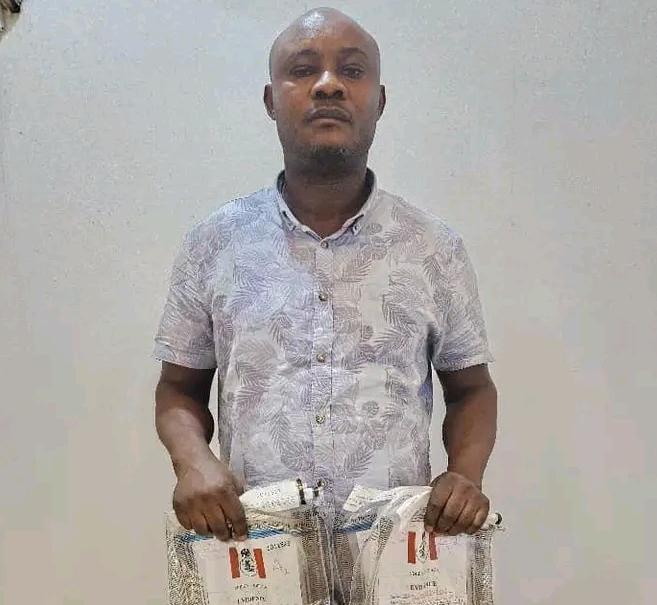
    Operatives of the National Drug Law Enforcement Agency (NDLEA) have arrested a 42-year-old Angolan businessman, Mbala Abuba, for allegedly attempting to smuggle cocaine to Istanbul, Turkey.

    Abuba, a native of Zaire Province in Angola, was apprehended on Tuesday, February 25, 2025, at the screening point of Mallam Aminu Kano International Airport while trying to board Egypt Air flight MS 880 to Istanbul via Cairo.

    A body scan confirmed he had ingested illicit drugs, leading to his placement under excretion observation. Over seven excretions, he expelled 120 pellets of cocaine, with a total weight of 1.829 kilograms.

    Abuba admitted he was previously involved in the township delivery business in Angola before turning to drug trafficking.

    This was contained in a post on the agency’s X handle on Sunday, March 2.

    The post partly reads: “Operatives of the National Drug Law Enforcement Agency, NDLEA, have arrested a 42-year-old Angolan businessman Mbala Dajou Abuba at the Mallam Aminu Kano International Airport (MAKIA), Kano for attempting to traffic a large consignment of cocaine, which he ingested, to Istanbul Turkey.

    “Abuba, who is from the Zaire province in Angola, was arrested on Tuesday, 25th February 2025, at the screening point of the Kano airport while trying to board Egypt Air flight MS 880 to Istanbul, Turkey, via Cairo. After his body scan result confirmed he ingested an illicit drug, he was thereafter placed under excretion observation, during which he expelled 120 pellets of cocaine weighing 1.829 kilograms in seven excretions. In his statement, the suspect claimed he was into the business of township delivery services in Angola before delving into the illicit drug trade.”


  • Multichoice increases DStv, GOtv subscription prices

    Multichoice increases DStv, GOtv subscription prices


    Multichoice is set to increase the prices of its DStv and GOtv packages effective from March 1, 2025.

    This was disclosed in a statement to its customers on Monday.

    The statement titled, “Price adjustments for DStv and GOtv packages,” read, “Dear Customer, please note that effective 1 March 2025, there will be a price adjustment on all DStv packages.

    “This is to enable us to continue to offer our customers world-class homegrown and international content, delivered through the best technology.”

    This is coming almost one year after its last price review.

    According to the company, its latest price review will hike the DStv Compact bouquet from N15,700 to N19,000, the Compact Plus to N30,000, and the Premium subscription to N44,500.

    Similarly, GOtv customers, who currently pay N3,600, will now pay N3,900, while the tariff on GOtv Plus will rise from N4,850 to N5,800.

    The GoTV max package will now cost N8,500 while the Supa will cost N11,400 and the Supa Plus, N16,800.

    MultiChoice, the parent company for DStv and GOtv, claimed the price increase is due to the increasing cost of running a business in Nigeria.

    It points to currency depreciation, with the naira’s value dropping significantly and high inflation ballooning its operation expenses.

    See price review below:


  • Panic as Airtel Nigeria increases data prices (new list)

    Panic as Airtel Nigeria increases data prices (new list)

    Airtel Nigeria, the country’s second-largest telecommunications operator (Telco) has made significant adjustment to its data pricing structure.

    A check by the News Agency of Nigeria (NAN) using the *312# code and on the Airtel website showed the revised data prices.

    According to the telco’s website, the revision, which affects various data bundles, is aimed at mitigating the impact of escalating operational costs on the company’s operations, amidst a challenging economic landscape.

    The revised data plans, published on its website, include daily plans: N50 for 40MB (valid for 1 day), N100 for 100MB (valid for 1 day), N200 for 200MB (valid for 3 days), and N350 for 1GB (valid for 1 day).

    On the other hand, weekly plans have become N350 for 350MB (valid for 7 days), N500 for 750MB plus 1GB YouTube Night and 200MB YouTube Music/Spotify (valid for 7 days), N500 for 1GB plus 1GB YouTube Night and 50MB Socials (valid for 7 days), and N500 for 2GB (valid for 2 days).

    Other changes for monthly plan include 3GB for N2,000 (from 1.5GB at N1,200), 4GB for N2,500 (formerly 3GB at N1,500), and 8GB for N3,000 (formerly 4.5GB at N2,000).

    Other adjustments include 10GB for N4,000 (formerly 6GB at N2,500), 13GB for N5,000 (from 10GB at N3,000), 18GB for N6,000 (formerly 15GB at N4,000), and 25GB for N8,000 (replacing 18GB at N5,000).

    Airtel’s call rates rose to 25 kobo per second from about 18 kobo per second. Like MTN, Airtel has left some tariff plans untouched. For instance, the 5GB plan/week for N1,500 remains unchanged.

    This development comes on the heels of a tariff hike of about 50 per cent by MTN Nigeria, which took effect almost a week ago, in a bid to cushion the impact of rising operational costs.

    NAN reports that a look at the telco’s X page revealed bitter complaints by subscribers.

    A Subscriber, Okikiola (@okikiola_Ayoade) said: “Return our data bundles back e no easy to dey get money, you people dey inconvenience us, data from 3000 for 20gb is now 3000 for 10gb ,Why are we suffering for what we are paying for, ogun dey kee una shey until when we no get clothes for neck again?

    Also, Jessy Paul (@Firstjessy), another Subscriber, queried the telco for stopping its previous data offer, saying that the only reason he was using Airtel was because their plans were reasonable.

    “Can you change it back to what it used to be or should I break my Airtel SIM and switch to another network?” Paul asked.

    Another Subscriber, ShadeFX D BoiCrypt (@ShadeFx__) said: “Life is already hard for us and you decided to add more to it by being heartless, Why increase data plans and then exhaust it so fast.

    “What did we do wrong by choosing to use your network? Does it sounds fair to you now? Are you happy? This is Evil,” he said.

    However, Airtel on its X page apologised for the inconveniences caused by the data increase to subscribers who complained.

    “We extend our sincere understanding regarding your concerns, and wish to apprise you that comprehensive revisions have been effectuated across our voice and data plans,” Airtel said.

    NAN reports that the Nigerian Communications Commission (NCC), the industry’s regulatory body, had approved a maximal increment of 50 per cent tariff adjustments to operators, citing the need to ensure the sustainability of the telecommunications industry.

    The commission said its approval was in response to prevailing operational costs and was made pursuant to its power under Section 108 of the Nigerian Communications Act, 2003 (NCA).

    The NCC said that, while recognising the concerns of the public, the decision was made after extensive consultations with key stakeholders across the public and private sectors.


  • ‘We don cast, we admit’, MTN apologises to customers

    ‘We don cast, we admit’, MTN apologises to customers


    Telecom Company, MTN has issued a public apology to its customers in response to widespread dissatisfaction over a sudden 200% increase in the price of its popular 15GB data bundle.

    The price hike, which saw the cost of the 15GB weekly data plan surge from N2,000 to N6,000, caught many subscribers off guard and quickly sparked an outcry on social media.

    The backlash, which began on Wednesday, has drawn significant attention as users expressed their frustration over the steep increase in data costs.

    In an informal message via their social media handle, MTN, acknowledged the frustration of its customers.

    The post reads: “To our 150 digital bundle lovers, You dey vex. We know.

    “We know how upsetting it must have been to suddenly wake up to a 200% increase on your favourite digital bundle.

    “We could share several reasons, and provide explanations, but omo, all that one na story. We don cast. We get it and admit it. Let’s just say na mistake.

    “In this love season, don’t stay angry with us. Please forgive and forget. You matter die and we will never stop showing you how much. Let’s continue our relationship.”


  • BREAKING: Court Orders FG To Take Over Keystone Bank N6.25bn Shares

    BREAKING: Court Orders FG To Take Over Keystone Bank N6.25bn Shares


    Justice Ramon Oshodi of the Lagos State Special Offences Court in Ikeja has ordered the forfeiture of 6.25bn billion units of ordinary shares belonging to Keystone Bank Limited, valued at N1.00 each, to the Federal Government of Nigeria.

    The order came after a company, Sigma Golf Nigeria Limited, represented by its Chairman, Umaru Hamidu Modibbo, pleaded guilty to the fraudulent conversion of N20 billion belonging to the Asset Management Corporation of Nigeria (AMCON).

    This follows a plea bargain agreement entered into between the firm and the Economic and Financial Crimes Commission (EFCC).

    But the first defendant in the case, a former Managing Director of AMCON, Ahmed Kuru,
    pleaded not guilty to the charges.

    The EFCC filed a six-count amended charges against the defendants for the alleged Offences of conspiracy, stealing and transfer of property derived from an illegal act.

    The anti-graft agency also accused the defendants of dishonestly converting a total of N20 billion AMCON funds for Sigma Golf Nigeria Limited.

    During the proceedings on Tuesday, EFCC Counsel Rotimi Oyedepo (SAN) informed the judge that the Commission and Sigma Golf Nigeria Limited had agreed to resolve the matter amicably and in accordance with legal principles, justice, and public policy.

    He added that the terms of the plea bargain agreement included Sigma Golf Nigeria Limited pleading guilty to all six court charges and being wound up by the court.

    He further noted that the court would order the forfeiture of all rights, titles, and interests in 6,250,000,000 units of Keystone Bank Limited’s ordinary shares to the Federal Government of Nigeria, represented by the EFCC.

    Mr Oyedepo disclosed that “the EFCC agrees not to pursue criminal charges now or in the future against Alhaji Umaru Hamidu Modibbo.”

    Both the convict and its counsel, David Idemu, confirmed that the plea bargain agreement was entered into voluntarily and without coercion.

    Mr Kuru’s lawyer, Olasupo Shasore, (SAN) did not oppose the agreement.

    Justice Oshodi then convicted Sigma Golf Nigeria Limited and adopted the terms of the plea bargain agreement.

    During the proceedings, the judge also granted Mr Kuru bail in the sum of N50 million with two sureties, who must swear to an affidavit of means before the court. The sureties must also provide evidence of tax payment for the last three years.

    The court ordered the EFCC to notify the Nigerian Immigration Service regarding the seizure of Mr Kuru’s passport by the court registrar.

    Before adjourning the case to March 7 for the commencement of the trial, the court temporarily released Mr Kuru to his lawyer until his bail conditions were perfected.

    The former AMCON boss is also standing trial along with four other defendants for an alleged N76 billion and $31.5 million fraud at Arik Airline, which he has pleaded not guilty to