Category: Lifestyle

  • I’m Tired Of My Marriage, This Is Why I Want To End It

    I’m Tired Of My Marriage, This Is Why I Want To End It

    I’ve made some previous posts about how my wife threatens me with leaving our marriage everytime we have small issues (I didn’t post it with this account).

    She always threaten to leave anytime we have misunderstandings, not even only misunderstandings, even when we are having normal conversations and someone refers to maybe a bad marriage experience, she always says if it’s her she will leave.

    I’ve spoken to her about it several times, I have even spoken to her family about the issue but it keeps repeating itself.

    She has this kind of mentality that she can leave the marriage at any time I do something to her and she repeats it every time, the last one was during an outing when we had a misunderstanding, even before hearing my own side of the story, she said she already tired of the marriage and wants to leave, so I told her to go if she wants.

    The next morning, she came to wake me up and told me she doesn’t want to do again that she wants to leave, she said she’ll call her people and I should call my people. I said fine.

    I told my family about it, and they supported me because a woman can’t threaten me with marriage after one child.

    Another thing my wife does is that she constantly compares me to other men, telling people I don’t provide for my family, I don’t take care of her, to the extent her friends are telling her that if a man doesn’t provide for his woman, then he’s pushing her out to meet other men.

    In regards to the issue of providing, when we met, things were going very well, it was just the two of us and I had money at the time, I took her on vacation, booked flights for her, bought her hairs, a new phone and all. But now we have a child, added responsibilities, and money isn’t as it used to be before but one thing I never do is to starve my family.

    Last year I made close to 20m but I didn’t see the money, not because I’m an extravagant spender but because of family expenses, I can’t even explained what happened to the money aside the fact that I bought a car.

    I opened a business for her with almost 3 million, the business crumbled, she doesn’t want to do anything, she stays home all day just pressing phone. If I don’t have any money at all she can’t support me, she calls me for everything, even to as little as salt in the house.

    She started comparing our marriage to when she was single, that she used to wear the lastest clothes and buy the lastest hair, and now she’s married she doesn’t get those things forgetting those where the thing I used to do for her when there was enough money.

    This whole thing has made me tired of the marriage and I don’t feel like continuing it any more, I’ve told her to call her people since she doesn’t want to continue the marriage so they can return the bride price. I just want to focus on my life.

  • My Father Converted From Muslim To Christian Because Of Food – Shank (Video)

    My Father Converted From Muslim To Christian Because Of Food – Shank (Video)


    Popular comedian, Adesokan Adedeji Emmanuel a.k.a Shank Comics recounts how his father switched from being a Muslim to a Christian.

    He made this known while speaking to a fan he met in the United States.

    The fan had informed him that he thought he were Muslim like himself, however, Shank noted that he is a Christian.

    However, he clarified that he has a Muslim name, Saheed, and his father used to be a Muslim.

    He noted that his father had converted on the day a church gave him food while he was famished.

    Shank said …“My daddy was a Muslim. Then there was one time he was fucking hungry then one church gave him food, then he became a Christian. I swear to God, my dad is so cheap.”

    Reactions have followed …

    @ugo_shib said; “He is doing the same thing, because of fame and money he became stup!d”

    @Magik_jay_ remarked: “Warey da use him papa for content”

    @Ameboibadan commented: “This ur own pass Esua oooo u sold ur daddy out because of Content ”

    @crestwrld wrote: “It’s a common thing, people vote for bad leaders because of food. That’s why the FG will make sure lots of her citizens are poor for easy control.”

    @thatguyharyor remarked: “He’s throwing his dad under the bus because he wants to clip farm LMAO”

    Watch video below;

    https://x.com/AsakyGRN/status/1926921308861809056?t=ymwBqnNeAK42CCfUYfdSrg&s=19


  • 6 Types of Men That Grow Old Fast

    6 Types of Men That Grow Old Fast


    1. The Chronic Worrier

    Men who constantly worry and stress over everything tend to age faster. Chronic stress triggers the release of cortisol, a hormone that, when elevated for extended periods, can damage internal organs, weaken the immune system, and accelerate the breakdown of collagen in the skin, leading to wrinkles and sagging. These men often suffer from sleep disturbances, high blood pressure, and mental fatigue—all of which contribute to premature aging. Emotional wellness is crucial, and those who neglect it pay the price with both visible and invisible signs of aging.


    2. The Sedentary Man

    A sedentary lifestyle is another major contributor to early aging. Men who avoid physical activity often experience muscle loss, poor cardiovascular health, and low energy levels. Lack of exercise can also lead to obesity, diabetes, and joint stiffness. Regular movement helps maintain youthful metabolism, keeps the bones strong, improves mood through endorphins, and boosts circulation. Without it, the body ages quicker, leading to physical decline and reduced lifespan. Simply put, a man who won’t move will grow old too soon.


    3. The Heavy Drinker and Smoker

    Alcohol and tobacco are two of the fastest aging accelerators. Men who regularly smoke and drink excessively expose their bodies to toxins that damage cells, organs, and skin elasticity. Smoking depletes oxygen from the skin, causing it to become dry and wrinkled. It also increases the risk of heart disease, cancer, and respiratory issues. Alcohol dehydrates the body, affects liver function, and leads to poor sleep and nutritional deficiencies. Together, these habits speed up aging both internally and externally.


    4. The Sleep-Deprived Hustler

    In today’s hustle culture, many men pride themselves on sacrificing sleep for productivity. However, chronic sleep deprivation is a silent aging agent. Men who consistently sleep less than 6 hours a night deprive their body of the time it needs to repair and regenerate. Poor sleep affects memory, reduces testosterone levels, accelerates weight gain, and contributes to heart issues. Sleep is not a luxury—it’s a biological necessity. Men who ignore this pay with faster aging and decreased quality of life.


    5. The Emotionally Repressed

    Men who suppress their emotions often suffer silently from depression, anxiety, and loneliness—all of which accelerate aging. Bottling up emotions affects mental health and leads to physiological changes in the body, including increased inflammation and reduced immune function. Moreover, these men are less likely to seek help or maintain close, supportive relationships, which studies have shown to be critical for longevity. A man who carries emotional baggage ages not just in the heart, but in his face and body as well.


    6. The Unhealthy Eater

    Diet plays a massive role in aging. Men who frequently eat processed foods, excess sugar, red meat, and unhealthy fats put themselves at risk of obesity, hypertension, and heart disease. These foods promote inflammation, which is a key driver of age-related diseases. Poor nutrition also deprives the skin of essential vitamins and antioxidants needed for a healthy glow. On the other hand, a man who eats a balanced diet rich in fruits, vegetables, lean proteins, and whole grains can slow the aging clock and feel younger longer.


    Conclusion

    Aging is inevitable, but premature aging is often a result of poor choices. Men who worry too much, live sedentary lives, indulge in harmful substances, skimp on sleep, bottle up emotions, or eat unhealthily are more likely to look and feel older before their time. The good news is that it’s never too late to make a change. By prioritizing physical, mental, and emotional health, any man can slow down the aging process and enjoy a more vibrant, youthful life.

  • How To Relocate To US, UK, Canada Through Fully-Funded Scholarship In 2025

    How To Relocate To US, UK, Canada Through Fully-Funded Scholarship In 2025

    Relocating to the US, UK, or Canada through a fully-funded scholarship in 2025 is a dream many Nigerians and other Africans share. With the right approach, academic excellence, and access to authentic information, this dream can become a reality. In this guide, we will explore practical steps to securing a fully-funded scholarship and relocating successfully, including expert tips from immigration lawyers.

    1. Understand What a Fully-Funded Scholarship Covers

    A fully-funded scholarship typically covers tuition, accommodation, flight tickets, health insurance, and living stipends. In some cases, it may also provide funding for research or books. Top institutions in the US, UK, and Canada, like Harvard, Oxford, Cambridge, MIT, University of Toronto, and McGill, offer these scholarships to outstanding international students annually.

    2. Build a Strong Academic and Extracurricular Profile

    Scholarships are highly competitive. To stand out, students must maintain excellent grades, participate in leadership activities, volunteer in community services, and gain work or internship experiences. Immigration and scholarship advisors emphasize the importance of personal development and storytelling in applications. “A compelling personal statement can set you apart,” says immigration attorney Angela Cohen. “They want to see impact, not just grades.”

    3. Prepare for Standardized Tests Early

    Countries like the US and Canada often require GRE, GMAT, TOEFL, or IELTS, depending on the program. Start early with test preparation and aim for high scores. Many scholarship bodies look for applicants with top scores, especially in STEM, public health, law, and business disciplines.

    4. Apply Through Recognized Platforms and Scholarship Bodies

    Avoid scam websites by applying through trusted platforms. Websites such as:

    • ScholarshipsCanada.com (Canada)
    • Chevening.org (UK)
    • EducationUSA.state.gov (US)
    • Commonwealth Scholarship
    • DAAD (Germany, often with Canada/UK collaborations)

    Immigration lawyer Charles Adebayo advises, “Don’t pay anyone to get a scholarship. The process is free. Follow embassy websites and official school portals.”

    5. Prepare Legal and Travel Documentation

    Once accepted, the school will issue your admission and scholarship letter, which is key for visa applications. You will then schedule a visa interview. Be truthful and confident during the interview. Prepare your travel and settlement plan ahead of time.

    For Canada, the Student Direct Stream (SDS) makes the process faster if you meet the financial and academic requirements. In the UK, after securing a Tier 4 student visa, you may be allowed to work and extend your stay post-study. The US requires a F-1 Visa, and students are allowed to work on campus and apply for OPT (Optional Practical Training) after graduation.

    Final Advice

    Be patient, follow authentic information sources, and be alert to opportunities. Scholarships come with deadlines, so set reminders and gather your documents in advance.

    “Don’t limit yourself to one country,” says Barrister Mercy Johnson, a Canada-based immigration expert. “Apply widely and stay positive. If you don’t get it this year, prepare better and try again next year.”

    With persistence, clear goals, and the right information, relocating to the US, UK, or Canada through a fully-funded scholarship is not just possible—it’s achievable.

  • 10 ‘cheap’ Android phones in Nigeria

    10 ‘cheap’ Android phones in Nigeria

    Considering the economic challenges and realities, purchasing a smartphone could be quite tasking for an average Nigerian. However, the price of your desired device is as important as other specifications, such as the brand, screen size, battery life, Random Access Memory (RAM), internal memory, image quality and camera megapixels.

    Despite the harsh economic challenges, it is not impossible to get a phone as your needs can also match your budget. Here are 10 affordable Android phones readily available in Nigeria and accessible to a wide range of budget-conscious Nigerian consumers.

    Read Also: Top five Apple iPhones with best camera quality

    1. Itel A18

    The New Itel A18 series with a 32GB internal storage capacity, 3GB/2GB RAM, is affordable for ₦65,900 to ₦70,000. This entry-level phone offers basic features such as browsing the internet and capturing life-exciting moments. It also provides a smooth and accessible mobile experience.

    The Itel A18 is a budget-friendly smartphone designed for users seeking simplicity, reliability and efficiency. The device has a sleek design and a user-friendly interface, offering a seamless experience for everyday communication and entertainment.

    Price range: ₦65,900 – ₦70,000

    2. RealMe C61

    The Realme C61 (6 GB+128 GB) is a sleek and powerful smartphone that offers good value for its price, especially with its larger display and RAM (6GB).

    This device is designed for those who want a seamless mobile experience. It offers everything from stunning visuals to long-lasting reliability. Whether you’re a multitasker, a gamer, or a photography enthusiast, the Realme C61 is a convenient device for you as it is the perfect companion for work, play and everything in between.

    Price: NGN 141,400.00

    3. Tecno Spark 30C

    The Tecno Spark 30C (4 GB + 128 GB) is affordable as it also offers a great deal and a good balance of interesting features, such as a large 6.6-inch display, advanced LTE connectivity, and is powered by the efficient Mediatek Helio G81 chipset.

    The Tecno Spark 30C uses Android 14 as its operating system and a 50 MP camera for high-quality photography.

    Price: Available for around NGN 135,600.00

    4. Samsung Galaxy A05

    The Samsung Galaxy A05 is equipped with a powerful octa-core processor, up to 6GB of memory (RAM), and up to 128GB of internal storage.

    This device offers efficient performance for the task at hand and it is a popular option for Samsung lovers who consider affordability.

    Price: ₦139,400 | $120.

    5. Infinix Smart 8

    The Infinix Smart 8 is designed for users who value performance, style and exceptional functionality. It offers a good combination of features and price, with a long-lasting battery capacity of 5000mAh.

    Internal Storage: 64GB, 128GB

    Price range: NGN 120,000.00- NGN 125,000.00

    6. OPPO A3X

    The OPPO A3X device (4 GB+64 GB) is a good option for those willing to purchase a phone with a good camera and decent performance at a reasonable price.

    It is a reliable smartphone equipped with a large 6.67-inch display, a Snapdragon 6s Gen 1 chipset and the latest Android 14 OS.

    It also has LTE connectivity, an 8 MP camera and a powerful 5100 mAh battery, delivering smooth performance and long-lasting usage for everyday needs.

    Price: NGN 147,900.00

    7. Tecno Pop 9

    The Tecno Pop 9 (3 GB+128 GB) combines essential features such as a long-lasting battery, Dual SIM, and a robust performance. It is an ideal choice for users seeking reliability and affordability.

    This sleek device offers a seamless user experience with its fast LTE connectivity, durable water-resistant design and long-lasting battery life. The Tecno Pop 9 is water-resistant, specifically with an IP54 rating, meaning it can withstand some water splashes and dust.

    Price Range: ₦110,000.00- ₦134,800.00

    8. Xiaomi Redmi A3X

    The Xiaomi Redmi A3X device (4 GB+128 GB) is a reliable option with decent specs for its price point.

    It is designed to provide a comprehensive smartphone experience that meets the demands of modern use. It offers a blend of performance, efficiency and user-friendly features such as robust connectivity, expansive display, enduring battery life and the latest Android OS.

    Price range: NGN 88, 000.00- 96,900.00

    9. HMD Aura

    The HMD Aura (4 GB+64 GB) is a compact device designed to provide a balanced mobile experience, combining an efficient chipset, vibrant display and a robust battery. It is also a student-friendly device, especially for online classes.

    The HMD Aura device is affordable and reliable, ensuring that students can stay connected, learn efficiently and participate in virtual education.

    Price: NGN 120,900.00

    10. Xiaomi Redmi A5


    Finally, the Xiaomi Redmi A5 is a budget-friendly option from Xiaomi as it offers smooth performance and enhanced features at a low price.


    The captivating features of the device include a vibrant 6.88-inch display with 720 x 1640 resolution for an immersive experience. You can capture stunning shots with the 50mp camera and enjoy all-day use with the long-lasting 5200mAh battery.


    Price: NGN 115,200.00


  • ‘Why I Dislike Lagos’

    ‘Why I Dislike Lagos’


    By: Esther Charles Ikedife

    I never reach NIGERIA , I don de see stress and shegebanza I AM SORRY, GUYS. but I dislike Lagos State.

    I almost missed my flight from Lagos to Asaba. I had totally forgotten that I’d need to pay for extra luggage, and I only had the 15kg free allowance for domestic flights. I arrived at the airport before 6:00 am, as my flight was scheduled for 7:45 am. After standing in line for almost an hour because of how crowdy the line was, it was finally my turn to check in. The attendant weighed my bags and informed me that I needed to pay ₦38,000 for excess luggage.

    I was taken aback, and she explained that it was ₦1,000 per kilogram or something like that.

    I hastened to make the payment, but she directed me to a specific area, urging me to hurry as my flight was departing soon.

    I rushed to the payment unit, only to discover that they only accepted ATM card payments. Unfortunately, I didn’t have a valid ATM card with me, having left all my cards with my mom when I left Nigeria, and the only one I had with me had expired.

    Hhhhhhhhhmmmmmmm… That was how I began to plead for alternative options.

    The boy on seat suggested that I transfer the money to his account, and he’d help make the payment, but I had to add some “malt money” as a token of appreciation.

    I agreed to his suggestion and took his account number, attempting to make a USSD payment from my Access Bank account, which was my most active one. However, the payment failed repeatedly, and I grew increasingly frustrated. I then tried using my Think To Ink Writers Academy account from Fidelity, but it didn’t work either, as the account was dormant despite having funds in it.

    To make matters worse, I didn’t have any bank mobile apps installed. Never had one before leaving Nigeria.

    I ended up calling my sister Gloria to help me make the transfer to the guy, but she couldn’t help out since she and I share the same bank Access Bank. No network.

    I rushed to the counter to plead with the attendant to check me in, and take my contact but she gave me a stern look and hissed.

    I then called Christie my sister to make the transfer, but she couldn’t understand me due to the background noise.

    I called my husband, informed him about the situation, and he scolded me for not having a banking app and not reaching out to him sooner.

    Someone that can’t even remember his naira Bank account is scolding me for not having Mobile Bank app.

    He took action and called someone to make the transfer. However, the person claimed to have made the transfer, but the guy on seat I was working with said he hadn’t received it. Meanwhile, my flight was being called, and I was getting increasingly anxious, feeling a rush of stress.

    I rushed to the counter, pleading with the attendant to check me in despite the issues with my payment, assuring her that the transfer had been made. However, she shot me a stern glance again, set my ID aside, and fired at me, “Madam, please shift and let me check in others. Your flight is departing in 10 minutes.”

    I continued to beg, even switching to Igbo when I saw her name tag, but she was just so rude.

    I stood there, overwhelmed by the stress. If I missed my flight, I’d lose out – no refunds, and I’d have to pay 50% to book a new one.

    I seethed with frustration and my husband was busy blaming me for not reaching him sooner.”Woh! Carry your luggage and go back to Gloria’s place. We book flight next time” he said.

    Just then, a kind stranger intervened, inquiring about the issue. The attendant explained, and he urged her to check me in. When she refused, citing concerns about people not paying, making her bare the loss.

    I offered to share my Facebook name as proof. That if I don’t pay, they should drag me on social media.

    The attendant no gree. She kwechiri!
    They finally announced for the last time and the man offered to pay, on the condition that I’d pay him back. “Flight tickets are expensive, and I don’t want you to miss yours. Please pay me back, I beg you. Don’t run off with my money,” he pleaded.

    I nodded and promised to repay as we exchanged contact information.

    The attendant cautioned him, “Your money might get lost,” but he asked her to check me in anyway.

    She complied, and I thanked him, but he waved it off, saying, “Stop thanking me, go and board before you miss your flight.”

    As I rushed to the escalator, the guy I’d been trying to pay for excess luggage called, saying he’d received the payment. I asked him to go to the check-in unit and inform the attendant.

    Luckily, I had taken the good man’s contact, so I called him to check if he’d completed the transfer. He said he was in the process when I called, but I assured him it was no longer necessary since the payment had been received. I thanked him for his help, and that was how I managed to catch my flight from Lagos to Asaba.

    The stress is already stressing just few days in.

    The way I’m planning to visit the bank to sort out all my accounts and fix all the fixable eeh.

    For now, let me focus on the wedding.

    You see Lagos? That city no work at all. I wonder how people survive there. Getting over populated by the day. The traffic I even experienced on my way to the airport is story for another day.

  • Snakes, Lizards Take Over Public Schools

    Snakes, Lizards Take Over Public Schools

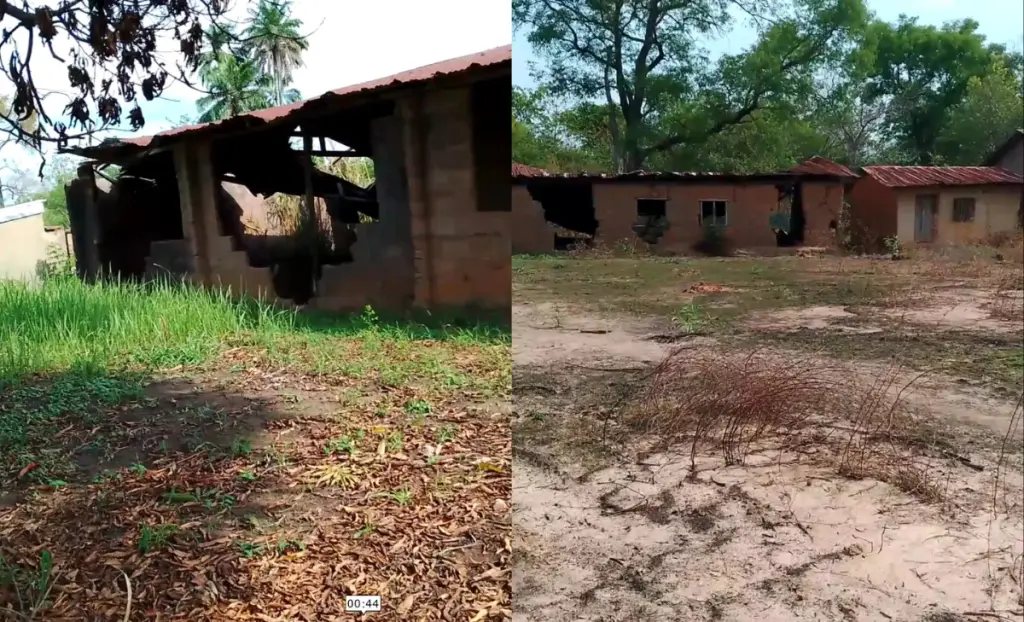
    Public primary schools in Owukpa, a district in Ogbadibo Local Government Area of Benue State, are facing a slow and painful extinction.

    Once nurturing grounds that shaped some of Nigeria state’s finest doctors, lawyers, journalists and professionals, these schools have now deteriorated into crumbling structures, deserted by both teachers and pupils, now overrun by reptiles.

    Years of government neglect, insecurity and policy setbacks have left the schools in ruins, with classrooms sitting empty, walls fallen apart, roofs blown off and only a handful of pupils still enrolled.

    A recent tour of the community by Dailypost revealed the alarming extent of the decay, raising urgent questions about the future of public education in Owukpa.

    One of the most disturbing sights on the tour was at LGEA Primary School Ikwo, a village in Itabono that borders Enugu State.

    Established in the early 1970s, this once-thriving educational institution has deteriorated beyond recognition.

    The school is now in a state of complete disrepair.

    The buildings have collapsed, classrooms are without chairs and the walls have crumbled to dust.

    The school currently has no single pupil, only snakes and lizards now roam freely through the abandoned structure.

    The decay is not confined to Ikwo alone. At LGEA Primary School Ekere Owukpa, the situation is even worse.

    The school, founded in the 1950s, which once played a central role in educating the community, now faces a severe shortage of both teachers and pupils.

    The classrooms are now largely empty, with many parents opting to send their children to private schools instead.

    Clement ‘All-Rounder’ Ocheme, a former headteacher and education supervisor from Ekere Owukpa, said that the lack of interest in public schools has been a major contributing factor.

    “Parents no longer see the value in public education. They are pulling their children out and enrolling them in private schools, which they believe offer better opportunities,” Ocheme told reporter.

    Chief John Ameh Onuh, a veteran teacher and the traditional ruler of Agbogiri Clan, echoed similar concerns.

    He recalled the days in the 1960s-1990s when the schools in the region were bustling with pupils.

    “We had over 500 students enrolled at that time, but now, the population has dwindled to less than 20,” Onuh noted with a sense of despair.

    “We need the government to take action before these schools vanish entirely.

    “There are hardly any teachers left. Since many of us retired, the government hasn’t recruited replacements and that has left a huge gap,” Chief Onuh lamented.

    “Most parents are no longer willing to gamble with their children’s future, so they’re turning to private schools. Take Ekere, for example, we have only one teacher in the entire school. How can one person possibly handle six different classes? It’s a heartbreaking reality. Public primary schools in our communities are slowly dying.”

    Similarly, at LGEA Primary School Achi Ugbugbu, the situation is particularly dire.

    The school, which once produced countless individuals who went on to make a mark in various fields, today has structures that are falling apart, classrooms that are bare, and not a single teacher to be found.

    Edwin ‘Dandy’ Apochi, a teacher who served in the school for decades, described the situation as “pathetic.”

    He said for years now, the school has had no teachers and its future is now uncertain.

    Sadly, LGEA Primary School Udaburu has also fallen into a state of neglect, with just two teachers left and only three pupils enrolled, most of whom barely show up for classes.

    Godwin Adikwu, one of the school’s teachers employed by the community, is responsible for all the classes, a daunting task given the school’s declining enrollment.

    Many parents have since pulled their children out, unable to tolerate the lack of proper facilities or teachers.

    Speaking with reporter, the Clan Head of Udaburu, Chief Simon Idoko, said the situation is beyond the community’s control and requires urgent government intervention.

    “We have done all we can as a people, raised funds, employed volunteer teachers, even provided teaching materials from our pockets, but there’s only so much a community can do.

    “The schools are collapsing, both physically and structurally. Our children are being left behind, and that is something no society can afford.

    “This is not just a local issue anymore; it is a state emergency. If the government continues to look away, we will wake up one day to find that public primary education in Owukpa no longer exists,” he lamented.

    Barrister David Mike Agada, a legal practitioner and proud alumnus of LGEA Primary School Udaburu, also decried the current state of his alma mater.

    Agada, who graduated from the school in 1993, recalled the vibrancy and overpopulation that once defined the institution.

    “Back then, the classrooms were so full that some pupils were sent home simply because there wasn’t enough space to accommodate everyone,” he reminisced.

    “Imagine being told you were too small to be in school because the place was bursting with pupils. That’s how vibrant the school used to be.

    “It’s heartbreaking to return to a place that once shaped the future of so many, only to find it in ruins.

    “It’s not just a building falling apart; it’s an entire generation’s opportunity being lost. Government silence is no longer just neglect; it’s a betrayal,” Agada added.

    The situation has only worsened since the retirement of key education figures in the area.

    Chief Simon Agada, former Head of School Services in Ogbadibo LGA, who is a native of Udaburu, voiced his frustration with the government’s neglect of public education in the region.

    “Since my wife, who was the headteacher of LGEA Primary School Udaburu, retired, the school has been left in the hands of no one,” Agada explained.

    “The people we have now are what we call gatecrashers; most of them lack proper training.

    “The government is not helping matters at all. The last time there was a meaningful recruitment of teachers was during George Akume’s tenure as governor back in 2007.

    “Since then, successive administrations have ignored the plight of government schools, not just in Owukpa, but across the entire Idoma land and Benue State at large.

    “The government has failed to provide the necessary support to keep these schools operational,” he lamented.

    In Ejule, another community within Owukpa, the public school faces similar challenges.

    The school, which once produced some of the region’s best medical doctors and lawyers, is now largely abandoned.

    “The lack of attention from the government is appalling,” said Mr Benedict Abutu, Education Secretary of Ogbadibo.

    Mr Augustine Akor Ameh, a former headteacher in the school, said, “One of our major challenges is the lack of basic teaching materials. For instance, many schools don’t even have chairs or desks, not for the pupils and not even for the teachers.

    “Moreover, there has been no clear effort or commitment from the government to support or motivate teachers.

    “Right now, private schools are taking over because they provide better learning environments and parents are withdrawing their children from public schools in large numbers.

    “Imagine, only two teachers are managing an entire primary school with six classes. That’s unacceptable. The government needs to take urgent action.”

    Wesley Primary School in Okpudu, the first primary school in Owukpa community, is yet another victim of this neglect.

    With its roofs blown off and classrooms empty, the school stands as a shadow of its former self.

    The school has no teacher with less than 10 pupils

    The situation in Atamaka, where insecurity has taken a heavy toll, is perhaps the most troubling.

    Last year, six young men were kidnapped along the Atamaka-Ugbugbu road, causing the only teacher at the LGEA Primary School Atamaka to flee.

    Today, the school stands vacant and parents are left with no choice but to seek alternatives for their children.

    “The situation is dire,” said a community leader.

    “We need urgent intervention from the government to ensure the safety of our children and teachers,” he added.

    Other schools, such as LGEA Primary School Ai-Fam (St Michael), LGEA Priamry School Ai-Ujah, LGEA Primary School Ikpochi and LGEA Primary School Ai-Odu, are also in a state of disrepair, lacking teachers and proper facilities.

    The situation has been worsened by the policies of the current state government.

    In 2022, the Benue State Government under then-Governor Samuel Ortom recruited a number of civil servants, including teachers.

    However, shortly after assuming office, Governor Hyacinth Alia reversed the move, ordering the dismissal of those employed during Ortom’s final months in office, among them, the newly recruited teachers.

    The publication learnt that the last time the state government recruited teachers in large numbers was in 2007, during the first tenure of then-Governor George Akume.

    Nearly two decades later, many of those teachers have either retired or died, with no replacements hired, leaving a devastating vacuum in the public education system.

    When Dailypost contacted the office of Grace Adagba, Chairperson of the Benue State Universal Basic Education Board (SUBEB), which oversees public primary schools in the state, an official requested a call back in one hour.

    Also, when the reporter visited the High Level, Makurdi office of the board, an official redirected him to the Ministry of Education and Knowledge Management, stating that the ministry was in a better position to respond to the development.

    “This matter you are talking about falls under the purview of the Ministry of Education and Knowledge Management.

    “They’re better positioned to provide detailed responses,” the official who craved anonymity said.

    However, repeated attempts to reach the Commissioner, Frederick Ikyaan, were unsuccessful, as calls were ignored and text messages went unanswered.

    Meanwhile, when reached for reaction, Mr Emmanuel Agese, information officer, SUBEB, denied knowledge of such dire situation in Owukpa.

    “There is no situation of dilapidated primary schools in Owukpa which has made pupils attend schools in neighboring states to the knowledge of SUBEB.

    “If there is such a situation then the head teachers of such schools have not reported the conditions of such schools to the executive chairman of SUBEB, Grace Adagba who is very proactive in responding to such cases.

    “The head teacher may not have reported the exodus of pupils from their schools because they could be benefiting from such an unfortunate incident.

    “The Executive Chairman is committed to the positive development of primary education in the state as can be seen in the uncommon transformation of the sector like the modern structures in our schools.

    “The head teachers should endeavor to promptly report such a situation to the appropriate authority if at all there is any.”

  • Why Nigerians In Australia Don’t Travel Back Home

    Why Nigerians In Australia Don’t Travel Back Home

    President of the American Academy of Optometry, African Chapter, Dr Uchechukwu Osuagwu, speaks with BIODUN BUSARI on his life journey from Nigeria to Australia

    How would you describe your growing up?

    I grew up in Aba, in the South-East of Nigeria. My parents and younger siblings are still there. After completing my primary education, I moved to Port Harcourt for my secondary education. Then, I travelled again to pursue my university education at Abia State University. After my internship in Akwa Ibom State, I went to Taraba State for my National Youth Service Corps programme. I relocated to Lagos to start working after the service year.

    Growing up in Nigeria was interesting for me, and it was where I learnt persistence and resilience. I grew up in an environment where giving up wasn’t an option. My parents were middle-class—my dad was a businessman, and my mum was a teacher. My family consists of five boys and a girl. I remember that my dad could only afford to buy a new pair of shoes when we were on school holidays. He wanted to ensure that we all went to school.

    When I returned from school, I remember the first pair of shoes I bought for him. He said it was the first time he had worn new shoes in the last three years. Another thing that helped me was music—I played music for quite a while. During my university days, I was playing professionally. I performed with some big names in the music industry in the East. I travelled to different places on weekends to sustain myself financially, so I wouldn’t depend too much on my parents. It was all a struggle, but those moments built me. My siblings and I are products of ancient values.

    What inspired you to study optometry?

    I didn’t dream of studying optometry initially. I had always wanted to be a medical doctor. My dad felt the same way. However, I found it difficult to gain admission into medical school despite my brilliance. I wrote my first exam and didn’t get the desired points. I took the second exam and still didn’t meet the cut-off mark for medicine, so I was offered botany.

    After one year in botany, if I had a good GPA, I could switch to medicine. While in my first year studying botany, I was able to get someone to help me switch to optometry before the year ended. That’s how my journey in optometry started. I fell in love with the course, but my dad still pushed me to study medicine. I told him I liked optometry, and the rest is history.

    Why did you choose to relocate to Australia?

    I tell people that any place outside Nigeria is fine because you still have to board a plane. Australia was not a destination many of us considered while growing up. What happened was that I first travelled to Saudi Arabia, where I spent about five years. I worked in a private clinic, then at a university, where I started working as a research assistant. During that time, I enrolled in a master’s programme in the United Kingdom, which I completed at Aston University.

    From that point, I started thinking about what I could do after my master’s. I was writing papers, publishing, and teaching. I had very good clinical skills and academic knowledge. I later got a scholarship in the UK to pursue a PhD, but it was only partially funded. After discussing it with my wife, we decided it wasn’t a good move.

    Then I got a fully funded PhD scholarship in Australia. I had already paid part of the PhD fee in the UK, which I lost because the school said I had pledged to study. We had a friend in Australia, and when we told him about the opportunity, he convinced us that it was a great place. We thought it through and moved. I’ve never regretted it for one day because this place is so peaceful. There are opportunities here, the education system is of good quality, and the people are very kind. It’s a great place to raise a family in a decent environment.

    What do you have to say about the myth that Nigerians who relocate to Australia forget to come back?

    It’s not a myth, it is real. It’s not that you don’t want to come back, but I’ll give you an instance.

    If you want to travel from Australia to Nigeria on a return ticket, you’d be looking at about $8,000. That’s just for the ticket. Whereas, if you’re travelling from the UK to Nigeria, you may need about £190 for a ticket, depending on the time of booking. But here in Australia, it’s a decision you have to consider carefully. The distance is quite far, as you could have cumulative flight hours of 36 to 48 hours, depending on the route you take.

    It’s not just the travel to Nigeria. Beyond the flight ticket, you’d also need to budget around £10,000 to £15,000 for family expenses. Every Nigerian here wants to go back home at least once in a while, but again, the cost is substantial. If you have to save close to $20,000 or $30,000 and spend it on just one trip, that’s a huge commitment.

    Added to that, our country isn’t treating us well. If Nigeria were getting better and people were seeing opportunities and a future there, they would come back. I understand how it is, it’s not a myth, it’s a reality that people weigh carefully.

    What are the first-hand opportunities for the Nigerian community in Australia?

    I think there is a wide range of skill sets for Nigerians to explore in Australia. The country has diverse needs and is looking for professionals in various fields. They are in need of doctors, nurses, car painters, electricians, automobile engineers, mechanics, chefs, physiotherapists, and radiologists. If certain requirements are met, such as age and English language proficiency, then anyone can apply. So, it’s open to people from all over the world.

    Also, professionals in IT and healthcare are in high demand, as well as those in managerial roles like business analysts and accountants.

    What is the real reason behind staff shortages?

    Australia has a massive landmass. As a result, there are many unoccupied or remote areas, and people live in locations with limited access to healthcare. They’re finding it difficult to service these areas effectively.

    Beyond that, the population is ageing, and manpower is being lost as people retire. So, there’s a need for younger people to fill the workforce gap. That’s one of the main challenges in Australia.

    Another issue is specialisation. Many migrants come with PhDs to work as lecturers and contribute to knowledge development. Meanwhile, many locals are already well-off. Some receive government support even without working, so they may not have the same drive as migrants. And as the country continues to grow, migration numbers are increasing.

    How do Nigerians cope with snakes and reptiles that visit their homes?

    I think every environment has its peculiarities. It’s part of living in a particular society. So, when you move here, you know what to expect. You have to adjust your mindset and behaviour to suit the community.

    Here, there are crocodiles, snakes, and scorpions. But since 2014, when I moved here, I’ve never seen any in my home, though I have seen them outside. It depends on where you live. Some areas have more snakes than others.

    Interestingly, some reptiles here are kept as pets. Some people build small enclosures to keep pythons. However, brown snakes are dangerous. If you see a snake, you don’t kill it, you call the snake catcher. They’ll come and return it to the bush. They don’t even kill them because snakes play a role in the ecosystem; they help control other animals that may be more harmful than they are. That’s how they preserve the environment.

    Snakes are around, but none of my family members has ever had a snake bite. Some people have had encounters, but it’s not as bad as people say. The weather here is also a factor. When it’s hot, snakes seek cooler spots, which is how they sometimes enter homes.

  • Top 10 Most-Visited Countries in the World (2025 Edition)

    Top 10 Most-Visited Countries in the World (2025 Edition)


    Travel and tourism have bounced back stronger in 2025, with millions of people exploring new cultures, cities, and attractions across the globe. While the world offers countless destinations, some countries consistently stand out and attract the highest number of international visitors each year.

    Here are the Top 10 most-visited countries in the world in 2025, based on global tourism data, popularity, and traveler reviews.


    1. France

    Estimated Annual Visitors: Over 90 million

    France remains the world’s number one travel destination in 2025. With its romantic charm, historical monuments, fine wine, and world-class fashion, cities like Paris, Lyon, and Nice keep drawing millions.

    Top Attractions:

    • Eiffel Tower
    • Louvre Museum
    • Palace of Versailles
    • French Riviera

    2. Spain

    Estimated Annual Visitors: Around 83 million

    Spain combines sunshine, beaches, festivals, and history. From flamenco dancing in Seville to the modern art of Barcelona, Spain is a rich cultural destination for every traveler.

    Top Attractions:

    • La Sagrada Familia
    • Alhambra Palace
    • Ibiza & Canary Islands
    • Madrid’s Royal Palace

    3. United States

    Estimated Annual Visitors: Over 75 million

    The United States remains a magnet for tourists due to its diversity — from natural wonders to big cities. In 2025, tourism has surged thanks to better travel access and top entertainment events.

    Top Attractions:

    • Times Square, New York
    • Grand Canyon
    • Walt Disney World
    • Las Vegas Strip

    4. Italy

    Estimated Annual Visitors: Over 65 million

    Italy continues to captivate visitors with its timeless architecture, rich history, and mouthwatering cuisine. Every region, from Rome to Sicily, offers a unique experience.

    Top Attractions:

    • Colosseum in Rome
    • Venice Canals
    • Leaning Tower of Pisa
    • Amalfi Coast

    5. Turkey

    Estimated Annual Visitors: Over 60 million

    Turkey offers a perfect blend of European and Asian influences. With its rich Ottoman heritage, beautiful beaches, and vibrant bazaars, it’s no surprise tourists flock here.

    Top Attractions:

    • Hagia Sophia
    • Cappadocia hot air balloons
    • Pamukkale
    • Bosphorus Cruise in Istanbul

    6. Mexico

    Estimated Annual Visitors: Around 55 million

    Mexico offers more than tacos and tequila — its ancient ruins, colorful cities, and beach resorts make it a top pick. In 2025, digital nomads and tourists alike are pouring into destinations like Cancun and Tulum.

    Top Attractions:

    • Chichén Itzá
    • Mexico City’s Historic Centre
    • Playa del Carmen
    • Oaxaca festivals

    7. United Kingdom

    Estimated Annual Visitors: Over 45 million

    The UK remains one of the most visited places thanks to its royal history, famous landmarks, and vibrant culture. London alone draws millions each year.

    Top Attractions:

    • Buckingham Palace
    • Big Ben and the London Eye
    • Edinburgh Castle
    • Stonehenge

    8. Thailand

    Estimated Annual Visitors: Over 40 million

    Thailand is a tropical paradise for tourists on a budget. In 2025, it’s one of the top destinations for adventure seekers, backpackers, and culture lovers.

    Top Attractions:

    • Phi Phi Islands
    • Grand Palace, Bangkok
    • Chiang Mai temples
    • Thai street food markets

    9. Germany

    Estimated Annual Visitors: Over 39 million

    Germany offers history, innovation, and scenic beauty all in one. Its medieval castles, Oktoberfest, and modern cities like Berlin continue to attract visitors.

    Top Attractions:

    • Neuschwanstein Castle
    • Berlin Wall
    • Black Forest
    • Cologne Cathedral

    10. Japan

    Estimated Annual Visitors: Over 37 million

    Japan blends ancient traditions with cutting-edge technology. In 2025, it’s one of the most sought-after destinations due to its safety, culture, and innovation.

    Top Attractions:

    • Mount Fuji
    • Tokyo Disneyland
    • Kyoto temples
    • Cherry Blossom season

    These countries not only offer stunning landmarks and attractions but also ensure top-notch hospitality and experiences. Whether you’re into history, adventure, culture, or cuisine, these top 10 most-visited countries in 2025 have something for everyone.

    If you’re planning a trip soon, let this list guide your next global adventure.

  • Should I Marry Her Now Or Let Her Go? I’m Not Ready Financially

    Should I Marry Her Now Or Let Her Go? I’m Not Ready Financially

    Hey guys,


    Please, I need your opinion on this issue. So I’ve known my girlfriend since NYSC 2019, and ever since then, we’ve been best of friends. I travelled out in 2022, but we still kept in touch and from there we started dating. I’m 29 and she’s also 29. Honestly, I have plans to settle down and marry her when things are right.

    A quick note: she’s been trying to come over to meet me as a student ever since I got here, but for one reason or the other it hasn’t worked out (Canada visa rejections and all). Now, she’s talking about how she plans to settle down before her next birthday and even suggested that I marry her while she waits in Nigeria for a maximum of two years before joining me. She really just wants to get married.

    To be honest, I currently work and I’m also doing another master’s program in a very reputable institution here in Canada, and I will be done this year. The stress of working and schooling is a lot, and my current workplace pays the barest minimum. I literally have nothing left after sorting out all my bills and expenses. I’m not financially ready to settle down right now, and I even gave her a timeline of two years. Worst case, no matter what, we’ll settle down in two years max. Let me try and fix things for myself here. I can’t marry and bring someone’s daughter here to come and suffer.

    I’m a worried person. My dreams are really big and God knows I’m working tirelessly to achieve them. She also knows because I discuss everything with her. Honestly, I understand her point of view, but I’m the kind of person that gets really anxious easily. It would kill me to get married, have kids, and not be able to cater for them.

    I know you can’t have everything financially before settling down, but I want at least a moderately stable job. One that allows me to take care of her confidently even if she comes over and doesn’t work immediately. To be honest, my job pay is very low, like unimaginably low, and I’m just barely surviving. I’ve pictured every possible scenario, thinking and planning ahead, but everything is pointing to one answer — I’m not ready.

    Considering her age and the kind of person she is, I strongly believe that after marriage she will want kids and to start building a family. That’s not a bad thing, but I, as a man, don’t want to get stuck in that life yet because I know the kind of future I envision. I’ve always promised myself that I won’t raise a family on “manage-manage.” I feel like if I get married now and start raising a family, my focus will shift entirely to making sure they live well, which could make me lose track of my personal goals.

    I swear, I know my girlfriend loves me. That’s not in doubt. But I’ve been pleading with her to give me at least two more years. If after that things are still not great, then we’ll settle down and manage until something better comes.

    Right now, to be honest, I don’t even have anything financially to plan a small wedding, and I definitely won’t borrow or ask anyone for financial support to do a wedding.

    Please, I want your honest opinion. The two options here are: either get married before this time next year or end the relationship now, as there are other people already asking for her hand in marriage