Category: Lifestyle

  • Peter Obi: Pursue Learning, Skill Acquisition For Growth – Peter Obi To Youths

    Peter Obi: Pursue Learning, Skill Acquisition For Growth – Peter Obi To Youths


    Former presidential candidate of the Labour Party, Peter Obi, has advised Nigerian youths to pursue learning and acquire skills for personal growth.

    Peter Obi said this on Monday, in a statement, to mark World Youth Skills Day, on his X handle.

    Obi also called on federal and state governments to invest more in Nigerian youths to grow the economy. He advised that policies should be made to ensure an easy-to-do business environment for small businesses.


    He said investing in youths acquiring skills would help in addressing the country’s youth unemployment and ensure sustainable development for the country.

    With our predominantly youthful population, where more than half of the people are at their productive age, investing in youth skills will spur innovation and entrepreneurship that will result in the establishment of MSMEs which will catalyze economic growth and development in the nation.


    “As I have always maintained, small businesses, borne out of youth skills, innovation and entrepreneurship, contribute in different ways to the growth and development of so many countries, especially in exemplary comparable countries like; China, India, and Indonesia, to mention a few, which are large in population and have similar demographic features to Nigeria.


    “It is their small businesses and their support for their youth skills, innovation and technology that are propelling their growth,” Obi said.

    The former governor of Anambra State called on governments to prioritize practical education and empowerment programmes for youths.


    Obi said there would be reduction in crimes in the country if youths’ unemployment were addressed.


    “This day, therefore, reminds us, as leaders, to prioritize investment in youths through practical education, youth skills empowerment and support for innovation and entrepreneurship.


    “This will aid our journey from consumption to production, reduce crime in society and drastically reduce unemployment.


    “I also call on Nigerian youths to pursue learning, self-development and skills acquisition for growth,” he said.

  • Heartbreak For England As Spain Claim Record 4th European Title

    Heartbreak For England As Spain Claim Record 4th European Title

    Spain has captured a record fourth title in the European Championship after beating England 2-1 during Sunday’s final in Berlin.


    Mikel Oyarzabal scored the late winner in the 86th minute of the game to give Spain their fourth continental title. The Spaniards also won in 1964, 2008 and 2012 — broke a tie with Germany for the most titles in tournament history.

    Spain has captured a record fourth title in the European Championship after beating England 2-1 during Sunday’s final in Berlin.


    Mikel Oyarzabal scored the late winner in the 86th minute of the game to give Spain their fourth continental title. The Spaniards also won in 1964, 2008 and 2012 — broke a tie with Germany for the most titles in tournament history.

    A final that exploded into life in the second half looked set for extra time after England substitute Cole Palmer canceled out Nico Williams’ opening goal for Spain.


    But it was another substitute, Oyarzabal, who had the final word. The Real Sociedad forward was found just onside by a teasing Marc Cucurella cross to stab past Jordan Pickford and deliver Spain’s first major trophy since their golden generation won the last of three consecutive titles in 2012.


    With the win, Spain broke a tie with Germany for most Euro titles and signalled the coming of age of a fresh generation of talent led by the 22-year-old Nico Williams and 17-year-old Lamine Yamal, who became the youngest player to ever feature in a World Cup or European Championship final, surpassing the record set by Brazil legend Pele in 1958.


    And Spain left little doubt they were worthy champions, having won all seven of their games in the competition and becoming the first team in European Championship history to score 15 goals in a single tournament, breaking a tie with France’s winning side in 1984.


    For England, however, it was a cruel way to lose a second straight European Championship final and extended the men’s team’s 58-year wait for a major trophy.


  • President Tinubu’s Horse Wins Horse Racing Derby In Kaduna

    President Tinubu’s Horse Wins Horse Racing Derby In Kaduna


    President Bola Tinubu’s horse named ‘Renewed Hope’ has won the ‘Hope Renewed 1st Year Anniversary Horse Racing Derby’ held in Kaduna.


    The four-day epochal sport which ended on Saturday was put together by the Horse Racing Federation of Nigeria (HRFN).

    New Agency of Nigeria (NAN) reports that Tinubu’s winning horse emerged victorious in the ‘Division 1 Thorough Breed’, 10 furlongs or 2,000 metres race.


    The horse won a Saloon car, a cup and N100,000 prize money.


    Recalls that Tinubu’s horse maintained her African title of the fastest horse in Africa as it clinched first position in the June 2024 edition of the tournament in Bida, Niger State.


    The second position under the division was clinched by a horse named ‘Sarauinya’ and it got N1million.


    A horse christened ‘ Holiday Parade’ finished and went away with N700,000.


    The fourth position under the division was won by a horse called ‘Nawal’and it got a prize money of N500,000.


    In his remarks after the tournament, the Etsu Nupe who is also the Life Patron of the federation, disclosed that the Horse Racing Federation of Nigeria (HRFN) is planning a ‘Grade-One’ horse racing derby in Nigeria.


    Abubakar said, “Such derbies attract participants from across the world.


    “This is with the same level of prestige as the Royal Ascot, Preakness Stakes, Dubai World Cup, Saudi Cup and the Kentucky Derby.”


    He said that the federation was founded in 2019 with the aim of creating a national platform to organise, host and regulate horse racing activities across the country.


    According to the Etsu Nupe, the federation is dedicated to promoting national unity and prosperity by bringing from various regions through a shared passion for equestrian activities.


    He said efforts would be intensified to strengthen the cultural norms and values of the people through sports in other to prevent the cultures and traditions from going to extinct.


    The National Coordinator, Horse Racing Federation, Mustapha Abubakar-Bida Sarkin Dawakin Nupe’ expressed confidence that the federation would soon become a leading force in horse racing in Africa.


    According to him, this will be released with significant financial investment, a bold strategy and a passion for the project.


    The Sarkin Dawaki Nupe said that more measures were being taken to domesticate the competition in all parts of the country


    “Nigeria is taking a led in the horse racing in the committee of nations in Africa, we are happy to be part of history and to have pushed to ensure that these has become a reality”,


    “We have five countries participating, they are, Cameroon, Chat, Niger, Burkina Faso and Mali”, Abubakar-Bida said


    The closing ceremony was graced by the Life Patron of the federation and the Etsu Nupe, Alhaji Yahaya Abubakar.


    The Emir of Gwandu, Alhaji Ilyasu Bashar was represented by the Sarkin Borgun Ka’oje while Alhaji Ahmed Tijani-Anaje, Ohinoyi of Ebiraland, graced the event, among others.

  • Nollywood Veteran: I had my only child at 40 with one fallopian tube- Actress Ayo Mogaji

    Nollywood Veteran: I had my only child at 40 with one fallopian tube- Actress Ayo Mogaji


    I had my only child at 40 with one fallopian tube- Actress Ayo Mogaji


    Veteran Nollywood actress, Ayo Mogaji, has revealed how she became a mother at the age of 40 years with just one fallopian tube.


    Recounting her life experience on Friday during a podcast episode hosted by Nollywood actress, Abiola Adebayo, she said she had her baby six weeks after her 40th birthday despite having one fallopian tube.


    The fallopian tubes are narrow, hollow structures located on either side of the uterus. They serve as pathways for eggs to travel from the ovaries to the uterus.


    Mogaji said her fallopian tube was ruptured when she had her first pregnancy which was ectopic and had to be evacuated in order to save her life.


    An ectopic pregnancy happens when a fertilized egg implants and develops outside the usual space within the uterus.


    Typically, this occurs in a fallopian tube, where eggs normally travel from the ovaries to the uterus, resulting in what is known as a tubal pregnancy.


    She disclosed that some of her colleagues who were with her in the hospital cried bitterly because the doctor said she might not make it.


    She stated that the operation conducted to remove the pregnancy took seven to nine hours.


    Mogaji recounted, “There was this lawyer who wanted to marry me because he had been in a marriage for 14 years and they never had a child. He took me to his mum and I was looking for a child that period. Our mothers were introduced and I got pregnant.


    Unfortunately, the pregnancy was ectopic. It stayed right inside the fallopian tube and LUTH was on strike at that time. So, by the time we realised what was happening, they took me to seven hospitals and the late Uncle Ede Aderinokun was the one who gave me a note to the hospital where they admitted me.

    “They didn’t even want to admit me. The doctor said he wasn’t sure if I could survive till tomorrow and I said “Do you believe in God? Even if you do not believe in God, believe in me because I believe in God. We did not have an agreement that I was going to die like this.’ They did the operation and it took them seven to nine hours the following day.


    Fortunately or unfortunately, the ectopic pregnancy ruptured before they could do anything and it ruptured my appendix, so they had to remove one fallopian tube. I am living with one and I had my child through natural birth with that one I have left.”

    Speaking about her love life, she recalled that she fell in love and got married but her partner was abusive for the 13 years of their marriage.

    She revealed that her ex-husband physically abused her and she couldn’t stay at home with him without a third party.

    The thespian, however, advised ladies not to endure abusive marriage.


    She said, “When matrimony leads you to a place where you can’t have your own friends, the family can not come, you will start looking at them somehow, even knowing the kind of job you were in before you got married. The reaction at home, the abusive language, the physical abuse, the mental torture; when it gets too much, I will advise anybody to get out of that kind of marriage because otherwise, they may come and meet your candle.”


    On whether she could reconcile with her ex-husband, she said, “There can’t be room. If I could tolerate that thing for 13 years thinking there could be a change, then there can never be change. He is not a bad person but when you are too jealous and have a complex, it is very hard. It can’t work. You can try to make your marriage work, yes you can try.”


  • We’re not responsible for body found hanging on tree – LASTMA

    We’re not responsible for body found hanging on tree – LASTMA

    We’re not responsible for body found hanging on tree – LASTMA

    The Lagos State Traffic Management Authority has said its operatives were not responsible for the dead body found hanging by the gate of an estate along the Lagos-Sagamu Expressway.


    The LASTMA General Manager, Mr Olalekan Bakare-Oki, disclosed this in a statement by Mr Taofiq Adebayo, the agency’s Director, Public Affairs and Enlightenment Department, on Friday.


    Bakare-Oki debunked the rumours circulating on social media, insinuating that the deceased’s vehicle was impounded by the officers of the agency.


    He confirmed that the body was discovered early hours of Thursday by passersby and was immediately reported to the police at Shagamu Road.


    “Several speculations were made by sympathisers present at the scene. Some said he was dressed like a motorcyclist (okada rider), while some speculated he was a tricyclist (Marwa rider).


    “Some

    even believed he was brought to the scene by his killers during the wee hours of midnight, and stage managed it, to give it the semblance of suicide because the victim’s leg was touching ground.

    “For brevity, no one could really identify him as either an okada or Marwa rider from amongst several operators of okada and Marwa who visited the scene.

    “It’s unfortunate that the incident occurred by an estate gate along Lagos-Shagamu Expressway,” Bakare-Oki said.

    While expressing sympathy to the deceased family, he warned those spreading unfounded reports to verify information before disseminating it.

    “Meanwhile, the body of the deceased has been evacuated by the State Environmental Health Monitoring Unit, Yaba, Lagos,” he added.

  • Assassin Househelp: Danger within: How blood-thirsty house helps kill bosses in cold blood

    Assassin Househelp: Danger within: How blood-thirsty house helps kill bosses in cold blood


    Several housemaids employed to assist with household chores have increasingly posed significant risks to their employers. Reports of maids physically and sexually abusing children, poisoning, and even murdering their employers have become alarmingly common. GODFREY GEORGE investigates this troubling trend, uncovering the underlying causes and the impact on families


    Why would you urinate in my teacup? Is there no toilet in your room? Why are you this wicked?” thundered Aisha’s madam, her voice quivering with anger and disbelief.


    The scene, captured in a viral video that trended on July 7, 2024, showed a woman in Abuja confronting her young housemaid after discovering the shocking act.


    The maid, a girl in her teens, had been caught on CCTV urinating into her madam’s teacup.


    After performing the disgusting act, she nonchalantly poured the contents into the kitchen sink and placed the mug back on the rack.


    The CCTV footage didn’t end there. On another occasion, the maid was seen sneaking into the kitchen, stuffing various food items—milk, salt, rice, spaghetti, and more—into a black bag, which she then hid under a table.


    The video further revealed her opening the fridge, using her bare hands to eat stored food directly from the plates, and then returning the remnants to the fridge.


    After each act, she would wipe her hands on her dress and proceed with her duties as if nothing had happened.


    When confronted by her madam, the maid broke down in tears, pleading desperately for forgiveness.


    “Please, forgive me. I beg you in Allah’s name. I won’t do it again. Please, forgive me,” she sobbed, her voice trembling.


    The madam, her patience and trust shattered, remained resolute.


    “You will be taken to the police station,” she declared, her voice firm despite the emotional turmoil evident on her face.


    The incident, highlighted by the raw footage and the emotional confrontation, underscores the complex dynamics and the breach of trust that can occur between employers and their domestic staff.

    Reacting to the video, a Nairaland user, Point Zerom, said, “The worst people to keep in your home are strangers called maids.


    You can never satisfy them, even if you punish her together with your own children, she’ll view her punishment as hatred and wickedness towards her.


    “The moment you finally send her home, you’ll be shocked at what she’ll tell people that you did to her, including raping or trying to rape her.”


    Another user, Omo Awoke, said it did not seem like the maid in the video meant any harm.


    “She is just lazy and dirty. She used the mug to urinate, emptied it in the sink, and washed it. But seriously, some people in third-world countries are a disaster to humanity.


    Humanity does not deserve poverty, as poverty causes oppression and human rights to be trampled upon. I imagine who you would be in the United States/United Kingdom/Canada to hire a full-time housemaid.


    “If you can afford one, she will be well-paid and will know her rights. You can’t oppress anybody cheaply like that, no matter who you are.


    “She’s your staff, and if she does something wrong, the best thing to do is to call the police to settle the matter, not harass her. I hope Africa will work someday and poverty and illiteracy will end.”

    Another user, Elevation D, speaking, noted that the young maid was lazy and dirty.


    “That was an act of laziness or dirtiness. If that was her own mug, would she urinate in it, wash it, and keep it as if nothing was wrong? Why not take her bath in the kitchen or poop inside the mug?


    “She definitely knew what she was doing and thought she could get away with that irresponsible act. Thank God for CCTV. It has saved many families from the evil intentions of too many so-called housemaids. I do not understand the Hausa language, but the image was enough to form my opinion that the girl was purely wicked with such an act.

    “Did you

    you not notice that the cup was not washed with soap? She simply rinsed it with water and placed it on the table. She deserved to be first beaten and then returned to wherever she was brought from.”

    He further wrote, “It’s a global issue, and families must remain vigilant. What started as urinating in a cup could have escalated to something far worse. John believed that people must pray to avoid accommodating such evil-minded individuals in their homes. Families must be cautious, aware, and proactive in protecting their loved ones from potential harm.”


    A growing menance 

    In recent times, the role of housemaids in Nigerian homes has come under intense scrutiny due to a rising tide of alarming incidents.


    Reports of maids physically and sexually abusing children, poisoning, and even murdering their employers have become disturbingly frequent.


    This trend has not only instilled fear among families but also highlighted the critical need for stringent vetting and monitoring of domestic workers.


    The headlines paint a grim picture: housemaids trusted to care for children and manage household chores have been implicated in heinous acts. These incidents reveal a dark side of domestic work that has long been overlooked.


    The stories often begin with a desperate need for help. Families, burdened by work and other commitments, seek domestic workers to ease their load.


    However, beneath the surface of this seemingly simple arrangement lies a complex web of deceit and danger. Maids, some with hidden grudges or sinister motives, infiltrate homes under the guise of assistance.


    The twists in these tales often involve a sudden change in the maid’s behaviour, leading to catastrophic consequences.


    Stealing without mercy

    No one believed that 22-year-old Odiong Emmanuel was capable of theft.


    He had been living with the Attonis since he was 16. He was originally employed to work as a fuel attendant at a fuel stand in the Bonny Island Local Government Area of Rivers State.


    His family had come to drop him off with Mr Fidelis Attoni and his wife, Comfort, to ‘assist with housework’.


    “We saw how things were going and decided that we should let him work as the chief attendant in my husband’s fuel stand. He was living with us. We gave him an en suite apartment in our home, but he eats from my kitchen.

    .


    “We placed him on a salary of N30, 000 and we still provided clothes for him and also sent money to his parents. What we never knew was that he was stealing from us,” Comfort told our correspondent.


    A few years down the line, Mrs Comfort said she noticed that Odiong was becoming too defensive and didn’t want anyone to get into his room.


    “We would ask him to wash the cars, but he wouldn’t do it. He started bringing women to our home and it was becoming really uncomfortable for my kids and me. I told my husband who was always away but he said I was overreacting. So, I let it be.

    ” In 2018, this boy brought a new phone to the living room to charge. We asked him who owned it; he said it was one of his friends who gave it to him. After our investigation, we found out the phone belonged to him. We dug further and found out he had rented a house in the area and had fully furnished the place with a TV, an air conditioner and a full sofa set. He also lodged two girls from the neighbourhood there. One was already pregnant for him as I learnt. Her mother had been searching for her for weeks not knowing she had gone to live with him in his new location.

    ” I

    didn’t know how to approach the matter. I just called my husband and told him. I also asked that he audited his account. What we found out will shock you. This guy used to make a daily contribution of N2000 in three places.

    “His account statement showed he always sent N50,000 every week to a particular account number, believed to be that of a family member of his. This guy has been stealing from my husband and has started a building in his village. I cannot even believe it,” she said.

    The woman said when Odiong was confronted; he first lied about it and was acting like the victim until her husband involved the police.


    ” The

    e auditor we hired had given us all the documents that showed the wreckage he had done for more than the four years or so he lived with us.

    “This boy just wanted to ruin my husband’s business. He would make N500,000 and he would write N50,000. The guy was a clear thief.

    “My husband would be lamenting that the business was not making any profit and we were losing money every time. We never knew this boy was stealing from us daily and enriching himself,” she said.


    “We

    involved the police who began an investigation, and the things we found out were heartbreaking. After some time, my husband said we should withdraw the case. We did and we called his people and sent him back to them.

    “To date, I have not been able to get over it. My family decided that whoever was coming to work for us would stay in their own homes and come from there and we wouldn’t have any affiliation with them other than paying them their salaries.”

    When our correspondent reached out to Odiong on Wednesday, he said he did not steal anything from the Attonis.


    Don’t listen to them. I didn’t steal from them. They expected me to look tattered because I was working for them. They are lying against me. They thought if they sacked me, I would be homeless. I am not homeless. I am fine and I will rise again,” he said.

    Asked if he was into any daily saving scheme, he said, “That one is not their business. Bros, I didn’t do anything to those people. They were accusing me of sleeping with their daughter. I did not touch that girl.”

    Our correspondent reached out to the Attonis to share Odiong’s reaction, stressing the issue of sexual intercourse with their daughter.


    Mrs Attoni, responding angrily, said, “That boy wants us to send him to prison. If he dares us, we will send him to prison.”

    Mrs Comfort said her husband enrolled Odiong in a sandwich programme with a college of education based in Enugu that ran a satellite programme in the area and was footing the bills.


    According to her, he was in his third year, studying social studies education.


    “We celebrate his birthday. We give him money for Christmas and send food and money to his family every month together with the salary we pay him. He enters my kitchen and dishes his own meals. He cooks what he wants. He sleeps in my children’s rooms. I treat him as my own son. How can he be that wicked to us?” she queried.

    On Thursday, Odiong called back and asked this reporter to help beg the Attonis for forgiveness, saying that he did not do it all alone.


    He mentioned some names which have been shared with the Attonis who have promised to take the matter up with the police and their lawyers.


    Ran off with employer’s kid

    In 2016, Mr Suliyat Azeez, a resident of Okokomaiko, Lagos, hired Grace as a home-help to assist with household chores and look after her two young children, six-year-old Kafaya and four-year-old Farouk.

    Grace, who had recently started working for the Azeezs, perpetrated the abduction barely 24 hours into her employment.


    The abduction unfolded when Grace, seemingly under the guise of buying food for the children, took Kafaya and Farouk out of the home of the Azeezs and did not return.


    Upon discovering that her children were missing, Mrs Azeez promptly reported the incident to the police, triggering an immediate search and investigation.


    The case quickly garnered significant public and media attention due to its shocking nature and the vulnerability of the abducted children.

    It raised concerns and questions about Grace’s intentions and background, as well as the risks associated with employing domestic staff without thorough background checks or safeguards.


    Law enforcement agencies, including the Nigerian Police Force, launched a widespread search operation to locate Grace and safely recover Kafaya and Farouk.


    Details regarding the eventual recovery of Kafaya and Farouk or the apprehension of Grace are not extensively documented in public records. However, the Nigeria Police found the children and arrested the perpetrator who said she was going to sell the children for a fee.

    Kidnapped kids, used them for begging

    In the same year, there was another unsettling case – Asmau’s. Asmau, a housemaid, exploited the trust of her employer, Hawau, to kidnap her two children, six-year-old Amina and seven-year-old Rukayya, from Ogun State and subjected them to a life of begging in Lagos.


    Hawau had employed Asmau to help with household chores and care for her children, Amina and Rukayya.


    Trusting her housemaid, Hawau sent the children with Asmau to their grandparents in Lagos, believing they would be safe and cared for.


    However, Asmau had different intentions. Instead of taking the children to their grandparents, she took them to Lagos and used them to beg for alms on the streets.

    The children, dressed in tattered clothes, were subjected to harsh conditions.


    Asmau forced them to beg, and any resistance or display of emotion was met with beatings.

    The young girls, Amina and Rukayya, endured unimaginable hardship as they navigated the dangerous streets of Lagos, far from the safety of their homes and the comfort of their families.


    Hawau’s nightmare began when she learned that her children were not with their grandparents as expected.


    Frantic and desperate, she reported the incident to the authorities, sparking a search for Asmau and the missing children.


    The case drew significant attention, highlighting the perils faced by children who fall into the hands of unscrupulous individuals.

    Law enforcement agencies and child welfare organizations in Lagos collaborated to locate Amina and Rukayya.


    The search efforts involved appeals to the public for information and a thorough investigation into the whereabouts of Asmau.


    The community rallied together, driven by the hope of finding the innocent children and bringing them back to safety.


    Vet maids to their teeth before hiring’

    “If you must hire a maid, then you must vet them very well to be sure you know them to a large extent. Maids are maids. They are not family members. Treat them as employees and don’t fail to be on the lookout.


    “Some of them can make you lose your guard and they will strike. You will never believe the extent they can go,” said Patience Hart, a laboratory scientist who owns a home-help agency based in Port Harcourt, Rivers State.


    Hart said no one should arbitrarily hire maids without making sure they are well-documented and have guarantors.


    “Children are not maids. Your maids must be over 18 and they should come through an agency and a lawyer must also be involved,” she stressed.


    Install CCTV– Security expert


    A civil engineer who works with a satellite company in Benin City, Edo State, Mr Miracle Morgan, said every home with a maid must have an active CCT V stationed in the house.


    “These maids can be so mischievous. You will never know who they truly are until you are not there with them. They will beat up your children, invite their friends, and even abuse your children.”


    Chepaka further speaking said, “To mitigate these risks, families must exercise caution and due diligence when hiring domestic workers. Agencies that provide maids should be regulated and held accountable for thorough background screenings.


    “Employers should also maintain open communication and establish clear boundaries and expectations.”


    While housemaids play a vital role in many Nigerian homes, the rising tide of deadly incidents underscores the need for vigilance and reform.


    By addressing the root causes and implementing rigorous safeguards, we can create safer environments for both families and domestic workers, restoring trust and security in this essential sector


  • Japa Plans: Surviving in UK tough, I struggled to pay school fees — Nigerian woman

    Japa Plans: Surviving in UK tough, I struggled to pay school fees — Nigerian woman

    Surviving in UK tough, I struggled to pay school fees — Nigerian woman


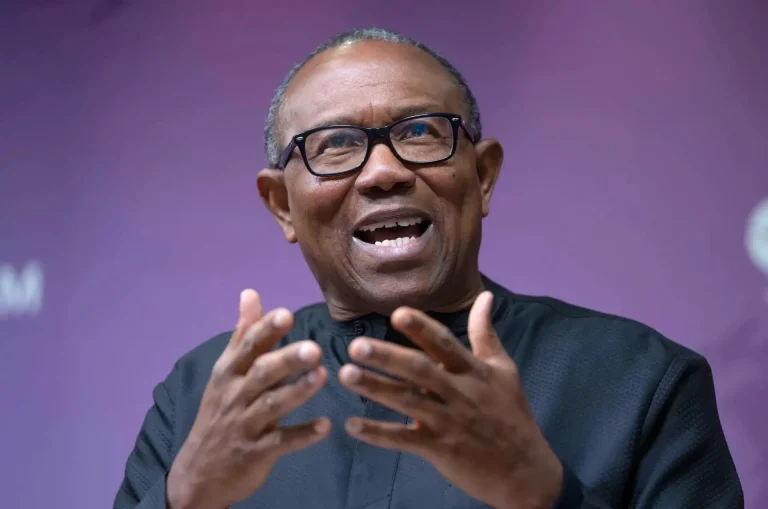
    Nigerian woman, Yetti Tabai, speaks with BIODUN BUSARI about her years of struggle as an undergraduate in the United Kingdom and her resilience to succeed


    What inspired your decision to leave Nigeria at such a young age?

    I left Nigeria for the United Kingdom to study when I was 15. I graduated from secondary school in Nigeria at the age of 14. I came to the United Kingdom hoping to get admission to a university. However, I was told that at age 15, I couldn’t gain admission to a university in the UK. So, I needed to go back to secondary school. It was a disappointment for me that I couldn’t start university, and as such, I had to go back to Year 11, which is the same as SSS3 in Nigeria. That was my initial frustration, as I had to study again everything I had already learnt in Nigeria. I thought that was the end, but after finishing SSS3, I was told I would have to pass my A Levels for two years before proceeding to university. This meant I spent three years studying similar subjects to those I studied in Nigeria.

    Consequently, the people I graduated with from secondary school would be finishing university while I was in Year 1. That was my initial frustration and the reason for my delay. I got admission to London Metropolitan University to study Law and International Relations. In the middle of that, I moved to Luton to study the same Law, and I graduated from Bedfordshire University.

    How long have you stayed in the UK and what is the experience like so far?

    Most of my experiences during my time as a university student were hardships, particularly in terms of working multiple jobs to afford my fees. I initially thought I would receive a student loan as a British citizen, but my application was refused. It was then that I realised I needed to work two jobs to pay my university fees.

    I initially worked at McDonald’s and then at Nando’s. This meant I had to miss many lectures as I needed to work seven days a week, from noon to midnight. Consequently, I had to rely on online study despite being enrolled in a full-time degree programme. This affected my grades due to low attendance, but it was the only way I could afford my fees.

    I worked seven days a week and saved money to pay for rent and tuition fees. At one point, I could not afford bus fare to and from the university. I saved up for about three months to buy a bicycle for £70, which allowed me to commute to school. Now, things have eventually worked out. What seemed so difficult at that time was the rigid educational system, but I overcame it eventually. I know better now.

    What key factors have contributed to your success in the UK?

    Working hard was my only option; failure was never a consideration. During my years of pursuing my degree, I made sure I was always studying. I worked hard to afford the things I needed. Having a reliable network of people was helpful, but it’s important to understand that others also have challenges. There weren’t many people to borrow from, which meant I had to work hard to afford what I needed in life. I didn’t let the challenges I faced deter me from my goals. Whether it took one year, two years, or three years to achieve them, I remained patient. I didn’t pressure myself by comparing my progress to others. The fact that my peers were achieving things didn’t make me borrow money to reach my goals faster. If it took forever, I would take my time and achieve it in God’s time. Through this hard work, I obtained an education and a job in information technology. I also opened a food business in Milton Keynes in 2023 and another in Manchester in 2018. It has been a journey of growth, diligence, and resilience.

    How did you balance pursuing a law degree, a music career, and managing your restaurants?

    After finishing my law degree, I did not proceed to practice law. Instead, I went into IT, which was earning me more money than what lawyers used to make back in the day. The money I made in IT was what I invested to start my restaurants. While starting my restaurant business, I also delved into music.

    What is the difference between Nigeria and the UK?

    The difference is that one place is hot and the other is very cold. Apart from weather differences, we are talking about how far your money can go and the network of people. In the UK, you don’t have a huge network of people to rely on. When you come to the UK, you need to understand that whatever goals you have, you might need to work on them by yourself because you don’t have a next-door neighbour who you can leave your children with.

    It is a very isolated kind of life in the UK. Of course, you would have friends now and then, but it’s not like Nigeria where it is very community-based. Sometimes, it can become lonely when you don’t know the people around you. Even if you know people, most are working and doing shifts around the clock, so you don’t have time to spend with them. In Nigeria, it is almost common knowledge that most people are free at the weekends. It is now a question of where you are going to hang out with them. So, there are a lot of huge cultural differences between the UK and Nigeria.

    How do British people generally perceive Nigerians, and how does this affect relationships between the two communities?

    I think the British people have observed that Nigerians are resilient and hardworking. They recognise that Nigerians excel in education, frequently achieving First Class honours. In their healthcare sector, many doctors, nurses, and care assistants are Nigerians, showcasing their brilliance. Therefore, British people appreciate having Nigerians in their workforce because they value the rewards of hard work. However, some British people perceive Nigerians as competitors for jobs, given their reputation for diligence and determination.

    How does the British government’s approach to assisting its people set an example that the Nigerian government could learn from?

    The British government provides a plethora of networks for grants, funding, support, and advice for its people. Here in the UK, we have something called the Citizens Advice Bureau. You can walk in there and receive free legal advice. There are numerous places you can visit, like local libraries, where you’ll find leaflets to assist with various issues. Whether you’re dealing with landlord disputes, financial struggles, or contemplating suicide, there are resources available to guide you toward better decisions. The British government has considered every possible scenario its citizens might face and has established hubs where people can seek help, all provided free of charge. While the British community can be isolating for foreigners, information is readily accessible everywhere. It’s up to individuals to tap into these resources, including funding, grants, and benefits, by conducting their research and completing applications independently. Rather than waiting for others to assist, individuals are encouraged to be proactive in seeking support. I believe this proactive approach, with readily available help and information centres, is something I would like to see implemented by the Nigerian government to support its citizens effectively.

    Does the Japa syndrome ever bother you?

    It concerns everyone, including the British government and immigration officers, because it has pros and cons. Many people have been caught in the whirlwind of paying high fees to come to the UK, and these fees are constantly changing. Initially, it was £15,000, but now they’ve raised it to £23,000, and I think the Prime Minister recently increased it again. It’s not easy money; even £15,000 is a significant amount.

    The Japa syndrome has been beneficial in terms of many Nigerians coming to the UK to study and improve their lives. However, policy changes have also adversely affected those who left Nigeria with plans for a better life. They sold property in Nigeria, hoping to study in the UK and eventually return to Nigeria. But with constant changes in educational landscapes and fees, their goals and plans are disrupted, making it difficult for them to leave the UK and even harder to consider staying.

    These changes affect everyone: Nigerians who stay, those who can return, and those who might have planned to transition to other countries, as these endeavours require financial stability.

    How do you emotionally respond to both positive and negative news reports concerning Nigeria?

    When I hear positive reports, it makes me excited to know that my country is improving. And when I hear negative reports, of course, I feel sad. Every Independence Day reminds me of what I want Nigeria to become versus its current state.

    What are your thoughts on the policies implemented by the former UK Prime Minister?

    He did the best he could during his time, and I can only hope that the new Prime Minister offers more favourable policies for immigrants or those in the diaspora. That’s what I can say about that. Nigerians and other foreigners hope for the best, and we hope to have good representation in Parliament to express our concerns.

    Do British customers frequent your kitchen?

    Ninety-five per cent of my customers are British which tells me that our food is going far and wide.

    How has your family supported you, and do you have any investments in Nigeria?

    I currently invest in Nigeria because I believe it will be better and greater. The last time I was in Nigeria, the airport was lovely and amazing. Not a lot of people were asking for tips. They let you travel in peace. The air-conditioning and the baggage trolley were working and Nigeria is becoming great. My family has helped me so far. I wouldn’t have been able to do any of those things without the support of my family.

  • Sad: Woman, son beat 14-year-old boy to death over missing N1000

    Sad: Woman, son beat 14-year-old boy to death over missing N1000


    Woman, son beat 14-year-old boy to death over missing N1000


    A yet-to-be-identified woman and her son, known only as Chukwuemeka, have allegedly beaten a 14-year-old boy named Testimony to death at their home on Delta Street, Ayanre, off Ibiye bus stop, Badagry, Lagos.


    Our correspondent gathered that the deceased was reportedly beaten for allegedly misplacing N1000 note given to him by one of the suspects to buy items at the market.


    Multiple sources who spoke with our correspondent said that the deceased teenager was allegedly beaten for several hours starting at 11 pm on Wednesday, before succumbing to his injuries around 1 am on Thursday.


    One of the neighbours who spoke with our correspondent on Friday said, “This young boy was beaten to death by his guardians, who were not his biological parents. The neighbours tried to intervene, but the doors were locked from the inside.


    “Around 6 am this morning (Thursday), he (the deceased) wasn’t responding to his name, so they rushed him to a nearby hospital. The hospital didn’t have oxygen therapy, so they brought him back home, which aggravated the boy’s condition.

    The woman then called her prayer partners in church to start praying for miracles to happen before the boy finally gave up the ghost. The police came exactly around 5.10 pm on Thursday to pick up the woman, who was the main suspect in the brutalities shown to the deceased.”


    Meanwhile, Benjamin Hundeyin, the spokesperson for the state police command, said he could not confirm the incident when our correspondent inquired about it.


    ” I

    cannot confirm that now,” Hundeyin wrote in response to our correspondent inquiry on Friday.

    However, a one-minute and thirty-two-second video shared with our correspondent by another eyewitness, who chose to remain anonymous due to the sensitivity of the matter, showed the lifeless body of the boy with severe bruises, covered with a cloth in the apartment.

    One of the men suspected to be behind the camera was heard saying, “This is the dead boy with bruises,” while others were screaming in disbelief.

  • Daddy Freeze: Appeal Court upholds Daddy Freeze’s N5m adultery fine

    Daddy Freeze: Appeal Court upholds Daddy Freeze’s N5m adultery fine

    Appeal Court upholds Daddy Freeze’s N5m adultery fine

    The Court of Appeal in Port Harcourt has upheld the fine imposed on popular Nigerian On-Air Personality, Ifedayo Olarinde, also known as Daddy Freeze, for committing adultery.


    A High Court sitting in Port Harcourt, Rivers State, had on February 18, 2021, ordered Daddy Freeze to pay the sum of N5m for committing adultery with one Benedicta Elechi.


    He was ordered to pay the money to Paul Odekina, who was married to Elechi at the time the adulterous act was committed.


    “The sum of N5,000,000 is awarded against Ifedayo Olarinde (the 2nd Cross Respondent to the Cross Petition) as damages for depriving the Cross Petitioner of the amiable consort of his wife (Petitioner/1st Cross Respondent) and for injury suffered as a result of his adultery with the Petitioner/Cross Respondent,

    The court also dissolved the marriage contracted between Paul and Benedicta due to her adulterous act with Daddy Freeze. https://punchng.com/high-court-fines-daddy-freeze-n5m-for-adultery/?amp

    Not satisfied with the High Court’s judgement, Daddy Freeze approached the appellate court for redress.

    Daddy Freeze’s main grounds of appeal were that Odekina did not attempt to serve him personally before applying for substituted service, which violates Order 7 Rule 2 of the Rules of the Trial Court.

    He also held that the purported service by substituted means i.e., by courier was not effective as shown in the affidavit of service, adding that the non-service violates the twin pillars of the principle of natural justice.

    In the Certified True Copy of the judgment, dated June 26, 2024, and obtained by our correspondent on Friday, the three-man panel of Justice Abubakar Talba, Danlami Senchi, and Hannatu Balogun dismissed Daddy Freeze’s appeal for lack of merit.


    The court ruled that if the appellant wanted to overturn the trial court’s judgment due to non-service, he should have filed a counter-affidavit against the affidavit of service and then sought to set aside the trial court’s judgment.


    It partly read, “Affidavit evidence can only be countered by a Counter Affidavit. As such, I found the procedure adopted by the Appellant alien to our jurisprudence.

    Where the Appellant wants the judgment of the trial court to be set aside for non-service, he ought to have approached the trial court by filing a Counter affidavit against the affidavit of service he seeks to set aside and consequently set aside the judgment of the trial court. Thus, as it is in the instant appeal there is nothing filed by the Appellant to counter the affidavit of service of the Process Server filed in


    “Hence, therefore I resolved the sole issue for determination against the Appellant and in favour of the Respondents. The appeal therefore lacks merit and it is hereby dismissed


    “Accordingly, the judgment of the Rivers State High Court in Suit No. PHC/403MC/2012 delivered on the 18th February 2021 by J. Akpughunum, is hereby affirmed. I make no order as to costs”.


    According to the CTC of the judgement, Ola Faro and Ikobah Hilton appeared for the appellant while N.A. Naenwi and Wilcox Abereton (SAN) represented the first and second respondents respectively.


  • Burkina Faso’s military junta to ban homosexual acts

    Burkina Faso’s military junta to ban homosexual acts

    Ó


    Burkina Faso’s military junta has announced a ban on homosexual acts, making it the latest African state to crack down on same-sex relations despite strong opposition from Western powers.

    Homosexuality was frowned upon in the socially conservative West African state, but it was never outlawed.

    Justice Minister Edasso Rodrigue Bayala said the junta’s cabinet had now approved legislation to make it a punishable offence, but he did not give further details.

    The military seized power in Burkina Faso in 2022, and has pivoted towards Russia after drastically reducing ties with former colonial power, France.


    Burkina Faso’s decision to outlaw homosexual relations is part of an overhaul of its marriage laws.

    The new legislation, which still needs to be passed by the military-controlled parliament and signed off by junta leader Ibrahim Traoré, only recognises religious and customary marriages.

    “Henceforth homosexuality and associated practices will be punished by the law,” the justice minister was quoted by AFP news agency as saying.

    Capt Traoré took power in September 2022 after overthrowing another military ruler, Lt Col Paul-Henri Damiba, accusing him of failing to quell an Islamist insurgency that has gripped Burkina Faso since 2015.

    Burkina Faso was among 22 out of 54 African states where same-sex relations were not criminalised.


    Unlike in many former British colonies, it did not inherit anti-homosexuality laws after independence from France in 1960.

    Muslims make up around 64% of Burkina Faso’s population and Christians 26%. The remaining 10% of people follow traditional religions or have no faith.

    Many African states have been taking a tougher stand against the LGBTQ community in recent years.

    Uganda is among those that have adopted legislation recently to further crack down on the community, despite strong condemnation from local rights groups and Western powers.

    In May, its Constitutional Court upheld a tough new anti-gay law that allows for the death penalty to be imposed for “aggravated homosexuality”, which includes having gay sex with someone below the age of 18 or where someone is infected with a life-long illness such as HIV.

    Activists said they would appeal against the ruling.

    Burkina Faso’s military junta to ban homosexual acts

    18 hours ago

    By Richard Kagoe,

    BBC News


    Share

    Reuters Capt Ibrahim TraoréReuters

    Capt Ibrahim Traoré’s regime is spearheading an overhaul of marriage laws

    Burkina Faso’s military junta has announced a ban on homosexual acts, making it the latest African state to crack down on same-sex relations despite strong opposition from Western powers.

    Homosexuality was frowned upon in the socially conservative West African state, but it was never outlawed.

    Justice Minister Edasso Rodrigue Bayala said the junta’s cabinet had now approved legislation to make it a punishable offence, but he did not give further details.

    The military seized power in Burkina Faso in 2022, and has pivoted towards Russia after drastically reducing ties with former colonial power, France.


    Homosexual acts were decriminalised in Russia in 1993, but President Vladimir Putin’s government has been cracking down on the LGBTQ community, including banning what it calls “propaganda of non-traditional sexual relations”.

    The doctor forced to fight jihadists in Burkina Faso

    Nigeria-EU deal sparks false claims over LGBT rights

    The Nigerian queer parties that offer liberation

    Burkina Faso’s decision to outlaw homosexual relations is part of an overhaul of its marriage laws.

    The new legislation, which still needs to be passed by the military-controlled parliament and signed off by junta leader Ibrahim Traoré, only recognises religious and customary marriages.

    “Henceforth homosexuality and associated practices will be punished by the law,” the justice minister was quoted by AFP news agency as saying.

    Capt Traoré took power in September 2022 after overthrowing another military ruler, Lt Col Paul-Henri Damiba, accusing him of failing to quell an Islamist insurgency that has gripped Burkina Faso since 2015.

    Burkina Faso was among 22 out of 54 African states where same-sex relations were not criminalised.

    Unlike in many former British colonies, it did not inherit anti-homosexuality laws after independence from France in 1960.

    Muslims make up around 64% of Burkina Faso’s population and Christians 26%. The remaining 10% of people follow traditional religions or have no faith.

    Many African states have been taking a tougher stand against the LGBTQ community in recent years.

    Uganda is among those that have adopted legislation recently to further crack down on the community, despite strong condemnation from local rights groups and Western powers.

    In May, its Constitutional Court upheld a tough new anti-gay law that allows for the death penalty to be imposed for “aggravated homosexuality”, which includes having gay sex with someone below the age of 18 or where someone is infected with a life-long illness such as HIV.

    Activists said they would appeal against the ruling.

    The World Bank has halted new loans to President Yoweri Museveni’s government while the US has stopped giving Ugandan goods preferential access to its markets, following the adoption of the legislation last year.

    Mr Museveni defended the legislation as preserving traditional family values, and said Uganda would not allow the West to dictate to it.

    The daughter of Cameroon’s president drew mixed reaction after she came out as a lesbian last week.

    Brenda Biya, who lives abroad, said she hoped that her coming out would help change the law banning same-sex relations in the country.

    Cameroon has been ruled with an iron-hand by her 91-year-old father, Paul Biya, since 1982.

    In Ghana, parliament passed a tough new bill in February that imposes a prison sentence of up to three years for anyone convicted of identifying as LGBTQ+.

    However, President Nana Akufo-Addo has not signed it into law, saying he will wait for the courts to rule on its constitutionality.

    The finance ministry has warned him that if the bill became law, Ghana could lose $3.8bn (£3bn) in World Bank funding over the next five to six years.

    Ghana is suffering a major economic crisis and received a bailout from the International Monetary Fund (IMF) last year.