Blog

  • Forex crisis: Nigeria’s ID4D project gains N8.6 billion from Naira devaluation in 2024

    Forex crisis: Nigeria’s ID4D project gains N8.6 billion from Naira devaluation in 2024

    FForex crisis: Nigeria’s ID4D project gains N8.6 billion from Naira devaluation in 2024


  • Global stock markets plunge on US recession fears

    Global stock markets plunge on US recession fears

    Global stock markets plunge on US recession fears

    (more…)

  • Protests: Kaduna, Zaria boil; over N700bn lost in 5 days — ASBON, KACCIMA

    Protests: Kaduna, Zaria boil; over N700bn lost in 5 days — ASBON, KACCIMA

    Protests: Kaduna, Zaria boil; over N700bn lost in 5 days — ASBON, KACCIMA.

    By Soni Daniel, Emma Ujah, Kingsley Omonobi, Yinka Kolawole, Johnbosco Agbakwuru, Bashir Bello, Ozioruva Aliu, Luminous Jannamike, Marie-Therese Nanlong, Ibrahim Hassan-Wuyo, Idris Salisu

    KADUNA — The nationwide protest against hunger in the country turned riotous in Kaduna and Zaria yesterday, compelling the state government to declare a dusk-to-dawn curfew.


    Protests: Kaduna, Zaria boil; over N700bn lost in 5 days — ASBON, KACCIMA

    Protests: Kaduna, Zaria boil; over N700bn lost in 5 days — ASBON, KACCIMA

    By Soni Daniel, Emma Ujah, Kingsley Omonobi, Yinka Kolawole, Johnbosco Agbakwuru, Bashir Bello, Ozioruva Aliu, Luminous Jannamike, Marie-Therese Nanlong, Ibrahim Hassan-Wuyo, Idris Salisu


    KADUNA — The nationwide protest against hunger in the country turned riotous in Kaduna and Zaria yesterday, compelling the state government to declare a dusk-to-dawn curfew.


    Aside from Kaduna, the protest also continued in Lagos, Abuja, Jos, Benin, Kano, and Zamfara, despite President Bola Tinubu’s nationwide broadcast on Sunday.


    0.00 / 0.00

    Meanwhile, losses to the economy have been estimated at over N700 billion in the first five days of protest against hardship, and while N600 billion was recorded in Lagos, Kano lost over N100 billion, the Association of Small Business Owners of Nigeria, ASBON, and Kano Chamber of Commerce and Industry, KACCIMA, declared yesterday.


    Miscreants hijack protest, loot shops in Kaduna


    Miscreants and other criminal elements hijacked the protest in Kaduna, unleashing terror on unsuspecting citizens by breaking into shops and snatching cell phones.


    One of the miscreants in Kawo area of Kaduna North, met his waterloo as a mob beat him to stupor before handing him to security operatives.


    The hoodlums also stopped vehicles going in and out of the state capital from the Zaria road axis, molested passengers and forcibly seized phones and other valuables, while brandishing dangerous weapons.


    A procession of the protesters, comprising mainly youths, children and women, and hoisting the flag of Russia, moved from Kawo to join other protesters and tried to occupy the NEPA roundabout in the heart of the city.


    They were subsequently, dispersed by security operatives when the miscreants among them started burgling shops and looting.


    Soldiers drafted, hoodlums overpower security operatives, curfew imposed


    Meanwhile, there was heavy fight between miscreants in Tudun Wada, Kaduna and the security operatives as the youths continued to emerge in large numbers, destroying properties and looting shops.


    It was the intervention of the military that restored sanity in the area, even though the hoodlums had reportedly taken over an Armoured Personnel Carrier, APC, earlier deployed to the area to scare them away.


    Before the military arrived, hundreds of miscreants hauled stones and other objects at a commercial bank near the polytechnic, vandalised staff cars and stole valuables.


    Activities came to an abrupt end in the area as customers and other workers were seen scampering for their lives in Tudun Wada, which was tensed before curfew was imposed and soldiers deployed to area.


    The police had earlier, warned that anyone found vandalising or looting shops, would not be considered a protester but criminal.


    The Police had arrested a number of persons who were supplying the protesters with Russian flags and other offensive items used during the protest.


    In Zaria, about 75 km from Kaduna, the situation was tense as there was massive looting by the hoodlums but security operatives were able to contain the situation.


    “Two hoodlums who tried to assault a security operative at the Danmagaji area in Zaria, were feared dead,” a source told journalists.


    In an interview, a commissioner in Zamfara State, Alhaji Haidara, said just like in Kaduna, the protesters in Gusau also hoisted the Russian flag.


    He said: “Some of the protesters, especially the children, do not even know the implication of what they were doing. They don’t even know the Russian flag given to them.”


    However, a protester, who craved anonymity, said they were trying to attract the attention of Russia by waving the flag, so President Putin could come to their aid.


    “Since the West like America and UK abandoned us and are conniving with the government to worsen our plight, we are now seeking the attention of Russia to come to our aid, just as was done in Niger Republic and other countries in the Sahel,” he said.


    Meanwhile, there was calm in Kaduna, Zaria and environs at press time as the state government imposed a dusk to dawn curfew to stop further destruction and looting by the hoodlums.


    Businesses in Kano incurred over N100bn losses — KACCIMA


    Similarly, the former Deputy President, Kano State Chamber of Commerce, Mines and Agriculture, KACCIMA, Usman Darma, said losses incurred in the state within the five days of the protest was well over N100 billion.


    He said: “70 per cent in the state are into commerce and business, while 25 per cent of neighbouring African countries trade with Kano.


    “With the current situation, businesses have been shut down. Kano State is the worst hit. So, aside from looting and vandalism of properties, the state incurred losses of over N100 billion minimum within the five days.’’


    Similarly, the President of Nigeria’s largest grain market, Dawanau, Muntaka Isa, put the losses incurred by the market from the commencement of the protest till date at over N2 billion.


    Recovering from protests’ll be difficult —Abuja Chamber of Commerce


    In the same vein, Abuja Chamber of Commerce and Industry, ACCI, said yesterday it would be difficult to recover from losses suffered by businesses in the Federal Capital Territory, FCT, as a result of the ongoing protest.


    The Director-General of the chamber, Mr. Agabaidu Jideani, said although the financial figures of losses had not yet been put together, it ran into hundreds of million of naira.


    He said: “The Federal Capital Territory, FCT, has experienced significant financial losses due to the recent #EndBadGovernance protests, with costs running into hundreds of millions of naira.


    “The demonstrations led to the shutdown of major business areas, such as markets and shopping malls in the city and were marred by attacks from hoodlums, resulting in extensive property damage, looting of closed shops, and increased security expenses.


    “Particularly, affected were businesses in Lugbe axis and Mararaba area of Abuja, which reported incidents of vandalism and looting by miscreants.”


    Jideani, who expressed concern over the substantial losses incurred, added: “The cost of repairing the damage in the affected areas will place a significant burden on business owners, especially given the current challenges to business growth. Recovering from this setback will be difficult.’’

    He said ACCI had taken a proactive stance before the protests, with its President, Chief Emeka Obegolu, issuing a statement urging calm and vigilance.


    “Chief Obegolu’s statement was a call for restraint and caution, aiming to protect the business community, which often becomes a target during protests,” he added.


    While highlighting the significant disruptions caused to the business community in Abuja, Jideani said “businesses, ranging from small local shops to larger corporations, were forced to halt operations, leading to a substantial loss of revenue.


    “The decline in customer turnout, coupled with the costs associated with security and repairs, has raised major concerns among local entrepreneurs.”


    Federal offices deserted as protesters remain unyielding in Abuja


    As the protest continued yesterdaym for the fifth day, the Federal Capital Territory, Abuja, witnessed a surge in vehicular movements, indicating a gradual return to normalcy.


    However, government offices at the federal secretariat complex remained deserted, with only a few staff reporting for duty.


    Despite the increased vehicular movements, petty traders who rely on government workers for patronage were left waiting, as business remained slow.


    The protests have significantly impacted the daily lives of Abuja residents, with many struggling to cope with the disruptions.


    The protesters, who have taken to the streets in cities across the country, are demanding an end to hunger, food inflation, and bad governance, and are also calling for the return of fuel subsidy, among other demands.


    The government is yet to effectively address the protesters’ demands.


    Recall that President Bola Tinubu made a broadcast on Sunday in an attempt to address the protests.


    However, the broadcast was widely criticized for falling short of expectation of organizers of the protests, as well as prominent figures, such as former Vice President Atiku Abubakar, Nobel laureate Wole Soyinka, the Peoples Democratic Party, PDP, and the Nigeria Labour Congress, NLC, among others, who expressed disappointment with the President’s broadcast.


    DSS arrests protesters at 2am in Abuja


    Speaking on the protest yesterday, National Coordinator of Youths Right Campaign, Michael Adaramoye, said: ‘’We condemn the gestapo abduction of Mr. Babatunde Oluajo (Sankara) and Mr. Adaramoye Michael Lenin, by the DSS in Abuja, at about 2am Monday August 5, 2024, yesterday.


    ‘’They were abducted alongside other other occupant of the house. We assure Asiwaju Tinubu, that this will not dissuade the protesters but further embolden our resolve to end tyranny and attack on the living standard of Nigerians. We demand immediate and unconditional release of Michael and Babatude Now!’’


    Protesters converge in Lagos, despite Tinubu’s address, police fire teargas


    In Lagos, protesters converged on the Gani Fawehinmi Freedom Park, Ojota, to continue their demonstration yesterday, despite the nationwide broadcast by President Bola Tinubu on Sunday.


    The determination to continue the pretest followed a statement signed on Sunday by Hassan Taiwo, Ayoyinka Oni and Adegboyega Adeniji, on behalf of the organising committee, saying the address by President Bola Tinubu had yet to address their demands.


    They said they had listened with rapt attention to President Tinubu’s broadcast on Sunday and “consider it rather unfortunate” that it took President Tinubu three days of protest to address the country.’’


    While taking note of Tinubu’s offer of dialogue in his broadcast, the protest organisers noted that they were concerned that in the same breadth, the President had also ordered that the protest be suspended.


    “In our view, the president cannot be approbating and reprobating at the same time. The President cannot offer an olive branch while at the same time holding a dagger to our throat,” the trio said.

    The statement condemned the scenario “where thugs attacked protesters who had gathered for Sunday morning worship thereby injuring many.”


    Vanguard gathered yesterday that the protesters’ attempt to take their protest to Alausa, the seat of power in Lagos, was frustrated by hoodlums who attacked them in the full glare of policemen.


    Rescue Nigerians now, protesters with Russian flags beg Putin in Zamfara


    In Gusau, the Zamfara State capital protesters defied President Tinubu’s directive, stormed the streets of Gusau, waving Russian flags and calling on President Viladimir Putin to come to the rescue of Nigerians.


    The protesters, who wielded leaves as a mark of peace, and Russian flags, chanted solidarity songs as they marched through the streets of Gusau.


    They told journalists that the reason they wielded Russian flags was to indicate the country’s grievances and need for urgent response from President Putin to rescue the country from its present predicament.


    The protesters said they were out on a peaceful demonstration but not to cause violence or cause destruction of government or public properties, but to ensure the leaders in the country knew about their grievances.


    One of the leaders, Yakubu Aliyu, popularly called “the leader” told our Correspondent that the speech made by President Tinubu has provoked Nigerians, describing it as empty.


    Russia not party to flags flown during protest — Embassy


    But the Russian Embassy in Nigeria, in a swift reaction yesterday, insisted that the Russian government had no involvement with the national flags displayed during the nationwide protest.


    The statement read: “The Embassy has noted the reports in Nigerian media and the circulation of videos and images in digital media depicting protesters in northern states of the country carrying Russian flags and chanting slogans to Russian President, Vladimir Putin.


    “The government of the Russian Federation as well as any Russian officials are not involved in these activities and do not coordinate them in any way.


    “As always, we emphasize that Russia does not interfere in the domestic affairs of foreign states, including Nigeria. These intentions of some protesters to wave Russian flags are personal choices of individuals, and they do not reflect any official position or policy of the Russian government in the issue.


    “We respect Nigerian democracy and believe that peaceful demonstrations in conformity with the Nigerian law are a manifestation of democracy. However, should these events lead to any disruptions or acts of violence, we strictly condemn them.”


    Protesters stay home as hoodlums defy curfew, confront security agents


    in Plateau State, protesters complied with the state government’s curfew in Jos/Bukuru metropolis.

    However, hoodlums poured unto the streets in a section of Jos as security agents tried to contain them and prevent the outbreak of violence.


    The Old Airport Junction, venue of the daily protest, was deserted as the protesters remained indoors.


    The state police command deployed men to quell the resistance to the curfew by some hoodlums in Dilimi and other nearby communities in Jos North local government area.


    The hoodlums were mostly young people, armed with dangerous weapons and tried to loot shops in the city centre.


    Some yet-to-be-ascertained numbers of persons were also arrested for defying the curfew and breaking into shops along Bauchi Road and the Zololo area of Jos North.


    However, the State Police Public Relations Officer, DSP Alfred Alabo, who appealed for compliance to the curfew, said: “In line with the Plateau State government’s imposed 24-hour curfew, following the actions of unscrupulous elements, amid the peaceful protest in the state, Plateau State police command has robustly made deployments to various areas within Jos/Bukuru metropolis to prevent further breakdown of law and order.’’


    Protesters defy Edo govt, hoodlums block roads in Benin


    In Edo State, despite the order by the state government that roads should not blocked, suspected hoodlums yesterday blocked some roads in Benin City and on outskirts, as some protesters continued their street demonstration, insisting they would be on the road for ten days before they would re-strategize for the next .line of action against government.


    Though life is gradually picking up in the state capital, many businesses, including banks, remained shut, apparently for fear of being attacked by suspected hoodlums.


    All the banks and most shops and offices along Airport Road, Ekehuan Road, Sapele road, Sokponba Road and environs remained shut.


    While police went through Sapele Road to the bypass to clear the road blocks, suspected hoodlums mounted roadblocks around Upper Mission from Teboga Junction and extorted motorists.


    Parts of TV road were also blocked just as Egba Junction after the bypass, along the Benin –Auchi road, was also blocked by suspected hoodlums.


    In Ekheuan Road where suspected hoodlums took over on Sunday, soldiers were stationed at Erediauwa Junction Asoro Bustop and other areas along the road to prevent the road from being blocked against motorists.


    Speaking to Vanguard, one of the leaders of the protesters, Omobude Agho, also carpeted President Bola Tinubu’s Sunday broadcast, saying it was hollow.


    He said: “We are still in the street because this protest is for ten days, it is a warning protest, ten days warning protest. Afterwards, the protest will go to the next level, so we have only done four days and today (yesterday) is the fifth day and we must continue.


    ‘’Some government-sponsored people tried to infiltrate the protest, so that they can discredit it and a lot of persons are being misled. So we want to rekindle the spirit of Nigerians to wake up and defend their right.’’


    Tinubu, security chiefs in closed-door meeting


    As the protest continued in some parts of the country yesterday, President Bola Tinubu met behind closed doors with heads of security and paramilitary operatives under the aegis of National Security Council, NCS, at the Presidential Villa, Abuja.


    The Chief of Defence Staff, CDS, General Christopher Musa, led the service chiefs and other military and paramilitary heads to the meeting.


    Recall that President Tinubu on Sunday in a national broadcast, had pleaded with organizers of the nationwide protest to suspend action, especially as it had gone violent in some states, with attendant loss of lives and destruction of property.


    Also present at the meeting were Vice President Kashim Shettima, the Chief of Staff to the President, Femi Gbajabiamila, and the Inspector General of Police, IGP Kayode Egbetokun, among others


    Police arrest 31 distributors, producers of Russian flags in Kano, Kaduna, others

    Also yesterday, the Nigerian Police said it has arrested 31 persons for what it described as treason for producing and distributing Russian flags and calling for anarchy

    Force Public Relations Officer, ACP Muyiwa Adejobi, who disclosed this, said 30 persons were arrested in Kaduna, while one person who was recruiting persons for distribution of the flags, was arrested in Kano.


    Adejobi also said that as at today (yesterday) the number of persons arrested “who are not protesters but criminal elements, rioters” in connection with the protest were 873, up from 861 at the weekend.


    He spoke at the joint press briefing of spokespersons of security and response agencies at the headquarters of the Department of State Services, DSS.


    Adejobi said: “What we are having in the country right now are protests, demonstration and riots. Those arrested are rioters, armed robbees, looters and criminal elements. Arrest of criminal elements should not be described as arrest of protesters.


    “Those arrested so far across the country are criminally-minded persons, looters engaged in criminal offences, such as vandalism and destruction of public and critical infrastructure. So, we should use the appropriate description for them, they are not protesters.’’


    Speaking on allegations of using live bullets against protesters at MKO Abiola Stadium, ACP Adejoba said the Police and sister security agencies have operated in line with rules of engagement in managing the protest.’


    He said: “Using tear gas against protesters when they resort to violence is allowed anywhere in the world. We have reiterated that we will not fold our arms to see vilence again. In some states, protesters have been so violent, to the extent that they attempted to break into Government House.


    ‘’We need to use our words contextually this time around. I know we are aware that we are having protests in Nigeria. At the same time, we are aware we have riots in some states in Nigeria. So arrests of certain individuals who have been riotous should not be seen as the arrest of protesters. Let us get it clear.


    “Again, we have been able to arrest some individuals who engaged themselves in what I call treasonable felony. To carry the flags of a foreign country on a sovreign land is a criminal offense. We have arrested them.


    ‘’Just this morning (yesterday), we arrested one Ahmed Tailor from Kano, in Kano local government area, for producing a large quantity of Russian flags, giving them to young Nigerians to fly for reasons best known to him.


    “We are profiling him. We want to get other sponsors like him. As I speak with you, the same thing has happened in Kaduna. We’ve been able to arrest 30 of them with same Russian flags.


    ‘The undertones of this protest, based on our intelligence before it commenced on August 1, 2024, have begun to manifest, because I don’t think end bad governance peaceful protest should generate to a level where a foreign country’s flag will be flown in Nigeria. And it’s spreading from one state to another. Are we still having a protest? That is a big question for all of you.”



  • Rating: GCR affirms Dangote Industries Limited AA+(NG)/ A1+(NG)

    Rating: GCR affirms Dangote Industries Limited AA+(NG)/ A1+(NG)

    Rating: GCR affirms Dangote Industries Limited AA+(NG)/ A1+(NG)

    .strong earnings prospects from the new refinery


    GCR Ratings (GCR) has affirmed the national scale long-term and short-term issuer ratings of AA+(NG) and A1+(NG) respectively accorded to Dangote Industries Limited (DIL).

  • Youth Uprising: A Clarion Call for Africa’s Future

    Youth Uprising: A Clarion Call for Africa’s Future


    Youth Uprising: A Clarion Call for Africa’s Future

    As protests rage across Kenya under the banner #RejectFinanceBill2024, a broader narrative is unfolding across the African continent. These decentralized mass protests against proposed tax increases are not merely a reaction to local policies but symptoms of a larger malaise affecting many African nations.


    As young people take to the streets demanding accountability and effective governance, the echoes of Nigeria’s End SARS movement are loud and clear. The unrest in Kenya epitomizes the growing discontent among Africa’s youth, underscoring the urgent need for political and economic reforms across the continent


    The Finance Bill 2024, proposing significant tax hikes, has sparked widespread outrage in Kenya. The government’s decision to increase taxes amidst rising inflation and economic hardship is seen as a direct affront to citizens already struggling to make ends meet. Despite numerous cost-cutting recommendations, the government has opted to burden its populace with additional taxes instead of implementing fiscal prudence. This scenario is not unique to Kenya; it reflects a common trend across many African countries, where governments prioritize short-term revenue generation at the expense of long-term economic stability and social cohesion.


    A Continental Youth Uprising


    The Kenyan protests have inspired similar movements across the continent, with protests breaking out in Nigeria and in Uganda by young people galvanized through social media. Platforms like Twitter and Facebook have been instrumental in mobilizing youth across Kenya and beyond. Facing unprecedented levels of unemployment and economic uncertainty, these young people are increasingly disillusioned with their governments. The African youth bulge, which should be an asset, is becoming a liability as job creation lags behind population growth. This demographic pressure cooker, exacerbated by poor governance and economic mismanagement, is a ticking time bomb.


    Notably, the protests have seen youth mobilized across tribal and religious lines, united in their demand for change. The End SARS protests in Nigeria, which began as a movement against police brutality, quickly morphed into a broader call for good governance and economic justice. Similarly, the #RejectFinanceBill2024 protests in Kenya, though centered on taxation, are rooted in a deep-seated frustration with systemic corruption and ineffective leadership. These protests signify a growing awareness and willingness among Africa’s youth to challenge the status quo and demand a better future.


    The Political Nuances


    The political landscape in many African countries complicates the situation. Governments often stifle dissent through internet shutdowns, arrests, and violent crackdowns on protesters. In Kenya, the response to the Finance Bill protests has been mixed, with attempts to placate the public while violently cracking down on dissent. This delicate balancing act reflects a broader pattern of governance in Africa, where leaders are often torn between maintaining power and addressing the legitimate grievances of their citizens.


    Furthermore, the role of external actors, particularly international financial institutions like the International Monetary Fund (IMF), is significant. Many African countries, burdened with unsustainable debt, have turned to the IMF for financial assistance. Although higher interest rates often reflect a history of defaults, the conditions attached to these loans typically include austerity measures and structural adjustments that worsen the plight of ordinary citizens. Kenya’s tax proposals, driven by the need to meet IMF loan conditions—standing at 68 percent of its GDP, well above recommended levels—highlight the complex interplay between domestic policies and international financial obligations..


    To address the root causes of these protests and pave the way for a more stable and prosperous Africa, several steps need to be taken:


    Fiscal Responsibility and Transparency: African governments must prioritize fiscal responsibility and transparency. This entails not only generating revenue but also rationalizing expenditure by cutting wasteful spending and reducing corruption. Strategic investments in education, healthcare, and public transport are crucial, alongside the implementation of efficient tax systems. Transparent use of public funds is essential to build trust between governments and citizens.


    Youth Employment and Entrepreneurship: Addressing high levels of youth unemployment should be a top priority. African governments need to create an enabling environment for entrepreneurship and small businesses, invest in education and skills training, and create industries that can benefit its large youth workforce.


    A New Social Contract: There is an urgent need for a new social contract between African governments and their citizens, prioritizing transparency, accountability, and inclusive development. This contract should be founded on principles of equity and justice, ensuring that the benefits of economic growth are widely shared.


    Engaging with Multilateral Institutions: While loans from institutions like the IMF can provide necessary financial relief, African governments must negotiate terms that do not burden their citizens. Debates and consultations before implementing IMF-recommended austerity measures are essential, ensuring policy approaches that prioritize Africa’s interests.


    Regional Cooperation: African countries must work together to address common challenges. Regional bodies like the African Union can play a significant role in mediating conflicts, promoting good governance, and fostering economic integration.


    The youth protests breaking out are a powerful reminder of the untapped potential and simmering frustrations of Africa’s young population. As the continent grapples with economic hardship and governance deficits, it is imperative for leaders to heed the voices of their young citizens. Africa’s future depends on creating inclusive, transparent, and accountable governance structures that harness the energy and creativity of its youth. By addressing the underlying issues driving these protests, African countries can chart a course towards a more prosperous and stable future.


    Stephen Chukwumah is a Nigerian-born advocate who is based in Washington, D.C., and works internationally on key policy issues. Twitter: @chibik3


  • Aviation Unions Petition Tinubu Over Grounding Of Arik Air Fleet

    Aviation Unions Petition Tinubu Over Grounding Of Arik Air Fleet

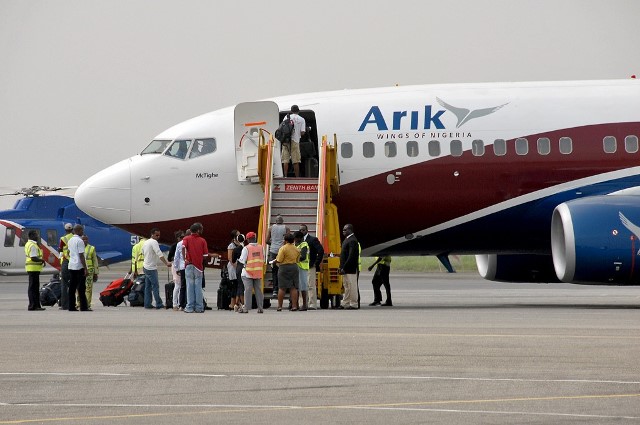
    LAGOS – Unions in the Nigerian aviation industry have jointly written an open letter to President Bola Tinubu on the grounding of the Arik Air fleet of aircraft by the Nigerian Airspace Management Agency (NAMA).


    û


    The unions; National Union of Air Transport Employees (NUATE), Air Transport Services Senior Staff Association of Nigeria (ATSSSAN) and the National Association of Aircraft Pilots and Engineers (NAAPE), expressed shock with the grounding of the airline’s fleet.


    The open letter dated August 1, 2024 and obtained by Daily Independent, was signed by Comrades Ocheme Aba; General Secretary, NUATE, Frances Akinjole, Principal Deputy General Secretary, ATSSSAN and Olayinka Abioye, General Secretary, NAAPE.


    The petitioners, expressed shock with the grounding of the operations of the airline over the indebtedness between Engr. Arthur Eze and Sir. Johnson Arumemi-Ikhide, the founder of Arik Air.


    The unions also maintained that the aircraft in question belonged to secured creditors as lien and wondered how such equipment could be taken over by another creditor.


    They argued that the aircraft could not have been used as writ for the loan.


    According to the unions, the action had created anguish and severe frustration among Arik’s passengers and had exacerbated the present air travel challenges in the country.


    The unions also said that no fewer than 2,000 direct staff of the airline would be affected, while no fewer than 16,000 dependents would also face the current hardship of the grounding of the airline by the agency.

    The petition added: “Under the current severe socio-economic upheavals, throwing such large numbers of citizens into economic quagmire can only worsen the forbearance strains. This is apart from losses of the other third party vendors and service providers – airports, aviation agencies, ground handlers, fuellers, caterers and many more. This will also have a significant negative impact on the earnings of aviation agencies.


    “Against the background of the negative consequences of the earlier similar grounding of Dana Air for which the industry is still counting the losses, we consider this avoidable situation to be truly worrisome.”


    The unions appealed to intervene in the crisis by calling all parties in the matter, especially the government agencies to order and allow the airline to continue its operations, even while the issues are being resolved.


    The unions also pointed out that there was an order of court directing all parties to maintain status quo ante on the issue.


    Daily Independent had exclusively reported on Monday that the grounded aircraft, Boeing 737-700 with the registration number: 5N-MJF, B737-800; 5N-MJQ and DASH8-Q400 with the registration number: 5N-BKX, belonged to Afrexim Bank.


    The paper also reported that the situation may discourage foreign creditors from financing aircraft purchase for indigenous airlines, fearing that their assets may be taken as lien by other creditors in case of litigation.


    NAMA in a statement last Tuesday by Alhaji Abdullahi Musa, its Director, Public Affairs and Consumer Protection, had said that three Arik Air aircraft were affected by the Supreme Court ruling.


    The statement clarified that the airline’s fleet of aircraft were grounded over the $2.5 million debt to one Atlas Petroleum International Ltd, which attached its airplanes.


    Earlier, the management of Arik Air (In Receivership), had accused Mr. Festus Keyamo, the Minister of Aviation and Aerospace Development of grounding the airline’s fleet of aircraft


  • Mobius, maker of low-priced SUVs for startups, to shutdown

    Mobius, maker of low-priced SUVs for startups, to shutdown

    Mobius, maker of low-priced SUVs for startups, to shutdown

    Mobius Motors, a Kenya-based automaker backed by Playfair Capital, has entered a voluntary liquidation after efforts to rescue the company for nearly one year failed. Mobius has been struggling to settle suppliers and pay salaries as debts from its operations rise.


    “At a meeting of the shareholders held on 5 August 2024, it was resolved to place the company under liquidation as per Section 393(1) (b) of the Insolvency Act and appoint KVSK Sastry as the liquidator to wind up the company,” Nicolas Guibert, Mobius director, said in a notice.


    Kenya’s Insolvency Act 2015, allows companies to wind up if the board resolves “by special resolution that it be liquidated voluntarily.”


    Mobius, which raised $56 million across five rounds, manufactured low-priced SUVs targeting SMEs in infrastructure, agribusiness and supplies operating in remote areas, and needed vehicles that could withstand rough terrains.


    Founded in 2009 by Joel Jackson, a British national, while working in Kenya, Mobius pioneered a stripped-down SUV model “built for African roads” in 2014. The first model cost $10,000 (KES1.3 million), below the market prices of standard SUVs in Kenya.


    The startup built 50 units of its first model. It released Mobius II and Mobius III in 2018 and 2021 respectively, as successors of the first model, but failed to capture the Kenyan car market flooded with second-hand imports from the UK, Japan and other Asian countries.


    The company’s production was tied to pre-orders with a refundable deposit of $384 (KES50,000), which could mean the uptake of its models was low in the market.


    Mobius began mass production in 2015 after getting the backing of Playfair Capital, a UK-based VC. It also received funding from Chandaria Industries, a Kenyan-based manufacturer, DFC, a US government development corporation and PanAfrican Investment, a private investment firm

  • Bangladesh Prime Minister Resigns Amid Unrest

    Bangladesh Prime Minister Resigns Amid Unrest

    Bangladesh Prime Minister Resigns Amid Unrest

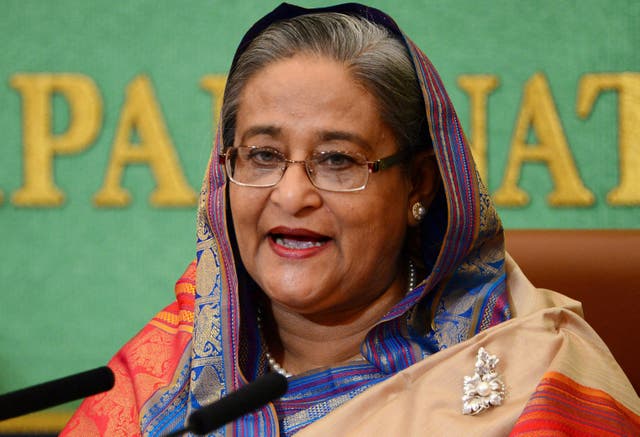
    Prime Minister Sheikh Hasina

    Bangladesh’s prime minister has resigned and fled to India following weeks of violent protests in the country.

    Prime Minister Sheikh Hasina, 76, and her sister took a military helicopter to India’s eastern state of West Bengal, according to media reports, which is just across the border. Another report, however, said she was headed to India’s north-eastern state of Tripura.

    The protests initially began peacefully in late June as students demanded the abolition of the quota system for government jobs, but escalated into violence following clashes between protesters, police, and pro-government supporters at Dhaka University.

    Despite a nationwide curfew, student activists defied the orders and organized a march to the capital, Dhaka, on Monday to pressure Hasina into resigning.

    Happy protesters jubilating Bangladesh Prime Minister’s resignation.

    On Monday, protesters breached Ms. Hasina’s official residence after defying a military-imposed curfew in Dhaka.

    During a televised speech, Army Chief General Waker-Us-Zaman confirmed that the Prime Minister had fled the country and announced the formation of an interim government.

    In celebration of the Prime Minister’s end of 15-year rule, thousands of people stormed her official residence, shouting slogans, pumping fists, and displaying victory signs.

  • Food inflation: Students groan on campuses

    Food inflation: Students groan on campuses


    Food inflation: Students groan on campuses

    • •My son came home malnourished, I hadly recognised him —Parent
    • •We’re hungry, restless —Students
    • •Something has to be done —NAPTAN
    • •Reintroduce subsidised meals for students —NANS

    •Students can apply for Upkeep Allowance Loan —NELFUND


    By Adesina Wahab


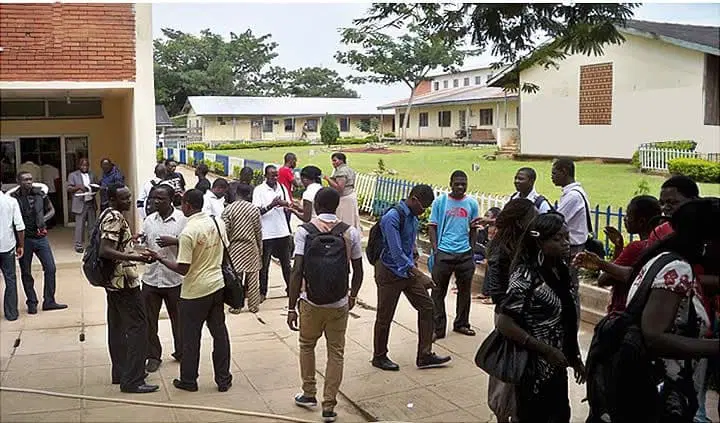
    LAGOS: When Elisha (other names withheld), a student in one of the public universities in Lagos State came home during a break, his father could barely recognise him, as though not sick, he was visibly emaciated, no thanks to malnutrition.


    0.00 / 0.00

    On campus, the accounting education student told his inquisitive father that he was only able to afford bread and beans since most food items had gone out of the reach of average citizens.


    “I was outside the house when I saw him coming on a commercial motorbike. Even from afar, I could see how lean he was. When he came down and greeted me, I asked him whether he fell sick in school and he said nothing of such happened. I asked him whether he knew he had emaciated and what he thought was the reason.


    “The reply I got was shocking. He said he mostly ate bread and beans on campus. They cannot cook in the hostels, which are even overcrowded. To eat what we call “swallows” is a luxury most of the time.


    ”I felt bad but apart from him, I still have three other children in the same university. And this is a school where we paid less than N40,000 as fees just a couple of years ago and we are now being made to pay nearly N200,000,” Elisha’s father, a medical worker in a Lagos teaching hospital, said.


    Food inflation in Nigeria

    Recently, the National Bureau of Statistics, NBS, said headline inflation for June 2024, was dominantly driven by food inflation, which rose to 40.9 per cent year-on-year, up from 40.7 in May 2024 and significantly higher than 25.3 per cent in June 2023. Similarly, core inflation rose to 27.4 per cent in June 2024, from 27.0 per cent in May 2024 and 20.1 per cent in June 2023.


    It added further that all measures of inflation rate rose in June 2024, albeit at a slower pace. Headline inflation increased to 34.2 per cent in June 2024 from 22.8 per cent in June 2023 and 34.0 per cent in May 2024.


    The inflationary pressures remain driven by currency depreciation, with the official exchange rate averaging N1471/$ in June, compared to N769/$ in June 2023 and rising imported food inflation (36.4 per cent y/y).


    Cost of meal in UNILAG

    For a 300-level student of the University of Lagos, UNILAG, Akoka, surviving in school is now becoming difficult. The student, who craved anonymity, explained that previously, N5OO could suffice for snacks per day, and N1,500 for a meal. Now, N800 cannot get the same quantity of snacks.


    “I am in the Department of History Education at UNILAG. Previously, I used to spend about N500 on snacks and drinks; and N1,500 on meals per day. But now, N800 can’t guarantee a snack and a drink. For meals, it is even worse.”


    On the cost of the cheapest meal, she noted that: “The cheapest plate of meal for someone like me that doesn’t eat much is N1,300. But to get a full portion is between N2,800 and N3,000. I had to stop buying food from some places in school.”


    Another student of UNILAG, who simply gave his name as Musa, told Vanguard: “Before the hike in food prices, I was spending between N5,000 and N10,000 on feeding weekly. And sometimes, I would not spend up to that amount.


    ”Now, I spend close to N20,000. Most of the time, this money is not enough. So, to survive I had to stop going to some restaurants to eat.”


    Another student, Israel Chukwuemeka, a 300 level student of the Department of English, explained that feeding at home saved him the trauma of hunger at school.


    “Since I go to school from home, I usually eat before leaving home, so that I won’t feel too hungry in school. Occasionally, one would still need to top it up in school. Whenever there is need for that, I spend N500 per day. However, the school management should simply subsidise food items for students.”


    Scoop of rice is N300 in LASUED

    Despite the fact that Lagos State University of Education, LASUED, Ijanikin, Lagos, is close to the Nigeria-Benin border, where most traders bring rice to the state, rice is still unaffordable for many students. A scoop of cooked rice goes for N300, and five of such cannot satisfy an adult.


    A 200 level student in the school, Elizabeth Emmanuel, called on the government to reduce the cost of food items.


    Lamenting that students who depend on rice, one of the country’s staple and cheapest foods before the hike, could no longer afford it as a scoop of rice goes for N300.


    “Before now, I can manage N4,000 for a week. However, the same is no longer feasible now. Common rice is being sold for N300 per scoop. What the government can do is to drastically reduce the cost of food items. because they cannot give us cooked meals.


    I spend N3,000 daily on feeding- Covenant University student

    For a 200 level student of Covenant University, Ota, Ogun State, the government needs to bring down the cost of food items. He also lamented the fact that parents were facing serious challenges keeping their wards in school.


    The student, who craved anonymity, explained: “Before the hike in prices of food items, my feeding was okay as I was able to follow my food timetable, budget and savings compared to now. While I spent N1,500 daily on feeding then, if I decided to feed twice, now, I spend N3,000 also feeding twice.


    “The government needs to bring down the prices of food items because after paying school fees, our parents still have to worry about the cost of feeding us.”


    We’re barely surviving on feeding allowance- UNILORIN student


    For Ruka Ibrahim, a 400 level student of the Department of Mass Communication, UNILORIN, students are eating not to get satisfied but to survive.


    “It’s a known fact that Nigerian students don’t feed well when they’re away from home. However, the recent hike in prices of food items has made things unbearably difficult. Students don’t eat to get satisfied anymore, they eat to survive!“


    I am always hungry and restless

    Another student of UNILORIN has this to say: “My feeding before the hike in the prices of food items was not that consistent since I’m not from a well-to-do family, but I was able to afford three square meals per day at least with enough protein and nutrients.”


    A student, who refused to divulge his name or department, explained: “Before, I spent N1,000 daily, but now, I spend N3,000. As a result, I am always hungry and restless.”


    On what he wants the government and his school management to do, he said:


    They should focus on the students too. The transport fare in my school is taking all our feeding allowances, coupled with the hike in the prices of food, we are barely surviving as students and it is affecting our academics.”


    School fellowship my saving grace – UNIBEN student

    According to Favour Binchang, a Linguistics Studies student of the University of Benin, UNIBEN, Benin City, being part of a school fellowship has been of great value.


    “Then, N20,000 augmented with the foodstuffs from home was okay for me in a month. Currently, things are so bad that I can’t even make such calculations anymore. I’ve had to go back home twice this semester just to keep up with food supplies.


    “To survive now is hell. If you patronise a ‘Bukateria’ at school, the cost of the cheapest food is about N1,200 per plate and it can barely satisfy you. So, I’ve had to juggle between home and school.


    ”Other times, I would travel to my sister’s house to spend the weekend and have three days of free food. My campus fellowship and friends have had to come through and succour me through the storms of hunger.


    “To save students from hunger, as it was in the 70s/80s, the government should make food free on campus cafeteria with students using their food cards. It’s not for students to be thinking about what to eat and academic rigours at the same time.”


    What schools are doing

    When fees were increased at the start of the ongoing session at UNILAG, the management faced a lot of pressure from students who could not cope with the situation. Apart from those students who said they were unable to pay the new fees, there were those who had difficulties feeding.


    According to the Vice Chancellor, Prof. Folasade Ogunsola, the management of the school, corporate bodies and even alumni association came to the rescue.


    “Some students said they were able to pay the fees, but that they had difficulties feeding. In line with our belief that no student would drop out for any reason, the management of the university is providing meals for 40 of such students daily.


    ”We feed them thrice and we have also increased the number of participants in our work study scheme as well as increase the amount we pay them,” she said.


    What we want the government to do – Parents

    Parents, under the auspices of the National Parent Teacher Association of Nigeria, NAPTAN, have called on the government to act fast in making life better for citizens, including students.

    The Deputy National President, Chief Adeolu Ogunbanjo, told Vanguard that most people were going through difficult times.


    “The government should ease things for the citizens because people are going through a lot, including students. The recent pronouncement by the federal government that there would be import waivers for some staple food items such as rice, beans etc, is commendable.


    ”Though the government said it would be for six months, I would suggest it lasts for as long as the hunger situation is brought under control.


    “Our land borders can also be opened for a month or two to allow essential food items come in. I am not saying the borders should just be flung open forever, that is going to affect our local farmers but we need to make things easier for all. Now, the cost of some items are coming down, especially pepper and tomatoes.


    “Most students in our higher institutions are teenagers who are at ages they need good nutrition, but many parents are unable to take care of their needs.”


    Our suggestions – NANS

    The National President of the National Association of Nigerian Students, NANS, Comrade Lucky Emonefe, said it had been difficult for students to cope under the current economic situation.

    “How much can parents give their children that will be enough now? The cost of living is high and prices keep changing, going up daily. Coupled with that is the fact that parents are also having their financial powers eroded, as their real incomes diminish.


    ”Government can subsidise feeding for students on campuses. They did that in those days and students used their meal tickets to eat in cafeterias.


    “We can do it again if we are willing and ready to do it. The resources are there and we just have to manage them judiciously. Also, government should think about the students during the distribution of palliatives. Empowerment should be given to students on campuses too.”


    Students can take upkeep allowance loan – FG

    The Federal Government, which recently started disbursing loans to students through the Nigerian Education Loan Fund, NELFUND, said the scheme had many parts which were intended to address different issues.


    Spokesman of NELFUND, Mr Nasir Ayitogo, said the scheme had a programme to address such issue.

    “The student loan scheme is not limited to helping students pay their fees. We do more than that. For instance, some students live off campus and may need to pay house rent, we can help do that if they apply for it.


    ”Also, students can apply for upkeep allowance loan too. That will help them on day-to-day feeding and general upkeep of their bodies and souls. Those in need of that can apply and when found okay, will be granted the loans NELFUND is about making learning comfortable for students by assisting with their fees, accommodation expenses and welfare,” he explained.


    •Additional reports by Elizabeth Osayande, Ebunoluwa Sessou & Damilola Akapo


  • Sanwo-Olu opens new engagement channels with protesters

    Sanwo-Olu opens new engagement channels with protesters

    Sanwo-Olu opens new engagement channels with protesters

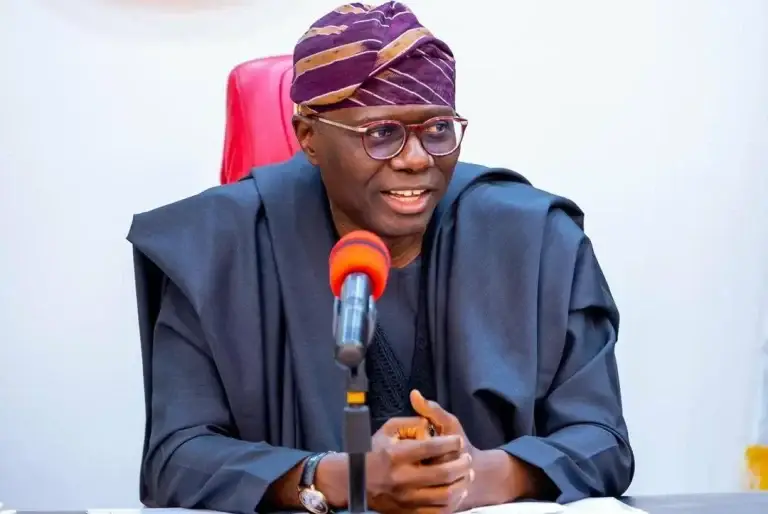
    The Lagos State Government has expressed appreciation to the protesters in Lagos for their peaceful conduct and their announcement of an end to their action following the broadcast by President Bola Ahmed Tinubu (GCFR) today.


    Lagos State Governor Babajide Sanwo-Olu

    Governor Babajide Sanwo-Olu praised the leaders of the protest in Lagos, saying: “Your stoppage of the protest today is a crystal clear affirmation of the fact that you know your collective voice has been heard by the government. What you have done is not only noble but the civilized thing to do.”


    In demonstration of the Lagos State Government’s commitment to continuous engagement with the youth, Mr Governor has directed that despite the stoppage of the protest, the dialogue and engagements which the state government initiated prior to the action I must continue.


    0.00 / 0.00

    Consequently, Mr. Governor has directed Ministry of Youth and Social Development; Ministry of Information and Strategy and Office of Civic Engagement to immediately open wider channels of engagement with various stakeholders, including the protest leaders.


    The Executive Council members in charge of the Ministries can be reached on the following dedicated Citizens Access Lines:


    . Office of Civic Engagement +234 802 522 4347


    . Ministry of Information & Strategy +234811965788


    . Ministry of Youth & Social Development +2347077178295


    Now it is fit and proper to, once again, warn our citizens to be very vigilant. Those who seek to divide us are yet to give up. They may continue to post fake news via audio and video channels. Lagosians must never give room to war mongering, scare mongering and rumour mongering. That is not our way; that is not who we are. That is not our style.


    Mr Sanwo-Olu, once again, praises Lagosians for rejecting anarchy and embracing peace. He praises the professional conduct of all security agencies, the Police Command, Department of State Services, the military, Civil Defence, and Neighborhood Watch.


    The Governor notes with great pride the roles of our traditional rulers, Civil Society Organisations, Community Leaders, Religious Leaders, Students Leaders and others, who ensured Lagos remained peaceful.


    He enjoins all Lagosians to continue their businesses without any fear whatsoever.