Blog

  • NAFDAC shuts down Sokoto bakery for using unfortified sugar, others

    NAFDAC shuts down Sokoto bakery for using unfortified sugar, others

    NAFDAC shuts down Sokoto bakery for using unfortified sugar, others

    The National Agency for Food and Drug Administration and Control has closed down a bakery for using unfortified sugar and banned bromate in Sokoto State.

    The NAFDAC State Coordinator, Mr. Garba Adamu told the News Agency of Nigeria on Friday, July 13, 2024, that the bakery was detected during a special raid by the agency’s officials.

    “We discovered that the bakery was using saccharine, an unregistered foreign sugar as a sweetener along with banned bromate in their productions.

    “The items were seized for destruction and the bakery is shut down until it complies with regulations and directives,” he said.

    Adamu emphasised that only fortified registered sugar containing Vitamin A with micronutrients and other vitamins are allowed to be sold and consumed in Nigeria.

    ”This is a Federal Government policy enforced by NAFDAC and other government agencies to ensure that consumers get the maximum nutritional and other health benefits from the products.

    Six other bakeries were also sanctioned for poor hygiene as enforcement officers led by Mr Buhari Manzo scaled up the routine inspection visits to bakeries across the state.

    Bakeries are monitored to ensure that they don’t use saccharine or other banned items as a substitute for fortified regulated ingredients,” Adamu said.

    The state coordinator also cautioned producers against using adulterated, counterfeit, unregistered and expired items in their places, reiterating that NAFDAC would continue the enforcement regularly.

    Adamu said the operation would be extended to Local Government Areas as part of the agency’s efforts to ensure that hygienic foods are sold.

    He called on the public to be wary of patronising unregistered products and always report any suspicious practices and contaminations to NAFDAC.

  • FG to convert 250,000 vehicles to CNG annually – Coordinator

    FG to convert 250,000 vehicles to CNG annually – Coordinator

    FG to convert 250,000 vehicles to CNG annually – Coordinator

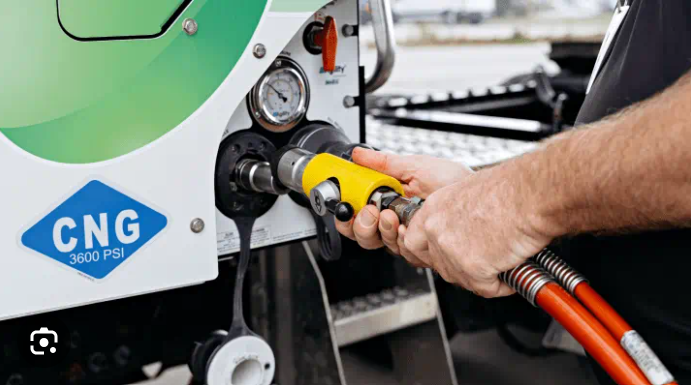
    The Presidential Compressed Natural Gas Initiative is set to mobilise all 36 states by year-end, converting petrol-powered vehicles to CNG, a cleaner and more affordable alternative.


    The P-CNGi’s Programme Execution Coordinator, Folarin Oworu, announced this at a rally held at the Mando Inter State Terminal, Kaduna, on Thursday, where 100 conversion kits were distributed to commercial transport union members.


    According to him, the initiative targets commercial vehicles, with partners in various states, aiming to convert 250,000 vehicles per year starting next year.


    He stated that the conversion kits, worth N1.5m, would be free for transport unions, to reduce transportation costs for the masses.

    He added that the next rally is scheduled for Lagos, with plans to cover all states before year-end.

    Oworu said, “What we are doing here today is front-to-back CNG conversion mobilisation. Mr. President has decided to make conversion free for the road transport unions – that is the NURTW, NATO and other road transport unions.

    “The idea is to bring down the cost of commercial transportation. How do we do that? It is by converting the commercial vehicles of transport unions to make their running cost cheaper. The idea is for them to translate these savings to the end users by making transportation cheaper.

    We are starting here in Kaduna and from Kaduna, we shall move to Lagos and before the end of the year, we would have gone to the whole 36 states.


    “The signing of the Memorandum of Understanding was done by the conversion partners we have at the various locations. The commercial vehicles will go and have their vehicles converted. The conversion kits are one hundred per cent free. The conversion cost is one hundred per cent free. That is the agreement in the MOU.”


    In his goodwill message, former National President of the National Union of Road Transport Workers, Najim Yasin, commended President Tinubu’s initiative on the P-CNGi agenda, aimed at converting commercial vehicles to use compressed natural gas.

    Yasmin applauded the President’s support for the transport sector and the decision to provide conversion kits free of charge to commercial vehicles, estimated to benefit 1 million vehicles.

    He encouraged members of NURTW, NATO, and other road users to key into the program, which is aimed at reducing the suffering of the masses by decreasing transportation costs and fuel prices.


    Yasmin thanked the President and organisers for involving transport workers in the program and expressed appreciation for the support from neighbouring states.


    He emphasised the program’s potential to reduce fuel prices and transportation costs, benefiting the masses. The program is set to roll out across all 36 states in the country.

    Yasmin said, “This programme will move around the 36 states of this country. We, the National Union of Road Transport Workers of Nigeria, the National Association of Transport Owners, use this opportunity to commend President Bola Tinubu for this laudable initiative and support for the transport sector in Nigeria.

    “I called on entire transport organizations- NURTWN, NATO…etc across the country to key into the programme. They have signed the agreement with the company for the conversion here in our present. We have got a number of vehicles that as of today can move to the conversion centres so that these vehicles can be converted one by one.

    “This one is strictly for commercial vehicles and that is why we are involved so that we ensure that our members key into this programme. We appreciate Mr. President and all those who work tirelessly to make this programme a reality.

    “We know how much

    a litre of fuel is now sold and if you fill your tank for N50,000, N45,000, it depends on the number of litres your vehicle is consuming. Before you go from Kaduna to Abuja, that fuel is gone. Automatically, it will affect the transport fare.”

    The Presidential CNG initiative is a key component of President Bola Tinubu’s administration’s palliative measures to mitigate the effects of the fuel subsidy removal policy on the masses.

    The initiative is seeking to provide relief to Nigerians by promoting the use of compressed natural gas as a cleaner and more affordable alternative to fuel.

    The move is part of the government’s efforts to cushion the impact of the subsidy removal and ensure a smoother transition to a more sustainable energy future.

  • Hunger Strike: Zulum, Shehu, CAN Oppose Planned Hunger Protest

    Hunger Strike: Zulum, Shehu, CAN Oppose Planned Hunger Protest

    Zulum, Shehu, CAN Oppose Planned Hunger Protest.


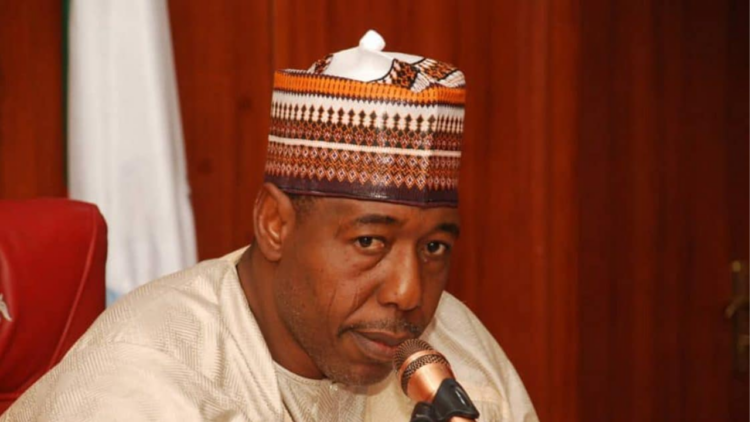
    Borno State governor, Babagana Umara Zulum, alongside the Shehu of Borno, Dr. Abubakar Ibn Umar Garbai Elkanemi and the chairman of the Christian Association of Nigeria (CAN), Most Rev Dr John Bogna Bakeni have appealed to the citizens of Borno and the country at large to shelve the planned hardship protest and embrace dialogue.


    At a stakeholders meeting convened by Governor Zulum at the Government House Maiduguri, the governor said he is appealing not only to the people of Borno State but also to Nigerians to shun any protest that would cause them hardship.

    Reports says that some Nigerians, under various bodies, have planned a nationwide protest between August 1st and 10th against the rising cost of living and the economic hardship facing the country at the moment.


    But during the stakeholders meeting, which comprised, the members of the state executive council, traditional rulers, Nigeria Labour Congress (NLC), Trade Union Congress (TUC), National Association of Nigeria Students ( NANS ), National Youth Council of Nigeria, the Nigeria Union of Journalists ( NUJ ) , the Nigerian military, the police among others, the governor noted that the government and people of the state who have been bearing the brunt of the Boko Haram insurgency cannot afford to participate in any protest that could result to destruction of property and maiming of innocent citizens.


    “I appeal not only to the people of Borno State, but to all Nigerians to shun any protest that will bring hardship to Nigerians. And there is a need for us to maintain law and order in the state. Any breakdown of law and order would be a disaster to the state. Let us engage in positive dialogue.


    The federal and state governments are doing everything possible to ensure that the current hardship that the people are facing is well reduced.


  • Oil Production: NASS Mulls Stronger Laws Against Crude Oil Theft, Vandalism

    Oil Production: NASS Mulls Stronger Laws Against Crude Oil Theft, Vandalism

    Oil Production: NASS Mulls Stronger Laws Against Crude Oil Theft, Vandalism.

    The National Assembly has thrown its weight behind NNPC Limited’s ongoing efforts to boost Nigeria’s crude oil production and grow its reserves, saying it will consider stiffer consequences for crude oil thieves and vandals of the nation’s critical hydrocarbon infrastructure.

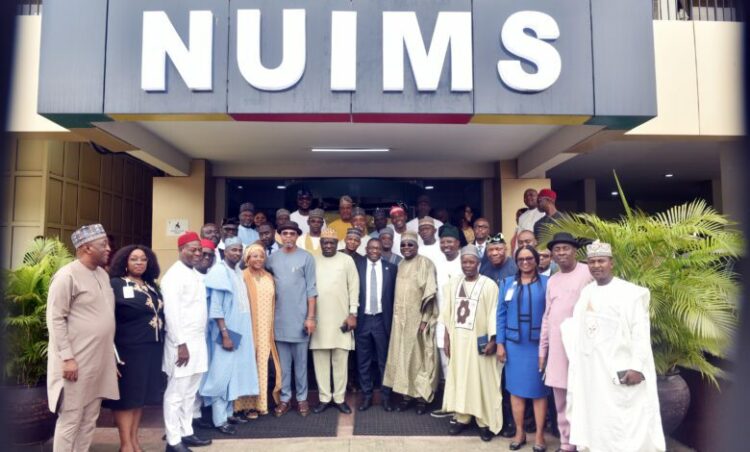
    This was made known when the National Assembly’s Joint Committee on Petroleum Resources (Upstream) paid an oversight visit on the NNPC Upstream Investment Management Services (NUIMS), an upstream arm of the NNPC Ltd, at its headquarters in Lagos, on Tuesday.

    Jointly led by the Committee Chairmen from both chambers, Senator Eteng Jonah Williams and Hon. Alhassan Ado Doguwa, the legislators described the menace of crude oil theft and vandalism of critical oil and gas infrastructure as major challenges to Nigeria’s revenue generation and budget targets, which must be curtailed.


    In his remarks, Senator Williams said it was imperative for the National Assembly to come up with legislative action that will help stop crude oil theft and increase Nigeria’s crude oil production.


    He said from what they found at NUIMS, it is duty-bound on the legislature to come up with decisive measures that will help the government to achieve its set targets in the oil and gas sector.

    On his part, Hon. Alhassan Doguwa said by virtue of their duties as a legislature, the lawmakers will fast-track the strengthening of a legislative framework to be able to check the excesses bedevilling the nation’s oil and gas sector.

    Doguwa, who commended NNPC Ltd’s efforts for its industry-wide security collaboration against the nation’s hydrocarbon infrastructure said more needs to be done to ensure the Company increases Nigeria’s crude oil production and grows its reserves.

    He said the legislature will consider deploying the stick and carrot approach towards addressing the issue, but where it becomes necessary, the stick approach must be emphasised to rise vehemently against any encumbrance standing in the way of Nigeria’s economic growth and development.

    Earlier in his detailed presentation to the lawmakers, the Chief Upstream Investment Officer (CUIO) of NNPC Ltd, Mr. Bala Wunti described NUIMS as a trustee of Nigeria’s upstream investments which ensures the country maximises returns through effective supervision of its Joint Venture (JV), Production Sharing Contracts (PSC) and Service Contracts (SC) operating partners.

    Wunti, who commended the lawmakers for their consistent support to the NNPC Ltd, said engagements with the National Assembly are crucial as they will help the NNPC Ltd in the attainment of its mandate.

    “We are here to see how the NASS will help us produce more barrels and deliver value to our shareholders. Increasing production is the new narrative and your support is needed to enable us to achieve our set targets based on our key principles of safety, speed, compliance and efficiency,” Wunti informed the legislators.

    He said so far, the industry-wide security collaboration against crude oil theft and vandalism of Nigeria’s critical hydrocarbon infrastructure through the four-way strategy of “Detect, Deter, Respond and Recover” have been instrumental in the recent restoration of some of the nation’s lost barrels.

  • Over 600,000 Nigerians sought asylum abroad under Buhari – Report

    Over 600,000 Nigerians sought asylum abroad under Buhari – Report

    Over 600,000 Nigerians sought asylum abroad under Buhari – Report


    Over 600,000 Nigerians filed for asylum in other countries between 2016 and 2023, which were years under the administration of former President Muhammadu Buhari.


    Buhari was President from 2015 to 2023 and handed over to President Bola Tinubu who was sworn in on May 29, 2023, after winning in the general elections the same year.


    According to a report released on Wednesday, July 17, 2024, by Statisense, a data collection organisation, of a total of 664,384 in eight years, 355,792 persons sought asylum between 2016 and 2019 while 308,592 sought asylum between 2020 and 2023.


    On a year-by-year basis, 66,862 sought asylum in 2016, 91,924 in 2017, 84,624 (2018), 112,382 (2019), 73,233 (2020), 83,105 (2021), 83,402 (2022), and 68,852 in 2023.


    The figures indicate a surge from the past years, as Statisense noted that within 12 years – 2004 to 2015 – only 204,791 Nigerians filed for asylum in other countries.


    In total, 869,175 Nigerians filed for asylum in the last 20 years, notably from 2004 to 2023.


    The report was posted on the organisation’s X.com handle @StatiSense, citing the United Nations Refugee Agency.


    In another report shared by the organisation on Wednesday, it was stated that the Republic of Niger topped countries with the most Nigerian refugees in 2023 with about 200,497 Nigerians and a total of 1,268,464 Nigerian refugees between 2015 and 2023.


    Niger, a border country, shares proximity with Nigeria’s north, where residents battle a spate of insecurity in the region ranging from banditry, terrorism and herdsmen-farmers crisis.

    In another report shared by the organisation on Wednesday, it was stated that the Republic of Niger topped countries with the most Nigerian refugees in 2023 with about 200,497 Nigerians and a total of 1,268,464 Nigerian refugees between 2015 and 2023.

    Niger, a border country, shares proximity with Nigeria’s north, where residents battle a spate of insecurity in the region ranging from banditry, terrorism and herdsmen-farmers crisis.


    Another report also revealed that Nigerians topped the list of African countries who sought asylum in Canada in 2023 with about 10,111 asylum seekers followed by Kenya with 1,345. It stated that 1,345 Nigerians however sought asylum in the United Kingdom and 5,136 in the United States of America.


  • Petrol landing cost now N1,117/litre – Marketers

    Petrol landing cost now N1,117/litre – Marketers

    Petrol landing cost now N1,117/litre – Marketers

    The landing cost of Premium Motor Spirit, also known as petrol, was N1,117/litre as of Tuesday, July 16, 2024, the Major Energies Marketers Association of Nigeria announced on Wednesday.

    MEMAN disclosed this during a webinar with journalists on Wednesday.

    The association revealed that the landing cost of diesel was N1,157/litre, while that of aviation fuel was N1,127/litre.

    The PUNCH reports that the N1,117 landing cost of petrol is far above the pump price of the product in Nigeria.

    At the moment, filling stations operated by the Nigerian National Petroleum Company Limited and those of the major marketers sell PMS at between N617/litre and N660/litre, while independent marketers sell for N700/litre or more.


    NNPC, the sole importer of petrol into Nigeria, has consistently denied subsidising the cost of PMS but refused to disclose the landing cost of the product.


    Our correspondent reports that the revelation from MEMAN is almost the first from marketers in the industry as the landing cost appears to have been shrouded in secrecy by the importer of PMS.

    MEMAN’s Executive Secretary, Clement Isong, said the costs were obtained from independent energy price benchmark providers.


    The association maintained that it would release similar information regularly to keep the masses informed.


    Recently, independent oil marketers accused private depot owners of hiking the ex-depot price of petrol from N630 to N720/litre.


    An expert in the energy sector, Prof Wumi Iledare, told our correspondent in an interview that the cost of PMS in Nigeria was far below the international price, considering the price of diesel.


    “The gap between the cost of diesel and petrol in Nigeria is much. It is never like that all over the world. That means something is wrong.


    “I don’t know if NNPC is paying subsidies or not, but somebody is absorbing the difference. You can call it under-recovery or subsidy, but the price of petrol today does not reflect the market cost of producing a litre of petrol,” he disclosed.


    Iledare added that with the current exchange rate, the price of petrol should not be less than 80 per cent of the price of diesel.


    .Corroborating this, a Professor of Economics at the University of Ibadan and President of the Nigerian Economics Society, Adeola Adenikinju, said, “The current price of PMS is being subsidised by the government. The government buys at higher rates and sells to us at subsidised rates. That is what they call under-recovery.”


    The International Monetary Fund recently warned the Nigerian government to remove what it called implicit fuel and electricity subsidies.


    In a report published recently by the IMF, the organisation told Nigeria that the subsidies would guzzle three per cent of the nation’s Gross Domestic Product in 2024 as against one per cent in the year before.


    President Bola Tinubu declared the removal of fuel subsidies during his inauguration on May 29, 2023.


    IMF noted, however, that “adequate compensatory measures for the poor were not scaled up promptly and subsequently paused over corruption concerns. Capping pump prices below cost reintroduced implicit subsidies by end-2023 to help Nigerians cope with high inflation and exchange rate depreciation.”


    However, the NNPC and the Federal Government have vehemently denied subsidising the current price of PMS.


  • Crude Shortage: IOCs still causing crude supply crisis, Dangote refinery cries out

    Crude Shortage: IOCs still causing crude supply crisis, Dangote refinery cries out

    Crude Shortage: IOCs still causing crude supply crisis, Dangote refinery cries out.

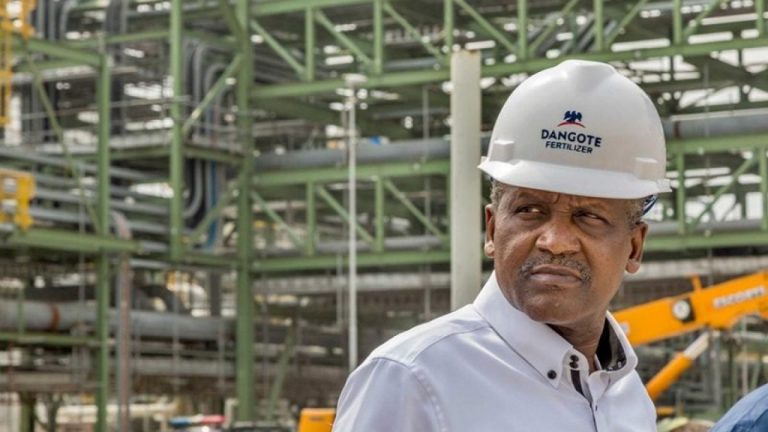
    The Management of Dangote Industries Limited has insisted that the international oil companies are still frustrating crude supply to its 650,000-capacity refinery.

    The management said this even as it commended the Nigerian Upstream Petroleum Regulatory Commission for its various interventions in the oil company’s crude supply requests from IOCs, and for publishing the Domestic Crude Supply Obligation guidelines to enshrine transparency in the oil industry.


    In a statement on Wednesday, the Dangote Group alleged that the IOCs insisted on selling crude oil to its refinery through their foreign agents, saying the local price of crude would continue to increase because the trading arms offer cargoes at $2 to $4 per barrel, above NUPRC official price.


    In a statement on Wednesday, the Dangote Group alleged that the IOCs insisted on selling crude oil to its refinery through their foreign agents, saying the local price of crude would continue to increase because the trading arms offer cargoes at $2 to $4 per barrel, above NUPRC official price.


    The group also alleged that the foreign oil producers seemed to be prioritising Asian countries in selling the crude they produced in Nigeria.


    The Vice President, Oil & Gas, Dangote Industries Limited, Mr DVG Edwin, said, “If the Domestic Crude Supply Obligation guidelines are diligently implemented, this will ensure that we deal directly with the companies producing the crude oil in Nigeria as stipulated by the Petroleum Industry Act.”

    Edwin insisted that IOCs operating in Nigeria had consistently frustrated the company’s requests for locally-produced crude as feedstock for its refining process.

    He stated that when cargoes were offered to the oil company by the trading arms, it was sometimes at a $2 to $4 (per barrel) premium above the official price set by the NUPRC.


    “As an example, we paid $96.23 per barrel for a cargo of Bonga crude grade in April (excluding transport). The price consisted of a $90.15 dated Brent price plus a $5.08 NNPC premium plus a $1 trader premium. In the same month, we were able to buy WTI at a dated Brent price of $90.15 + $0.93 trader premium including transport. When the Nigerian National Petroleum Company Limited subsequently lowered its premium based on market feedback that it was too high, some traders then started asking us for a premium of up to $4m over and above the NSP for a cargo of Bonny Light.

    Data on platforms like Platts and Argus shows that the price offered to us is way higher than the market prices tracked by these platforms. We recently had to escalate this to NUPRC,” Edwin said, urging the commission to take a second look at the issue of pricing.


    Edwin was reacting to a statement by the Chief Executive of the NUPRC, Gbenga Komolafe, who in an interview on national television said, “It is ‘erroneous’ for one to say that the International Oil Companies are refusing to make crude oil available to domestic refiners, as the Petroleum Industry Act has a stipulation that calls for a willing-buyer, willing-seller relationship.”

    While noting that the commission had been very supportive of the Dangote refinery as it had intervened several times to help secure crude supply, Edwin, however, insisted that the NUPRC boss might have been misquoted by some people hence his statement that IOCs did not refuse to sell to us.


    “To set the records straight, we would like to recap the facts below. Aside from the NNPCL, to date, we have only purchased crude directly from only one local producer, Sapetro. All other producers refer us to their international trading arms. These international trading arms are non-value-adding middlemen who sit abroad and earn a margin from crude being produced and consumed in Nigeria. They are not bound by Nigerian laws and do not pay taxes in Nigeria on the unjustifiable margin they earn.

    The trading arm of one of the IOCs refused to sell to us directly and asked us to find a middleman who would buy from them and then sell to us at a margin. We dialogued with them for nine months and in the end, we had to escalate to NUPRC who helped resolve the situation,” Edwin stated.

    He spoke further, “When we entered the market to purchase our crude requirement for August, the international trading arms told us that they had entered their Nigerian cargoes into a Pertamina (the Indonesia National Oil Company) tender, and we had to wait for the tender to conclude to see what is still available. This is not the first time. In many cases, particular crude grades we wish to buy are sold to Indian or other Asian refiners even before the cargoes are formally allocated in the curtailment meeting chaired by NUPRC.”


    He urged the NUPRC to take a second look at the issue of pricing, having severally asserted that transactions should be on a willing-seller, willing-buyer basis.


    For this to work, he said that there must be market liquidity (many sellers/many buyers in the market at the same time) unlike where a refinery needs a particular crude grade loading at a particular time then there is typically only one participant on either side of the market.


    “It is to avoid the problem of price gouging in an illiquid market that the domestic gas supply obligation specifies volume obligation per producer and a formula for transparently determining pricing. The fact that the domestic crude supply obligation as defined in the PIA has gaps is no reason for wisdom not to prevail,” Edwin stated.

    The PUNCH reported earlier that the President of the Dangote Group, Alhaji Aliko Dangote, told editors during a tour of the refinery that the refinery was set to roll out its petrol in August 2024, having resolved its crude oil supply issues through the help of the Nigeria National Petroleum Company Limited and the Federal Government.


    Dangote’s comment came a few days after the NUPRC said crude oil producers in Nigeria had committed to working towards a sustainable supply of crude oil to Dangote and other local refineries under a market-determined pricing system.


    Both parties had said the commitment aimed to ensure that while the operators (crude oil producers) do business optimally, the refineries are not starved of feedstock.


    Accordingly, the industry regulator, the Nigeria Upstream Petroleum Regulatory Commission has directed oil refiners to provide monthly price quotes on crude supply.


    Refiners accuse IOCs


    Meanwhile, the Crude Oil Refiners Association of Nigeria has also alleged that IOCs in the country have been selling crude to CORAN members through their trading agents in Europe instead of engaging in direct sales to local refineries.


    CORAN, while expressing optimism that the recent intervention of the Federal Government would help in stopping the practice, described it as an illegal act that requires immediate government attention.


    In an interview, CORAN Publicity Secretary, Eche Idoko, told The PUNCH that the oil companies engaged in the act despite the regulations of the Nigerian Upstream Petroleum Regulatory Commission on the Domestic Crude Supply Obligation.


    “To be fair to the Federal Government, the NUPRC has set up the Domestic Crude Supply Obligation that is meant to mandate the crude producers to supply to the Nigerian market.


    “But as I speak to you, the IOCs are still kicking to see how they can whittle down the effect of the DCSO guideline, which said they should sell crude to Nigeria on a willing-buyer, willing-seller basis, but under a favourable term to Nigerians.

    What the IOCs are pushing for is that the agreement is signed between the refineries and their trading agencies instead of themselves, but the Petroleum Industry Act says it should be with them. Why they want us to sign with their trading agencies or partners is that most of their trading agencies are in Europe,” Idoko stated.


    The oil refiners’ spokesperson added, “So, it means we are buying crude from a European country while the producer is in Nigeria. This is the same thing the Dangote refinery was complaining about. We will be buying our crude oil like it is from an international market. Those are the issues we’ve been grappling with.”


    Idoko added that the IOCs want to be paid through the A-rated banks, meaning the cost could only be paid in dollars.

    Another issue is that the IOCs want us to pay with an A-rated bank and no Nigerian bank is A-rated, so we have to buy with dollars. The clauses they are trying to smuggle into this trade agreement will make it more difficult for us to buy from them under a domestic trade term. This technically places us at a disadvantage,” he said.


    NUPRC recently announced that it had resolved the controversies between oil producers and local refineries, a development that was re-echoed by the Dangote Petroleum Refinery at the time it said the plant would release petrol to the market in August.


    However, CORAN called for concerted efforts to prevent a situation whereby the Dangote refinery would resort to the importation of its crude due to an unfavourable Nigerian market.

    Idoko told our correspondent that Dangote and other local refiners were in the oil business to ameliorate the sufferings of Nigerians, especially in having access to cheaper fuel and ending years of recurring fuel scarcity.


    Most refiners in Nigeria went into the business out of passion. We really want to see the sufferings of Nigerians ameliorated. But what I can say is that Dangote will definitely sell his product to make profits. He has done a lot to have sighted the refinery in Nigeria.


    “The Federal Government also has to do the needful to ensure he also gets the crude at a cheap rate. If the crude is not sold to him cheaper, we will not get the anticipated price reduction the refinery should bring to PMS. But it will be less cumbersome for the Federal Government to buy from him,” Idoko stated.


    CORAN expressed concern that the Federal Government was finding it difficult to enforce its regulations, saying the IOCs want to retain Africa as their market for imported petroleum products.

    “If local refineries sell their products outside Nigeria, it will bring an inflow of foreign exchange and it will reduce the pressure on the naira. But our question is, why is it so difficult for the Nigerian government to see through the gimmicks of these oil merchants who continue to hold us to ransom? They want to guarantee supply to their refineries outside Nigeria.

    “If Nigerian refineries continue to get crude supply, it means they can only get crude after the Nigerian refineries are satisfied; they might go out of market. The second reason is that they want a continuous market in Africa for their products, and Nigeria is the largest consumer of refined products in Africa. The Nigerian government should wake up.

    If Nigerian refineries continue to get crude supply, it means they can only get crude after the Nigerian refineries are satisfied; they might go out of market. The second reason is that they want a continuous market in Africa for their products, and Nigeria is the largest consumer of refined products in Africa. The Nigerian government should wake up.


    “The refining industry in Nigeria has the propensity to create 20 million direct and indirect jobs. It can solve 60 per cent of the current forex issue with a direct impact on inflation. We have been pleading with the Coordinating Minister of the Economy to sit with us to see how we can partner together, but the trade merchants have presented themselves as the saviour and we as the enemy,” he claimed.


    Idoko charged the Federal Government to implement its policies and guarantee the supply of crude to local refineries.


    Meanwhile, repeated efforts to speak with the IOCs individually and as a group proved abortive. While some of them acknowledged the emails sent to them by our correspondent seeking their reactions to the various allegations against them, they refused to comment.


    IOCs keep mum


    An official of the Oil Producers Trade Section, a sub-group within the Lagos Chamber of Commerce and Industry, promised to revert but he has yet to provide a detailed response up till when this report was filed.


    Rather the official, who did not want his name in print, said many of the allegations were not true.

  • Vigilante killed for stopping scavengers of contaminated frozen turkeys in Lagos

    Vigilante killed for stopping scavengers of contaminated frozen turkeys in Lagos

    Vigilante killed for stopping scavengers of contaminated frozen turkeys in Lagos

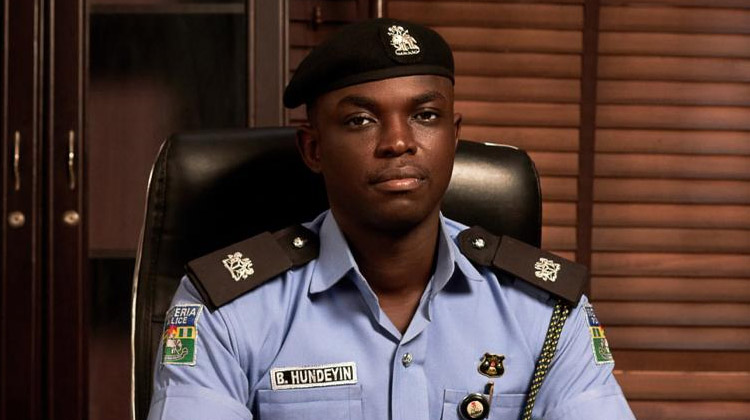
    The Police Command in Lagos State says it has arrested two suspected hoodlums over the death of a vigilante member in the Epe area of the state.

    The command’s spokesperson, SP Benjamin Hundeyin, confirmed this to the News Agency of Nigeria on Thursday.

    Hundeyin said that the Epe Police Division got a report on Monday at about 4.30 p.m. that an Ibile Vigilante member, simply identified as Oluwafemi, 45, was attacked on Friday at about 2.00 p.m. by suspected hoodlums.

    He said the hoodlums reportedly attacked the vigilante member at a refuse dump site, at Afero Village, Epe,  while attempting to stop them from scavenging disposed contaminated frozen turkeys from the dump site.

    According to the image maker, the vigilante member, who sustained injuries on parts of his body, was rushed to Epe General Hospital, where he was treated and discharged.

    “However, on July 15, 2024, at about 2.30 p.m., his condition relapsed and he was taken back to the hospital.

    “Doctors on duty battled to save his life, but unfortunately, he gave up the ghost. His corpse has been deposited at the mortuary.


    “The two suspects have been arrested in addition to the 12 already handed over to the task force on a Saturday over scavenging contaminated turkeys.

    “Investigation is ongoing,” he said.

  • Homecoming: Briton searching for Nigerian roots finally meets half -brother

    Homecoming: Briton searching for Nigerian roots finally meets half -brother

    In the middle of the busy afternoon of Monday, May 13, 2024, mail dropped in my box from an unfamiliar contact by the name Ramatu Ibrahim. Ordinarily, I should skip it to check later but I did open it.

    It read:

    Dear Oladimeji,

    Read a story you published in your paper on the 12th (of) March 2022. It is exactly like the story a friend told me about his dad and the lady his father impregnated in England while schooling.

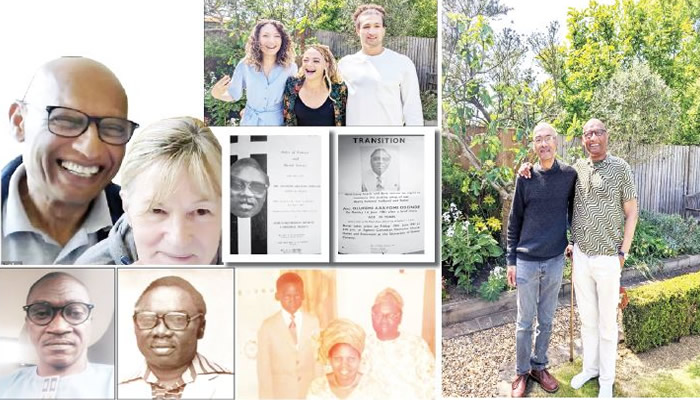
    I have pictures of my friend, Mr Muyiwa Odeinde, his dad, Arch Olufemi Odeinde, and his mum, Comfort Iyabo Odeinde. His dad’s obituary is also attached.

    His mum, Mrs. Comfort Iyabo Odeinde, lives at Bodija, Ibadan.

    His brother and sister are (1) Oluyemi Babajide Odeinde (2) Oyinkansola Odeinde…

    This mail brought back memories.  My story that Ramatu referenced was titled: ‘Father of Briton tracing Nigerian roots died in a car accident in 1981’.

    It was the story of a  68-year-old mixed-raced Briton, Paul Bolton, searching for his Nigerian father, whom he had never met.

    Bolton was born in 1954 by a British young lady to a Nigerian young man, who travelled to England for studies. He was conceived out of wedlock by the white mum, who was 19 years old at the time. The mum’s parents rejected the dad, for being a black man and for putting their daughter in the family way out of wedlock. They cut off the relationship between them and took the baby to an orphanage soon after he was born.

    The baby grew up without knowing his parents and at adulthood when he began to ask questions, his mother told him she did not wish to see him again and would not help him locate his father.

    After searching for 29 years without any headway, he reached out to PUNCH Newspapers and our investigation helped to unravel his father’s identity in three days.

    The story established Bolton’s father’s identity as Olufemi Odeinde, a successful architect, who died after an accident in 1981. It also revealed that on returning from England to Nigeria, Odeinde married Tinuade, the first indigenous librarian at the University of Ibadan, and they had two children, Oluyemi and Oyinkansola.  Oluyemi, an architect like his father, died in 2021 at the age of 60. Oyinkansola, it was found, lives in Italy.

    Now, Ramatu’s mail indicating that besides Oluyemi and Oyinkansola, Odeinde had another child named Olumuyiwa,  should have surprised me, but it did not.  Back in 2022 while investigating to unravel the identity of Bolton’s father, Olumuyiwa’s name had popped up vaguely.  It was mentioned in passing by one of the several persons I interviewed. The person hinted that the late Odeinde had another wife besides Oluyemi and Oyinkansola’s mother. I might have explored and introduced Olumuyiwa in a planned follow-up story but I did not have a sufficient lead. Bolton, who was searching for his Nigerian roots, told me he was happy enough to finally discover, through my investigation, that his father was the late Odeinde, a man from Ikorodu in Lagos State.

    Now that he knew, Bolton should approach his family in Nigeria and unite with them as he had long desired, but he told me he did not feel confident enough to make the first move. He said he was hoping that his Nigerian family, who was now aware of his existence through my story, would reach out to him first, to guarantee him he was welcome into the family. But nothing happened.

    About two years later, I asked Bolton again if he and his Nigerian family  had finally met but he replied: “No, unfortunately, there has been no contact from my Nigerian family, but at least I am  pleased to be aware of them.”

    I encouraged him to begin by mailing Oyinkansola, his surviving half-sister, who lives in Italy, but he would not. He did not want to present as an intruder. He needed the assurance that his Nigerian family wanted to meet him as much as he wanted to meet them.

    I recall that in 2022 Bolton’s wife, Jane, had told me: “I hope they will view him (Bolton) as a welcome addition to the family.”

    Then on May 13, 2024, Ramatu’s mail came out of the blue.  Attached were four portrait photographs of the late Architect Olufemi Odeinde; his obituary and funeral programme were kept from 1981. At the bottom of the obituary were listed the names of his children –  Olumuyiwa Odeinde appearing as the third and last child, behind Oluyemi Odeinde and Oyinkansola Odeinde.

    Ramatu copied my editor, Mr Dayo Oketola, her mail, which came in just when the frenetic newsroom activities were gathering momentum on that Monday afternoon. The editor needed my attention and summoned me on the intercom to his office. After he discussed what he wanted me for, I then brought up Ramatu’s mail. He said he saw the mail but had not opened it. When I told him what the mail was about, it sparked his interest. After we both examined the mail and the attached photographs and documents, my editor quipped that the lead for the concluding story had finally come and he gave directions on how to proceed.

    On the same day, I forwarded Ramatu’s mail to Bolton in the UK, to let him know about his other half-brother, Olumuyiwa. On the morning of the day after, I dialed Olumuyiwa’s mobile line, which Ramatu dropped. He picked on the first ring. He sounded very warm and courteous. When I mentioned my name, he became even warmer and confirmed that I was indeed speaking with Olumuyiwa Odeinde. He sounded so youthful, not anything near his age –  57.

    He immediately explained to me why it was Ramatu and not him who mailed me.

    Olumuyiwa was planning to mark his late father’s 43rd remembrance on June 1, 2024, and Ramatu, his friend, insisted that uniting with his half-brother, Bolton, would be a great way to honour the dad’s memory. The idea, he said, made sense because he recalled that while he was 14 years old, his late father had mentioned to him that he fathered a child in the UK while he was a student and regretted that he was denied the opportunity of seeing or taking the child.

    “He mentioned it to me before. So, now that it’s happening in my lifetime, don’t I owe him that thing to say, ‘Okay, Mr. Paul, yes, indeed, he’s your dad? He was your dad; be at peace with yourself. You have a family somewhere. Be at peace’. In the man’s memory,” Olumuyiwa said.

    Learning about Bolton

    Olumuyiwa said he had learnt about Bolton in 2022 when our story was published. But a failed email to PUNCH newspaper delayed the efforts to reach out.

    Olumuyiwa said he had learnt about Bolton in 2022 when our story was published. But a failed email to PUNCH newspaper delayed the efforts to reach out.

    “We were burying a cousin of mine that died then. It was at the burial that somebody just told me jokingly,  ‘O lo wa egbon e?” (Won’t you go and look for your brother?). And I was like, ‘My brother? What are you talking about? My brother, Oluyemi, died last year.’ Then the person pulled me aside and showed me the PUNCH article,” Olumuyiwa recounted.

    Upon seeing the article, the first thing that struck him was the shape of Bolton’s forehead.

    “Mr. Paul’s forehead, that was the first thing I saw! I just laughed. I knew. This one, this one,  na my papa pikin be this,” he said laughing loud.

    Then the other remarkable thing about the article was the photograph of the late Odeinde’s old office back in the 70s. The picture, Olumuyiwa said,  evoked a rush of memories because that was where his late father told him about his son in the UK whom he was denied the opportunity to see.

    “When I saw the picture of that Abusi greenhouse, that his office, I laughed because that was where we used to have our meetings,” he said nostalgically.

    Olumuyiwa said being the last born he was particularly close to his father, who insisted he must school in Nigeria while Oluyemi and Oyinkansola went abroad for studies.

    “Before my dad died – I was his last born. He had two wives, my stepmum and my mum. My stepmum had Yemi and Oyinkan. Yemi and Oyinkan were studying abroad. But I was the only one in Nigeria; he (my father) didn’t allow me to travel. He said I must study in Nigeria so that one child would be with him; that was his principle.

    “I was in the boarding house. I went to Loyola College (Ibadan). But every Friday, the school would permit me to take two hours to go and see my father because he was close to the principal. So it was then he told me a story, about something that happened to him in the UK.”

    The conversation began around the need not to waste food and be kind to strangers because you never knew who could be related to you.

    “You know, we were talking about wasting food and then children and things like that. And then he started telling me, ‘Do you know you have another brother?’ I said, ‘Yes, Yemi Odeinde’. But he said no and then he told me the story that he got to know that he was a boy, that he never saw the boy. He never did anything; they did not permit him to even go near the child; that he offered to take his child back to Nigeria, but they didn’t allow him.

    “So he was telling me that he didn’t know where the boy was, so I should be kind to strangers. That was what brought up that discussion. He was that kind of person to me. I was just 14 years old when he died,” Olumuyiwa narrated.

    The accident that claimed Odeinde’s life

    Odeinde died on Monday, June 1, 1981, after a motor accident on the Lagos-Ibadan Expressway. He died at a time when his architecture practice was blossoming. According to Olumuyiwa, Odeinde designed the Lagos State Polytechnic campus and was on his way from Ibadan to Lagos for his fees when he had a ghastly auto crash.

    “That Km 46 where The Redeemed Christian Church camp is now, that was where that accident took place. The car somersaulted; it was a Mercedes Benz; the new one. The plate number then was something 400, either Oyo 400 or something like that.

    “The car somersaulted, one tyre in the front, one tyre at the back got burst. He was in the back seat with his engineer then, Mr Adesanya, who also just died recently. The back glass shattered and shards of the glass entered his head. He broke some of his ribs.”

    Olumuyiwa said his father and the engineer were first rushed to the Shagamu General Hospital, Ogun State for initial treatment after which they were transferred to the University College Hospital in Ibadan.

    “It was at UCH that I saw him (after the accident). So I was seeing him every day. The school permitted me to go and see him every day. And he was okay. He was on the sickbed for about two weeks. He had a POP around his chest because of the broken ribs. The injury to his head from the shattered glass, there was no problem. They removed the shards and they bandaged his head. And you know, we were laughing at him because that was the first time he would have his head shaved. And he was playing with us.

    “There was even a time people spread rumours that he was paralysed. So when I came home from school, he showed me. He said, ‘Muyiwa, see, my leg is not paralysed’. He lifted his left leg, and right leg, showed me his hands and I said, ‘Yes, I’m satisfied’. He said, ‘It’s only this POP remaining.’ Then he told me, ‘Tomorrow they will discharge me’… He died that night,” Olumuyiwa said ruefully.

    A dream cut short

    Though he hailed from Ikorodu in Lagos, Odeinde started out his career as a civil servant in the Oyo State Ministry of Works, where he rose to become and retired as a director. On retiring, he went immediately into private practice as an architect and achieved financial success.

    “My dad was a very successful architect. He was a millionaire. He retired as a director in the Ministry of Works and Transport in Oyo State. When he retired, we went to his office, packed his stuff and he went into his private practice as an architect. He became quite successful. He had clients and he became very successful and that was when he died, painfully.

    Odeinde had built a mansion in Bodija and had grand plans for spending time with his family.

    Olumuyiwa explained: “That building is on  Ilaro Street in Bodija. Being an architect, he had designed it to fit his particular desires and needs.

    “He told the two women in his life at that time –  my mum and my stepmum – that he built three parts, three semi-detached duplexes. My stepmom on one side, he in the middle and then my mum on the other side.

    “He planned that if he walked this way and this one was not welcoming, he would go to the other side and if the two of them gave him troubles, he would stay in his place, so they wouldn’t disturb him.

    “That was the kind of person he was. So, I told him then that I preferred to stay with him rather than stay with anybody. So, we just laughed it over. But just before we would move into the building, he embarked on that trip to Lagos, had that accident and died.”

    The funeral

    The obituary and the funeral programme that accompanied Ramatu’s mail showed that Odeinde’s remains were interred on Friday, June 12, 1981, at the University of Ibadan Cemetry after a funeral service at the Agbeni Cathedral Methodist Church, Ibadan.

    “The late Bola Ige read one of the Bible passages at the funeral,” Olumuyiwa recalled, noting that his father, as a successful architect, was well-connected.

    “We’re from Ikorodu, Lagos. The governor, (the late) Bola Ige, all of them, they were his friends. He designed the Lagos State Polytechnic; Architect Odeinde designed it,” Olumuyiwa said proudly.

    He would like Bolton to know that he has a rich African heritage and he is welcome to unite with the family. Olumuyiwa emphasised that he felt obligated to welcome Bolton with open arms in honour of his late father.

    “If my dad remembered that he had a child somewhere that he did not know where the child was –  that was how close my dad and I were, that he discussed that matter with me. And  if somebody had shared all those things with me, why wouldn’t I, if I now see that this is the child, why wouldn’t I stretch out my hands to the child?”

    This was the news and assurances that Bolton had been longing for, so when I suggested a Zoom meeting to unite them, both parties eagerly embraced the idea.

    Bolton, now 70, came to the meeting alongside his wife, Jane, while Olumuyiwa was joined by his cousin, Yomi Porter, and friend, Ramatu. It was all joy and laughter during the Zoom meeting on the evening of June 8, 2024.

    “Oh my goodness! Amazing. How are you?” Bolton exclaimed with a broad smile upon seeing Olumuyiwa.

    With equal enthusiasm, Olumuyiwa responded, “When I see your forehead, it’s typical of our family! It’s nice to meet you, bro! This is your family!”

    Beside Bolton, his wife, Jane, was equally full of smiles.

    Jane, who has been very involved in her husband’s decades-long search for his roots, remarked: “It has taken a very long time to finally piece together the full history and this is the final, unexpected chapter to the story. So, it’s quite incredible.”

    “It took a long time to find a family! I started to search for my family 31 years ago!” Bolton said ruefully.

    Reflecting on his long search, Bolton explained, “Thirty-one years ago, when we had our first child, my daughter, I said to myself I really do need to find my family so I can pass it on to my children.”

    He recalled how he quickly found his mother and the disappointment when she declined to meet him.

    According to Jane, Bolton’s mother declined because the trauma of “being pregnant as a student and having a child by an African man” in the 1950s was something she wanted to permanently put behind her. This was a time when such relationships were disapproved by the white community.

    “She had to put it all behind her, so she didn’t want to meet him. And also, she got other issues. One of her own children had been born with significant disabilities. She had two daughters and her husband was also unwell at the time, so, she met with the social workers and declined to meet Paul. But the file indicated that your dad had wanted to take the baby,” Jane told Olumuyiwa.

    When blood calls

    Bolton studied and practised as a structural engineer. But strangely, unlike most structural engineers, he found that he loves and has a keen interest in architecture.

    “I have a lot of clients who are architects and they always say to me: ‘You seem to like architecture,’ –  because most structural engineers are not typically interested – and I will reply to them and say, ‘Yes, I like architecture!’ This was a strange thing, and then interestingly I realised my father was an architect!” Bolton said.

    Beaming with a large smile, Olumuyiwa said this was more than a mere coincidence because building and design run in the Odeinde family.

    “My grandfather, who is also your grandfather, is the first indigenous quantity surveyor in Nigeria; his name is Oladipupo Odeinde. So, you see, this thing about building and stuff runs in the family; it’s in the blood,” Olumuyiwa remarked.

    An unexpected discovery

    In late 2023, Bolton survived a stroke. While he has recovered considerably well, he is not fully back to his old self, so Jane does most of the talking.

    She opened up an unexpected chapter in the family saga when she mentioned that besides Bolton, another Briton, believed to have also been fathered by the late Odeinde, had been found in the UK through Ancestry DNA.

    The man’s name is Tony. He is 68 years old. He bears a striking resemblance to Bolton and their stories are remarkably similar.

    Tony was born in the 1950s in the same Hull city where Bolton was born. He was born by a young white woman to an African man strongly believed to be Odeinde. Like Bolton, Tony was given up by his mother after birth and was adopted by a white family named Tong. He has never met his biological parents either.

    Jane narrated: “Around the time that we were finding out about the family in Nigeria, my daughter, just out of interest, went for an Ancestry DNA test, which can tell whether you’re 40% African, 20% French, whatever and it can be used to help match you up with people you might be related to.

    “Around the same time, another young woman in the North of England, in Hull had done the same thing for her father. So, when Paul’s information came through, within a day or so, he got a message through Ancestry DNA, saying, ‘I think you could be my dad’s half-brother’ because the DNA was showing a sibling match.

    “We were a bit confused at first, but we can confirm that you have another half-brother in England named Tony, who is two years younger than Paul.”

    Jane said if there were any doubts, such were erased when Bolton and Tony finally met.

    She said, “We arranged to meet and immediately I saw Tony, I saw Paul in him and his daughter, Jenny, could be one of my children. She looks like our children.

    “I imagine that your father had no idea; he might have had a relationship… but the DNA was quite definitive. So, I am saying you’ve got not just one half-brother but two!”

    According to Jane, Tony’s mother, is it believed, was much younger than Odeinde and she wasn’t a fellow student. “Tony believes his mother is still alive and living in the same city, Hull,” she said.

    With a bemused smile, Porter, who was with Olumuyiwa at the meeting, remarked “The Odeinde men are known to be quite prolific when it comes to women’s affairs.”

    Olumuyiwa did not flinch at the revelation, rather he said, “Nothing is new under the sun.”

    For him, the more, the merrier.

    “Let’s just sort it all out once and for all. If my dad were to be alive, I believe this is what he would have done, to bring everyone together. He’s an African man.”

    Dreamed Nigerian visit

    When Bolton was young, he always dreamed about coming to Nigeria. He once found a tiny opportunity to but it fizzled out just before it could materialise

    “I’ve never been to Nigeria,” he said. “I remember one company I was working with and they had a new project that was going to be in Nigeria. This was a long time ago. And they were looking for people that would go to work in Nigeria and I said, ‘I’ll go! I’d go!’ But I wasn’t qualified enough at that time.”

    Jane added that their children have always been eager to visit Nigeria. She told Olumuyiwa, “When we told our daughter we would be meeting you today, the first question she asked was, ‘When are we going to Nigeria?’”

    She expressed optimism that a visit to Nigeria for a physical union may be about happening finally.

    “I’m sure it will happen at some point,” she said.

    Before that, however, their first daughter, Kalila, who is 30, will be getting married in London in August, and they would be pleased to have some Odeinde family members around.

    Summing up the significance of this meeting, Jane said to me:  “We are so grateful for all your help in highlighting Paul’s story and then connecting us with his family …it would make a good film script!”

    Olumuyiwa was equally full of gratitude. His message to me the day after the meeting said this much:“Mr. Paul and I chatted till about 11 pm yesterday. A lot of people will be happy, but not as happy as I am about this. Thanks so much for your efforts, I cannot forget you ever.”
     

  • Eight arrested for cultism, drug peddling in Kogi poly

    Eight arrested for cultism, drug peddling in Kogi poly

    Eight arrested for cultism, drug peddling in Kogi poly


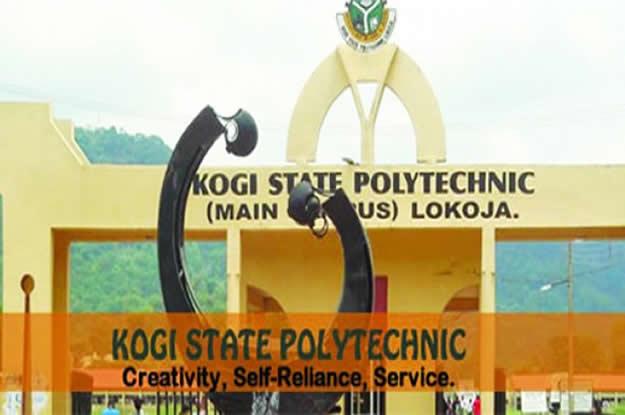
    The joint security team of Kogi State Polytechnic Lokoja, on Tuesday, July 16, 2024, arrested three students of the institution and five others suspected to be members of a secret society and hard drug peddlers.


    The arrests were made during the ongoing second-semester examination for the 2023/2024 academic session.


    A statement issued on Wednesday by the Director, Public Relations and Protocol of the Polytechnic, Omale Uredo, listed the students apprehended who are all of HND II in the Department of Business Administration to include:

    Ajayi Oladipo, Isenre Ayomide, and Omonijo Sunday.


    The five non-students, who are all from Ekiti State but based in Abuja Otitoju Christopher, Babatope Ayomide, Isaiah Babatunde, Shina Ayodeji, and Makinde Olalekan.


    The arrest of the suspects was a result of proactive measures put in place by the management of the institution to checkmate infiltration of cultists and other outlawed groups and individuals who were reported to be planning to enter the campus with guns and other dangerous weapons in connivance with some cyber-crime suspects popularly known as yahoo yahoo.


    Their intent, it was gathered, was to cause harm to their targets and commotion on the campus during the ongoing second-semester examination.


    “This was in the guise of their end-of-examination graduation “celebration” rituals which the Management had earlier banned due to security concerns” she added.


    According to her, in the build-up to the ongoing second-semester examination, the polytechnic management got intelligence reports that some bad elements suspected to be into cybercrime, cultism, and illicit drugs had perfected a plan to import their members from other states and institutions to cause mayhem on the campus.


    To prevent the occurrence, she said the management decided to intensify further security strategies by banning all forms of the second-semester examination on the campus in whatever guise.