Tag: Business

  • NAFDAC shuts down Sokoto bakery for using unfortified sugar, others

    NAFDAC shuts down Sokoto bakery for using unfortified sugar, others

    NAFDAC shuts down Sokoto bakery for using unfortified sugar, others

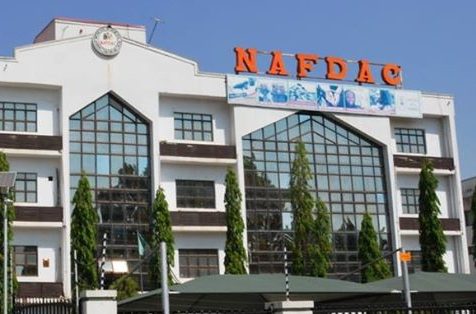
    The National Agency for Food and Drug Administration and Control has closed down a bakery for using unfortified sugar and banned bromate in Sokoto State.

    The NAFDAC State Coordinator, Mr. Garba Adamu told the News Agency of Nigeria on Friday, July 13, 2024, that the bakery was detected during a special raid by the agency’s officials.

    “We discovered that the bakery was using saccharine, an unregistered foreign sugar as a sweetener along with banned bromate in their productions.

    “The items were seized for destruction and the bakery is shut down until it complies with regulations and directives,” he said.

    Adamu emphasised that only fortified registered sugar containing Vitamin A with micronutrients and other vitamins are allowed to be sold and consumed in Nigeria.

    ”This is a Federal Government policy enforced by NAFDAC and other government agencies to ensure that consumers get the maximum nutritional and other health benefits from the products.

    Six other bakeries were also sanctioned for poor hygiene as enforcement officers led by Mr Buhari Manzo scaled up the routine inspection visits to bakeries across the state.

    Bakeries are monitored to ensure that they don’t use saccharine or other banned items as a substitute for fortified regulated ingredients,” Adamu said.

    The state coordinator also cautioned producers against using adulterated, counterfeit, unregistered and expired items in their places, reiterating that NAFDAC would continue the enforcement regularly.

    Adamu said the operation would be extended to Local Government Areas as part of the agency’s efforts to ensure that hygienic foods are sold.

    He called on the public to be wary of patronising unregistered products and always report any suspicious practices and contaminations to NAFDAC.

  • FG to convert 250,000 vehicles to CNG annually – Coordinator

    FG to convert 250,000 vehicles to CNG annually – Coordinator

    FG to convert 250,000 vehicles to CNG annually – Coordinator

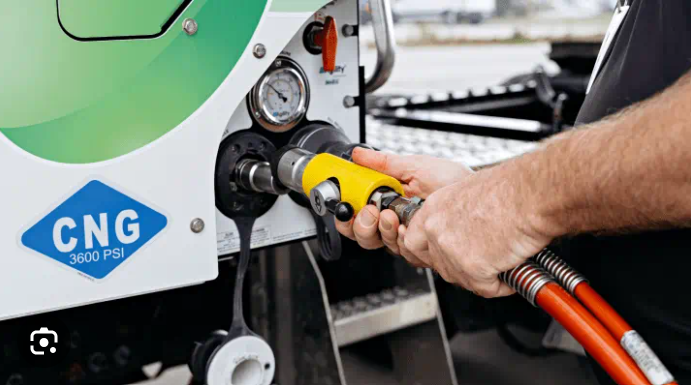
    The Presidential Compressed Natural Gas Initiative is set to mobilise all 36 states by year-end, converting petrol-powered vehicles to CNG, a cleaner and more affordable alternative.


    The P-CNGi’s Programme Execution Coordinator, Folarin Oworu, announced this at a rally held at the Mando Inter State Terminal, Kaduna, on Thursday, where 100 conversion kits were distributed to commercial transport union members.


    According to him, the initiative targets commercial vehicles, with partners in various states, aiming to convert 250,000 vehicles per year starting next year.


    He stated that the conversion kits, worth N1.5m, would be free for transport unions, to reduce transportation costs for the masses.

    He added that the next rally is scheduled for Lagos, with plans to cover all states before year-end.

    Oworu said, “What we are doing here today is front-to-back CNG conversion mobilisation. Mr. President has decided to make conversion free for the road transport unions – that is the NURTW, NATO and other road transport unions.

    “The idea is to bring down the cost of commercial transportation. How do we do that? It is by converting the commercial vehicles of transport unions to make their running cost cheaper. The idea is for them to translate these savings to the end users by making transportation cheaper.

    We are starting here in Kaduna and from Kaduna, we shall move to Lagos and before the end of the year, we would have gone to the whole 36 states.


    “The signing of the Memorandum of Understanding was done by the conversion partners we have at the various locations. The commercial vehicles will go and have their vehicles converted. The conversion kits are one hundred per cent free. The conversion cost is one hundred per cent free. That is the agreement in the MOU.”


    In his goodwill message, former National President of the National Union of Road Transport Workers, Najim Yasin, commended President Tinubu’s initiative on the P-CNGi agenda, aimed at converting commercial vehicles to use compressed natural gas.

    Yasmin applauded the President’s support for the transport sector and the decision to provide conversion kits free of charge to commercial vehicles, estimated to benefit 1 million vehicles.

    He encouraged members of NURTW, NATO, and other road users to key into the program, which is aimed at reducing the suffering of the masses by decreasing transportation costs and fuel prices.


    Yasmin thanked the President and organisers for involving transport workers in the program and expressed appreciation for the support from neighbouring states.


    He emphasised the program’s potential to reduce fuel prices and transportation costs, benefiting the masses. The program is set to roll out across all 36 states in the country.

    Yasmin said, “This programme will move around the 36 states of this country. We, the National Union of Road Transport Workers of Nigeria, the National Association of Transport Owners, use this opportunity to commend President Bola Tinubu for this laudable initiative and support for the transport sector in Nigeria.

    “I called on entire transport organizations- NURTWN, NATO…etc across the country to key into the programme. They have signed the agreement with the company for the conversion here in our present. We have got a number of vehicles that as of today can move to the conversion centres so that these vehicles can be converted one by one.

    “This one is strictly for commercial vehicles and that is why we are involved so that we ensure that our members key into this programme. We appreciate Mr. President and all those who work tirelessly to make this programme a reality.

    “We know how much

    a litre of fuel is now sold and if you fill your tank for N50,000, N45,000, it depends on the number of litres your vehicle is consuming. Before you go from Kaduna to Abuja, that fuel is gone. Automatically, it will affect the transport fare.”

    The Presidential CNG initiative is a key component of President Bola Tinubu’s administration’s palliative measures to mitigate the effects of the fuel subsidy removal policy on the masses.

    The initiative is seeking to provide relief to Nigerians by promoting the use of compressed natural gas as a cleaner and more affordable alternative to fuel.

    The move is part of the government’s efforts to cushion the impact of the subsidy removal and ensure a smoother transition to a more sustainable energy future.

  • Petrol landing cost now N1,117/litre – Marketers

    Petrol landing cost now N1,117/litre – Marketers

    Petrol landing cost now N1,117/litre – Marketers

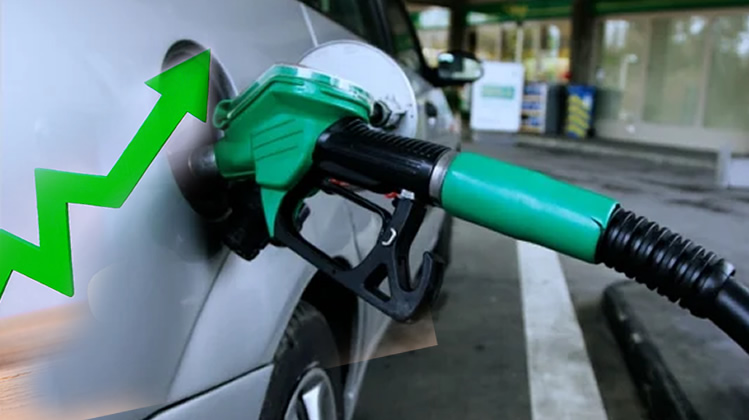
    The landing cost of Premium Motor Spirit, also known as petrol, was N1,117/litre as of Tuesday, July 16, 2024, the Major Energies Marketers Association of Nigeria announced on Wednesday.

    MEMAN disclosed this during a webinar with journalists on Wednesday.

    The association revealed that the landing cost of diesel was N1,157/litre, while that of aviation fuel was N1,127/litre.

    The PUNCH reports that the N1,117 landing cost of petrol is far above the pump price of the product in Nigeria.

    At the moment, filling stations operated by the Nigerian National Petroleum Company Limited and those of the major marketers sell PMS at between N617/litre and N660/litre, while independent marketers sell for N700/litre or more.


    NNPC, the sole importer of petrol into Nigeria, has consistently denied subsidising the cost of PMS but refused to disclose the landing cost of the product.


    Our correspondent reports that the revelation from MEMAN is almost the first from marketers in the industry as the landing cost appears to have been shrouded in secrecy by the importer of PMS.

    MEMAN’s Executive Secretary, Clement Isong, said the costs were obtained from independent energy price benchmark providers.


    The association maintained that it would release similar information regularly to keep the masses informed.


    Recently, independent oil marketers accused private depot owners of hiking the ex-depot price of petrol from N630 to N720/litre.


    An expert in the energy sector, Prof Wumi Iledare, told our correspondent in an interview that the cost of PMS in Nigeria was far below the international price, considering the price of diesel.


    “The gap between the cost of diesel and petrol in Nigeria is much. It is never like that all over the world. That means something is wrong.


    “I don’t know if NNPC is paying subsidies or not, but somebody is absorbing the difference. You can call it under-recovery or subsidy, but the price of petrol today does not reflect the market cost of producing a litre of petrol,” he disclosed.


    Iledare added that with the current exchange rate, the price of petrol should not be less than 80 per cent of the price of diesel.


    .Corroborating this, a Professor of Economics at the University of Ibadan and President of the Nigerian Economics Society, Adeola Adenikinju, said, “The current price of PMS is being subsidised by the government. The government buys at higher rates and sells to us at subsidised rates. That is what they call under-recovery.”


    The International Monetary Fund recently warned the Nigerian government to remove what it called implicit fuel and electricity subsidies.


    In a report published recently by the IMF, the organisation told Nigeria that the subsidies would guzzle three per cent of the nation’s Gross Domestic Product in 2024 as against one per cent in the year before.


    President Bola Tinubu declared the removal of fuel subsidies during his inauguration on May 29, 2023.


    IMF noted, however, that “adequate compensatory measures for the poor were not scaled up promptly and subsequently paused over corruption concerns. Capping pump prices below cost reintroduced implicit subsidies by end-2023 to help Nigerians cope with high inflation and exchange rate depreciation.”


    However, the NNPC and the Federal Government have vehemently denied subsidising the current price of PMS.


  • Crude Shortage: IOCs still causing crude supply crisis, Dangote refinery cries out

    Crude Shortage: IOCs still causing crude supply crisis, Dangote refinery cries out

    Crude Shortage: IOCs still causing crude supply crisis, Dangote refinery cries out.

    The Management of Dangote Industries Limited has insisted that the international oil companies are still frustrating crude supply to its 650,000-capacity refinery.

    The management said this even as it commended the Nigerian Upstream Petroleum Regulatory Commission for its various interventions in the oil company’s crude supply requests from IOCs, and for publishing the Domestic Crude Supply Obligation guidelines to enshrine transparency in the oil industry.


    In a statement on Wednesday, the Dangote Group alleged that the IOCs insisted on selling crude oil to its refinery through their foreign agents, saying the local price of crude would continue to increase because the trading arms offer cargoes at $2 to $4 per barrel, above NUPRC official price.


    In a statement on Wednesday, the Dangote Group alleged that the IOCs insisted on selling crude oil to its refinery through their foreign agents, saying the local price of crude would continue to increase because the trading arms offer cargoes at $2 to $4 per barrel, above NUPRC official price.


    The group also alleged that the foreign oil producers seemed to be prioritising Asian countries in selling the crude they produced in Nigeria.


    The Vice President, Oil & Gas, Dangote Industries Limited, Mr DVG Edwin, said, “If the Domestic Crude Supply Obligation guidelines are diligently implemented, this will ensure that we deal directly with the companies producing the crude oil in Nigeria as stipulated by the Petroleum Industry Act.”

    Edwin insisted that IOCs operating in Nigeria had consistently frustrated the company’s requests for locally-produced crude as feedstock for its refining process.

    He stated that when cargoes were offered to the oil company by the trading arms, it was sometimes at a $2 to $4 (per barrel) premium above the official price set by the NUPRC.


    “As an example, we paid $96.23 per barrel for a cargo of Bonga crude grade in April (excluding transport). The price consisted of a $90.15 dated Brent price plus a $5.08 NNPC premium plus a $1 trader premium. In the same month, we were able to buy WTI at a dated Brent price of $90.15 + $0.93 trader premium including transport. When the Nigerian National Petroleum Company Limited subsequently lowered its premium based on market feedback that it was too high, some traders then started asking us for a premium of up to $4m over and above the NSP for a cargo of Bonny Light.

    Data on platforms like Platts and Argus shows that the price offered to us is way higher than the market prices tracked by these platforms. We recently had to escalate this to NUPRC,” Edwin said, urging the commission to take a second look at the issue of pricing.


    Edwin was reacting to a statement by the Chief Executive of the NUPRC, Gbenga Komolafe, who in an interview on national television said, “It is ‘erroneous’ for one to say that the International Oil Companies are refusing to make crude oil available to domestic refiners, as the Petroleum Industry Act has a stipulation that calls for a willing-buyer, willing-seller relationship.”

    While noting that the commission had been very supportive of the Dangote refinery as it had intervened several times to help secure crude supply, Edwin, however, insisted that the NUPRC boss might have been misquoted by some people hence his statement that IOCs did not refuse to sell to us.


    “To set the records straight, we would like to recap the facts below. Aside from the NNPCL, to date, we have only purchased crude directly from only one local producer, Sapetro. All other producers refer us to their international trading arms. These international trading arms are non-value-adding middlemen who sit abroad and earn a margin from crude being produced and consumed in Nigeria. They are not bound by Nigerian laws and do not pay taxes in Nigeria on the unjustifiable margin they earn.

    The trading arm of one of the IOCs refused to sell to us directly and asked us to find a middleman who would buy from them and then sell to us at a margin. We dialogued with them for nine months and in the end, we had to escalate to NUPRC who helped resolve the situation,” Edwin stated.

    He spoke further, “When we entered the market to purchase our crude requirement for August, the international trading arms told us that they had entered their Nigerian cargoes into a Pertamina (the Indonesia National Oil Company) tender, and we had to wait for the tender to conclude to see what is still available. This is not the first time. In many cases, particular crude grades we wish to buy are sold to Indian or other Asian refiners even before the cargoes are formally allocated in the curtailment meeting chaired by NUPRC.”


    He urged the NUPRC to take a second look at the issue of pricing, having severally asserted that transactions should be on a willing-seller, willing-buyer basis.


    For this to work, he said that there must be market liquidity (many sellers/many buyers in the market at the same time) unlike where a refinery needs a particular crude grade loading at a particular time then there is typically only one participant on either side of the market.


    “It is to avoid the problem of price gouging in an illiquid market that the domestic gas supply obligation specifies volume obligation per producer and a formula for transparently determining pricing. The fact that the domestic crude supply obligation as defined in the PIA has gaps is no reason for wisdom not to prevail,” Edwin stated.

    The PUNCH reported earlier that the President of the Dangote Group, Alhaji Aliko Dangote, told editors during a tour of the refinery that the refinery was set to roll out its petrol in August 2024, having resolved its crude oil supply issues through the help of the Nigeria National Petroleum Company Limited and the Federal Government.


    Dangote’s comment came a few days after the NUPRC said crude oil producers in Nigeria had committed to working towards a sustainable supply of crude oil to Dangote and other local refineries under a market-determined pricing system.


    Both parties had said the commitment aimed to ensure that while the operators (crude oil producers) do business optimally, the refineries are not starved of feedstock.


    Accordingly, the industry regulator, the Nigeria Upstream Petroleum Regulatory Commission has directed oil refiners to provide monthly price quotes on crude supply.


    Refiners accuse IOCs


    Meanwhile, the Crude Oil Refiners Association of Nigeria has also alleged that IOCs in the country have been selling crude to CORAN members through their trading agents in Europe instead of engaging in direct sales to local refineries.


    CORAN, while expressing optimism that the recent intervention of the Federal Government would help in stopping the practice, described it as an illegal act that requires immediate government attention.


    In an interview, CORAN Publicity Secretary, Eche Idoko, told The PUNCH that the oil companies engaged in the act despite the regulations of the Nigerian Upstream Petroleum Regulatory Commission on the Domestic Crude Supply Obligation.


    “To be fair to the Federal Government, the NUPRC has set up the Domestic Crude Supply Obligation that is meant to mandate the crude producers to supply to the Nigerian market.


    “But as I speak to you, the IOCs are still kicking to see how they can whittle down the effect of the DCSO guideline, which said they should sell crude to Nigeria on a willing-buyer, willing-seller basis, but under a favourable term to Nigerians.

    What the IOCs are pushing for is that the agreement is signed between the refineries and their trading agencies instead of themselves, but the Petroleum Industry Act says it should be with them. Why they want us to sign with their trading agencies or partners is that most of their trading agencies are in Europe,” Idoko stated.


    The oil refiners’ spokesperson added, “So, it means we are buying crude from a European country while the producer is in Nigeria. This is the same thing the Dangote refinery was complaining about. We will be buying our crude oil like it is from an international market. Those are the issues we’ve been grappling with.”


    Idoko added that the IOCs want to be paid through the A-rated banks, meaning the cost could only be paid in dollars.

    Another issue is that the IOCs want us to pay with an A-rated bank and no Nigerian bank is A-rated, so we have to buy with dollars. The clauses they are trying to smuggle into this trade agreement will make it more difficult for us to buy from them under a domestic trade term. This technically places us at a disadvantage,” he said.


    NUPRC recently announced that it had resolved the controversies between oil producers and local refineries, a development that was re-echoed by the Dangote Petroleum Refinery at the time it said the plant would release petrol to the market in August.


    However, CORAN called for concerted efforts to prevent a situation whereby the Dangote refinery would resort to the importation of its crude due to an unfavourable Nigerian market.

    Idoko told our correspondent that Dangote and other local refiners were in the oil business to ameliorate the sufferings of Nigerians, especially in having access to cheaper fuel and ending years of recurring fuel scarcity.


    Most refiners in Nigeria went into the business out of passion. We really want to see the sufferings of Nigerians ameliorated. But what I can say is that Dangote will definitely sell his product to make profits. He has done a lot to have sighted the refinery in Nigeria.


    “The Federal Government also has to do the needful to ensure he also gets the crude at a cheap rate. If the crude is not sold to him cheaper, we will not get the anticipated price reduction the refinery should bring to PMS. But it will be less cumbersome for the Federal Government to buy from him,” Idoko stated.


    CORAN expressed concern that the Federal Government was finding it difficult to enforce its regulations, saying the IOCs want to retain Africa as their market for imported petroleum products.

    “If local refineries sell their products outside Nigeria, it will bring an inflow of foreign exchange and it will reduce the pressure on the naira. But our question is, why is it so difficult for the Nigerian government to see through the gimmicks of these oil merchants who continue to hold us to ransom? They want to guarantee supply to their refineries outside Nigeria.

    “If Nigerian refineries continue to get crude supply, it means they can only get crude after the Nigerian refineries are satisfied; they might go out of market. The second reason is that they want a continuous market in Africa for their products, and Nigeria is the largest consumer of refined products in Africa. The Nigerian government should wake up.

    If Nigerian refineries continue to get crude supply, it means they can only get crude after the Nigerian refineries are satisfied; they might go out of market. The second reason is that they want a continuous market in Africa for their products, and Nigeria is the largest consumer of refined products in Africa. The Nigerian government should wake up.


    “The refining industry in Nigeria has the propensity to create 20 million direct and indirect jobs. It can solve 60 per cent of the current forex issue with a direct impact on inflation. We have been pleading with the Coordinating Minister of the Economy to sit with us to see how we can partner together, but the trade merchants have presented themselves as the saviour and we as the enemy,” he claimed.


    Idoko charged the Federal Government to implement its policies and guarantee the supply of crude to local refineries.


    Meanwhile, repeated efforts to speak with the IOCs individually and as a group proved abortive. While some of them acknowledged the emails sent to them by our correspondent seeking their reactions to the various allegations against them, they refused to comment.


    IOCs keep mum


    An official of the Oil Producers Trade Section, a sub-group within the Lagos Chamber of Commerce and Industry, promised to revert but he has yet to provide a detailed response up till when this report was filed.


    Rather the official, who did not want his name in print, said many of the allegations were not true.
  • Vigilante killed for stopping scavengers of contaminated frozen turkeys in Lagos

    Vigilante killed for stopping scavengers of contaminated frozen turkeys in Lagos

    Vigilante killed for stopping scavengers of contaminated frozen turkeys in Lagos

    The Police Command in Lagos State says it has arrested two suspected hoodlums over the death of a vigilante member in the Epe area of the state.

    The command’s spokesperson, SP Benjamin Hundeyin, confirmed this to the News Agency of Nigeria on Thursday.

    Hundeyin said that the Epe Police Division got a report on Monday at about 4.30 p.m. that an Ibile Vigilante member, simply identified as Oluwafemi, 45, was attacked on Friday at about 2.00 p.m. by suspected hoodlums.

    He said the hoodlums reportedly attacked the vigilante member at a refuse dump site, at Afero Village, Epe,  while attempting to stop them from scavenging disposed contaminated frozen turkeys from the dump site.

    According to the image maker, the vigilante member, who sustained injuries on parts of his body, was rushed to Epe General Hospital, where he was treated and discharged.

    “However, on July 15, 2024, at about 2.30 p.m., his condition relapsed and he was taken back to the hospital.

    “Doctors on duty battled to save his life, but unfortunately, he gave up the ghost. His corpse has been deposited at the mortuary.


    “The two suspects have been arrested in addition to the 12 already handed over to the task force on a Saturday over scavenging contaminated turkeys.

    “Investigation is ongoing,” he said.

  • NLC kicks against calls for different minimum wage for states

    NLC kicks against calls for different minimum wage for states

    NLC kicks against calls for different minimum wage for states

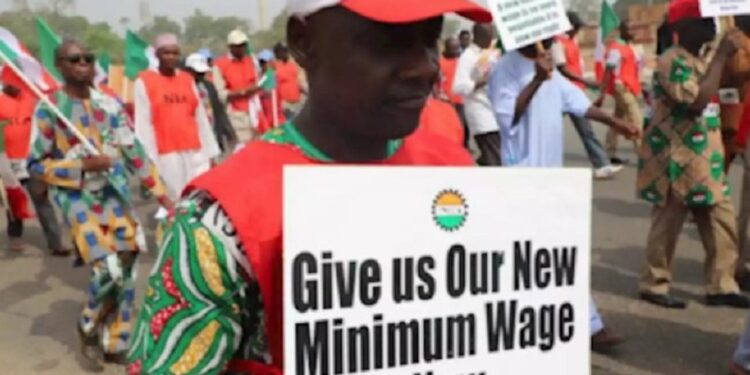
    The Nigeria Labour Congress (NLC) has opposed the call by some politicians for decentralizing minimum wage negotiations allowing states to have different minimum wages.

    In an interview with the News Agency of Nigeria (NAN) on Sunday in Ibadan, the Secretary of NLC in Oyo State, Mr. Adebayo Aribatise, stated that decentralizing minimum wage negotiations would disadvantage workers in some states.

    Explaining the broader implications of a centralized minimum wage, Fayemi noted that only a small percentage of the population benefits directly from minimum wage negotiations.

    However, Aribatise strongly opposed decentralizing minimum wage negotiations, stating that it is not ideal for the country.

    He pointed out that some states have not yet fully implemented the old N30,000 minimum wage despite the efforts of the NLC at both the national and state levels.

    He said, “The fact remains that the law binds states to pay national minimum wage. It is expected that the federal government will continue to set the minimum wage. If not, some governors will continue to do as they like.”

    “Some governors will bastardise the agreement if we allow it and junior workers will continue to earn nothing worthwhile,”

    Backstory

    Former Ekiti State Governor, Dr. Kayode Fayemi, had earlier emphasized the need for states to conduct wage negotiations with their labour unions independently from the Federal Government.

    Fayemi explained that the position of the Nigerian Governors’ Forum, which he once chaired, was that states should be allowed to negotiate with their labour unions separately, as “fingers are not equal.”

    What you should know

    The negotiation for a new minimum wage has lingered on in the past months due to the difficulty of different stakeholders in reaching a consensus.

    While the federal government and the private sector have agreed on a new minimum wage of N62,000, organised labour led by the Nigerian Labour Congress (NLC) and Trade Union Congress (TUC) are proposing N250,000.

    According to organised labour groups, a N62,000 minimum wage is not enough for the average worker in light of the significant increase in the cost of goods and services across the nation.

    The federal government had earlier stated that it cannot sustain the proposed minimum wage by organised labour which would amount to around N19 trillion yearly.

    On the other hand, the private sector led by NECA had also complained that it cannot meet the demands of labour unions now or any time soon stating the goal of the tripartite committee is to focus on job creation.

    The negotiation for a new minimum wage has been thorny leading to strike action that nearly crippled the economy with the shutting down of the national grid.

  • Banks, Others Sell Naira for New Rate as Dollar Supply Increases by $110m in 24 Hours

    Banks, Others Sell Naira for New Rate as Dollar Supply Increases by $110m in 24 Hours

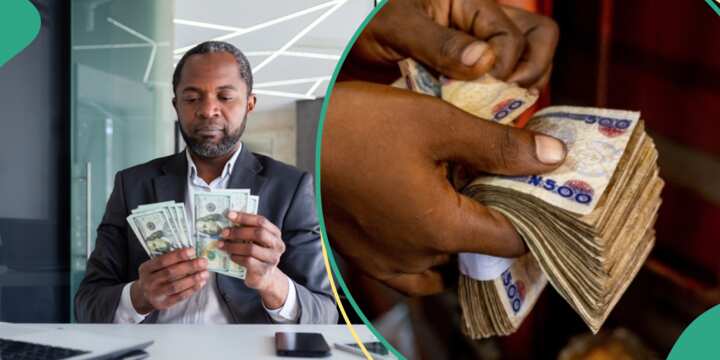
    The naira closed at N1,510/dollar on Thursday, almost unchanged from the N1,507/dollar the previous day

    Data shows that dollar supply increased in the official window by N110 million compared to the previous day

    According to the CBN, total foreign exchange inflow in the country has increased in recent times amid several policy reforms

    According to official data from FMDQ securities, the Nigerian Autonomous Foreign Exchange Market (NAFEM), the amount represents a 0.15% decline compared to the closing rate of N1,507.83 on Wednesday, 26.

    The Nigerian economy received approximately $5.95 billion in funding from the World Bank and Afreximbank in a single month, June 2024.


    Another source of inflow is foreign direct investment (FDI), which refers to investments made in domestic firms by foreign corporations through things like factory setup, real estate purchases, and ownership holdings in local businesses. International exchange inflows can also come from grants, remittances, international aid, and portfolio investment.

    Cardoso reported that compared to the inflows recorded in the prior quarters, the foreign exchange inflows for the first quarter of 2024 are almost 50% greater. 


  • Flutterwave Sacks Workers After Hackers Divert N11 Billion From Company Account

    Flutterwave Sacks Workers After Hackers Divert N11 Billion From Company Account


    Flutterwave, a startup in payment technology, has let go of twenty-four workers, or 3% of its personnel The company’s CEO said the move is part of its strategy to realign and capitalise on opportunities in its core business segments He added that the affected employees will receive some benefits depending on the nation in which they are employed 

    Flutterwave’s CEO, Olugbega Agboola, announced this in a statement released on Monday 

    He added that the company is committed to doing more with its expanding remittance sector, “Send app.” He also mentioned that the company has made a data-driven decision to reallocate resources to its core business, enterprise payments.


    Agboola said: “Consequently, we’ve made the difficult decision to support the transition of 24 Wavers accounting for 3% of our workforce,” Flutterwave said. “These Wavers are some of the most hardworking people you’d meet. We put in the work and I can confidently say that at Flutterwave, we have a competent workforce where everyone actively contributes.

    But once the data and the busines is pointing us to a specific direction, it would be counterproductive for us not to listen and create the right mechanisms to move faster on the opportunities awaiting us.”

    Affected workers to get benefits Agboola further said an average of three months gross salary, depending on the country where the employee is based, will be paid.

    He added: “We will also be monetising your unutilised accrued leave days. You will continue to have free access to our professional training platform for 12 months after your transitioning.”


    “We will be providing you with free outplacement service for 3 months. For Wavers with stock options, we will support you with an additional vesting period of 6 months. “You will have 3 months of free healthcare. You will continue to have access to our mental health and career coaches for 3 months post transitioning.”


    The CEO announced that there will be a review of compensation for all remaining staff. This comprises a new performance-based bonus structure linked to individual and team performance criteria, as well as a wage-based increase for the majority of employees that is in line with the market.

  • Capital Market: New SEC Chair Unveils Plans To Address Challenges, Boost Investor Confidence

    Capital Market: New SEC Chair Unveils Plans To Address Challenges, Boost Investor Confidence

    Capital Market: New SEC Chair Unveils Plans To Address Challenges, Boost Investor Confidence

    The newly appointed Chairman of the Securities and Exchange Commission (SEC), Alhaji Mairiga Aliyu Katuka, has shared his vision and strategic plans for addressing the prevailing issues within the regulatory agency and enhancing investor confidence in the Nigerian capital market.

    In a recent chat with select journalists, Katuka acknowledged the longstanding challenges faced by the SEC, particularly concerning staff welfare.

    “Before this new administration came on board, there were issues of staff not getting promotions for a long time and not having their salaries reviewed for over 10 years. The lack of promotion has been particularly disturbing,” he noted.

    Addressing the concerns, Katuka emphasised the importance of human resources in achieving SEC’s goals and assured that the team was already working on strategic plans to revitalise the capital market.

    Reiterating that building investor confidence was a top priority for the new administration, Katuka stated, “The capital market requires investor confidence, and we will do everything possible to ensure its success. Building investor confidence means ensuring that the market is transparent, dynamic, and fair, so investors can invest without fear.” He highlighted the need for credibility and integrity in the market and mentioned plans to engage stakeholders to support strategic initiatives.

    One significant focus area was increasing public awareness about the SEC’s activities. Katuka pointed out that many Nigerians, including the elite, were hesitant to invest due to a lack of understanding of the capital market. To address this, he said the SEC planned to launch engaging sensitisation programs and involve the press to educate potential investors about the market’s benefits.

    Katuka also emphasised the role of technology in modernising the SEC operations, stating, “We plan to make our IT robust to accommodate our goals.” With the SEC chairman’s 20 years of experience, the administration was confident in establishing a reliable market that both investors and stakeholders can trust.

    Katuka ended by addressing the SEC staff issue, reassuring them of efforts to improve their working conditions and boost their morale. He urged all Nigerians to support the SEC’s initiatives to ensure the success of the capital market. With these strategic plans in place, the new SEC administration aims to resolve existing issues, enhance market transparency, and foster a culture of informed investment across Nigeria.

    Born on February 15, 1961, in Keffi, present-day Nasarawa State, Alhaji Mairiga Aliyu Katuka obtained a Higher National Diploma in Accounting from Federal Polytechnic, Bida, in 1985, followed by a Master’s degree in Business Administration from Ahmadu Bello University in 2007. He holds numerous professional qualifications and certifications and is a Fellow of the Certified National Accountants of Nigeria (FCNA) and a member of the Nigeria Institute of Management (MNIM) and the Chartered Institute of Forensic and Certified Fraud Investigators of Nigeria (CCrFA).

  • Labour Politics: Govs Meet Over Minimum Wage, LG Autonomy

    Labour Politics: Govs Meet Over Minimum Wage, LG Autonomy

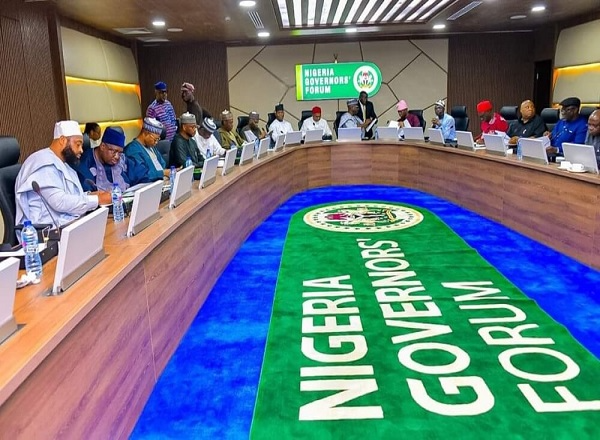
    Governors of the thirty-six states under the umbrella of the Nigeria Governors’ Forum (NGF) are currently meeting to address the ongoing debate surrounding the new minimum wage proposal and local government autonomy.

    Previously, the governors expressed concerns about the Federal Government’s proposed ₦60,000 minimum wage, deeming it unsustainable.

    They argued that implementing such a wage would result in many states allocating their entire monthly federation account disbursements solely to salary payments

    The governors have urged the tripartite committee to agree on a fair and sustainable minimum wage.

    In response to these concerns, the Federal Government announced on Tuesday that President Bola Tinubu would engage in further consultations before reaching a decision on the new minimum wage.

    Another key item on the agenda is the unresolved issue of local government autonomy.

    The governors are also set to deliberate on other critical matters of national importance, covering a wide range of pressing issues that impact the country’s socio-economic and political landscape.

    This high-level meeting aims to foster collaborative solutions and develop strategic initiatives to address Nigeria’s challenges, with the goal of ensuring a unified and effective approach to governance.