
The Federal Government, through the Nigerian Midstream and Downstream Petroleum Regulatory Authority, is expecting fresh reports to confirm the real sulphur content of the diesel produced by the Dangote refinery as the company debunked claims of inferior fuel production.
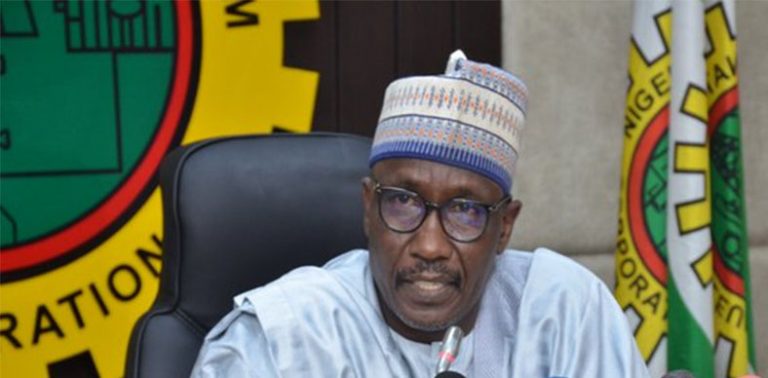
The NMDPRA spokesman, George Ene-Ita, in an interview with The PUNCH on Sunday, said the agency had done its job and would not engage in a media fight with anybody over the claims made by the NMDPRA Chief Executive, Farouk Ahmed, that Dangote’s diesel has more sulphur content than imported one.
According to Ene-Ita, the authority has about 15 engineers and scientists embedded in the Dangote refinery, whose fresh report about the refinery’s sulphur content will be out on Monday (today).
The PUNCH reported Ahmed as alleging that the diesel from the Dangote refinery contains high sulphur content.
Reacting to Dangote’s allegations that the NMDPRA was giving licences to some traders to import dirty fuel into Nigeria last week, Ahmed argued that it was the Dangote fuel that had a larger content of sulphur.
He also said the refinery, which has been selling diesel and aviation fuel in Nigeria for months, had yet to be licensed, stating that it was still at the pre-commissioning stage.
The claim by some media houses that there were steps to scuttle the Dangote refinery is not so. The Dangote refinery is still in the pre-commissioning stage. It has not been licensed yet; we haven’t licensed them yet. They are still in the pre-commissioning. I think they have about 45 per cent completion,” Ahmed declared.
The NMDPRA boss warned that Nigeria could not rely heavily on the Dangote refinery for its fuel supply.
According to him, the refinery had requested the regulator to stop giving import licences to other marketers so as to be the only fuel supplier in Nigeria
Nigeria.
“We cannot rely heavily on one refinery to feed the nation, because Dangote is requesting that we should suspend or stop importation of all petroleum products, especially AGO and direct all marketers to the refinery, that is not good for the nation in terms of energy security. And that is not good for the market, because of monopoly,” he stressed.
Speaking about quality, he said, “So, in terms of quality, currently the AGO quality in terms of sulphur is the lowest as far as the West African requirement of 50 ppm is concerned.
“Dangote refinery and some modular refineries, like Waltersmith refinery and Aradel refinery, they are producing between 650 to 1,200ppm. So, in terms of quality, their product is much more inferior to the imported quality,” he alleged.
Reacting during a tour of the refinery by members of the House of Representatives led by the Speaker, Hon. Tajudeen Abbas, over the weekend, Dangote asserted that products refined at the world’s largest single train refinery are of superior quality compared to the imported fuel.
The speaker and other members had observed the testing of Automotive Gas Oil from two petrol stations alongside the same taken from the Dangote refinery.
The diesel samples were procured from two well-known filling stations near Eleko junction along the Lekki-Epe Expressway, Lagos, by the lawmakers.
The Chairman of the House Committee on Downstream, Ikeagwunon Ugochinyere, and Chairman of the House Committee on Midstream, Okojie Odianosen, oversaw the collection of samples from the Mild Hydro Cracking unit of the Dangote refinery for testing of all the samples.
The Dangote laboratory tests were said to have revealed that Dangote’s diesel had a sulphur content of 87.6 ppm while the other two samples showed sulphur levels exceeding 1,800 ppm and 2,000 ppm respectively.
are over 15 engineers and scientists of the NMDPRA working with them for the last how many months. That’s how we get our reports. We have engineers and scientists there, who go there. That’s how we get them. That is why I keep on saying we don’t want to personalise this matter. We are working to see that the local refining capacity is booted to a point where we are self-sufficient in producing our fuel here.”
Dangote imports crude
Meanwhile, the Dangote refinery is in talks with Libya to secure crude for the 650,000 barrels per day plant and will also seek Angolan oil, a senior executive, Devakumar Edwin, told Reuters, as the refinery seeks to overcome problems with domestic crude supplies.
Since Dangote began operations in January, it has been unable to get adequate crude supplies in Nigeria, which, although Africa’s biggest oil producer, is struggling with theft, pipeline vandalism and low investment.
Dangote has resorted to importing crude from as far as Brazil and the United States.
“We are talking to Libya about importing crude,” Edwin told Reuters late on Saturday. “We will talk to Angola as well and some other countries in Africa.”
He declined to give details about the talks but said international traders and oil companies were among the biggest buyers of Dangote’s gasoil, much of which was being exported.
“The biggest off-takers are the two big traders Trafigura and Vitol and BP and, to some extent, even TotalEnergies. But all of them are saying they are taking it to offshore,” Edwin said.
Traders and shipping data have shown that Dangote is increasing gasoil exports to West Africa, taking market share from European refiners.
Dangote has said the refinery will begin the sale of Premium Motor Spirit in August, with a plan to stop the importation of refined fuel into Nigeria.
Marketers worried
However, Nigerians and marketers have been expressing concern over the ongoing controversies, especially after the regulator said the country would continue to import refined petroleum products into Nigeria.
The PUNCH recalls that while accusing the IOCs of plans to frustrate the refinery, the Vice President of Oil and Gas at Dangote Industries Limited, Edwin also accused the NMDPRA of granting licences indiscriminately to marketers to import dirty refined products into the country.
According to Edwin, the Federal Government issued 25 licences for the construction of refineries in Nigeria, but only the Dangote Group delivered on its promise.
The vice president noted that more than 3.5 billion litres of diesel and aviation fuel had been exported to Europe by the refinery in the past few months. The exported fuel, it was said, represented about 90 per cent of its production.
“The Federal Government issued 25 licences to build refineries and we are the only one that delivered on our promise. In effect, we deserve every support from the government. It is good to note that from the start of production, more than 3.5 billion litres, which represents 90 per cent of our production, have been exported. We are calling on the Federal Government and regulators to give us the necessary support to create jobs and prosperity for the nation,” Edwin stated.
It was alleged that even though Dangote was producing and bringing diesel into the market, complying with the regulations of the Economic Community of West African States, “licences are being issued, in large quantities, to traders who are buying the extremely high sulphur diesel from Russia and dumping it in the Nigerian market.”
Edwin lamented, “The decision of the Nigerian Midstream and Downstream Petroleum Regulatory Authority in granting licenses indiscriminately for the importation of dirty diesel and aviation fuel has made the Dangote refinery expand into foreign markets. The refinery has recently exported diesel and aviation fuel to Europe and other parts of the world. The same industry players fought us for crashing the price of diesel and aviation fuel, but our aim, as I have said earlier, is to grow our economy.”
He noted that because the refinery meets the international standard as well as complies with stringent guidelines and regulations to protect the local environment, it has been able to export its products to Europe and other parts of the world.
“It is regrettable that in Nigeria, import licences are granted despite knowing that we can produce nearly double the amount of products needed in Nigeria and even export the surplus. Since January 2021, ECOWAS regulations have prohibited the import of highly contaminated diesel into the region,” Edwin stated.
Meanwhile, some Nigerians online have called on President Bola Tinubu to relieve the NMDPRA chief executive of his job for saying the fuels produced by local refineries are inferior to imported ones.
Also, the House of Representatives said the allegations would be investigated.

 Petrol landing cost now N1,117/litre – Marketers